
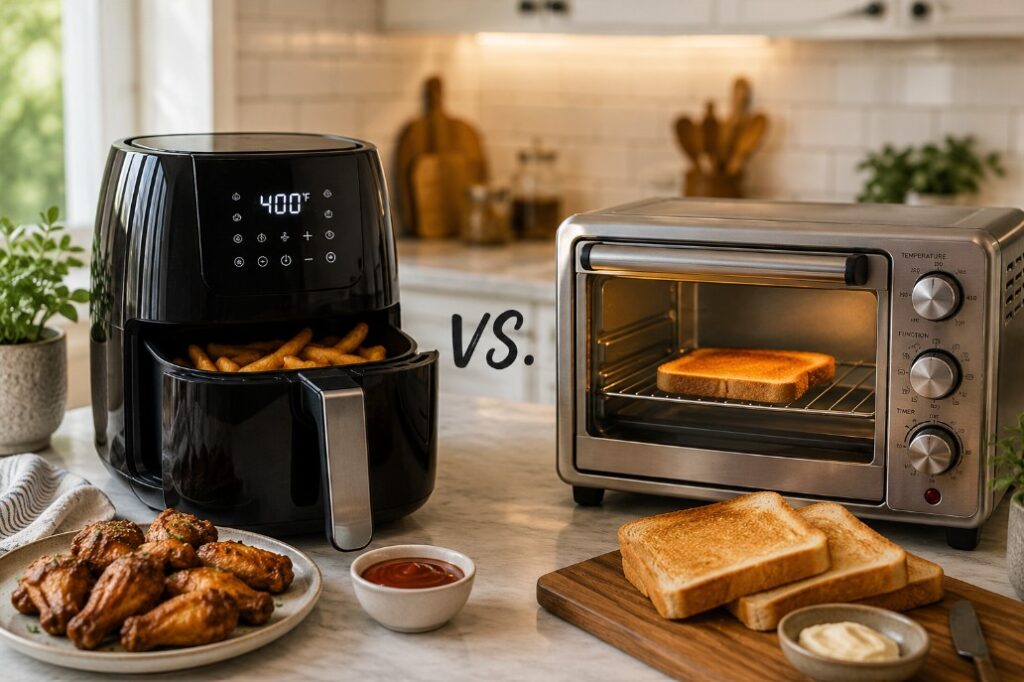
Air fryers and toaster ovens have become mainstays in many kitchens, each offering convenient ways to prepare quick meals and snacks. Both appliances promise faster cooking times and healthier alternatives to traditional frying or oven baking. However, deciding which is better for your lifestyle and kitchen setup depends on understanding their key features, practical uses, and limitations.
This comparison explores the differences and similarities between air fryers and toaster ovens to help readers navigate their choices. Whether you’re aiming to crisp up frozen foods, bake a small batch of cookies, or simply toast bread, knowing how these devices perform in everyday use can help you find the best fit for your needs.
Affiliate disclosure: Some links in this article are affiliate links. If you make a purchase through an affiliate link, I may earn a commission at no additional cost to you. As an Amazon Associate I earn from qualifying purchases.
Quick Facts
- Products Compared: Air fryer and toaster oven
- Best Overall Use: Air fryer excels at frying and crisping with less oil; toaster oven offers versatile baking, broiling, and toasting
- Budget Range: Air fryers and toaster ovens vary widely, generally starting from affordable entry models to higher-end multi-function units
- Best For: Air fryers suit those seeking quick, healthier fried-style foods; toaster ovens fit users wanting all-around cooking flexibility
Comparison Overview
Air fryers and toaster ovens are often compared because they both occupy countertop space and serve as alternatives to traditional ovens. Their compact size and relatively fast cooking times appeal to busy individuals and small households. Despite overlapping functions, they operate differently and excel in distinct cooking tasks.
Air fryers cook by circulating hot air rapidly around food, mimicking the effects of frying but typically with much less oil. In contrast, toaster ovens are miniature ovens that heat food with exposed heating elements, supporting a broader range of cooking methods such as baking, broiling, and toasting. Understanding how each appliance achieves these results clarifies why one may be preferable depending on cooking preferences and kitchen habits.
Side-by-Side Comparison
| Feature | Air Fryer | Toaster Oven |
|---|---|---|
| Cooking Method | Rapid hot air circulation | Heating elements for baking, broiling |
| Primary Uses | Frying, crisping, reheating | Toasting, baking, broiling, reheating |
| Cooking Capacity | Generally smaller basket size | Larger interior space, can fit bigger items |
| Cooking Time | Often faster due to concentrated heat | Slightly longer, more like a traditional oven |
| Versatility | Limited to air frying and some baking | More versatile with multiple cooking modes |
| Ease of Use | Usually simple controls, presets available | Varies by model; some with complex settings |
| Cleaning | Non-stick baskets, often dishwasher safe | Trays and racks removable, may require manual cleaning |
| Price Range | Mid-range to premium, depending on size and features | Wide range from budget to premium models |
Key Differences
Cooking Technology
Air fryers use a powerful fan to circulate hot air quickly around food, which creates a crispy outer layer similar to frying but with minimal oil. Toaster ovens rely on radiant heat from electric elements, providing more traditional baking and broiling results.
Food Capacity and Size
Toaster ovens typically offer larger interiors, suitable for baking small casseroles or multiple slices of bread at once. Air fryers often have smaller baskets, limiting the volume of food cooked in a single batch.
Cooking Versatility
Toaster ovens generally support a wider range of cooking tasks, including baking, broiling, toasting, and sometimes even rotisserie or dehydrating functions. Air fryers primarily air-fry but may also include baking and roasting presets.
Cooking Speed
Air fryers tend to cook food faster due to their intense air circulation and focused heating area. Toaster ovens may take longer but provide more even heat distribution for various recipes.
Control and Interface
Air fryers often come with preset programs and digital controls designed for ease of use. Toaster ovens vary widely, from simple manual dials to digital touchscreens offering multiple settings.
Cleaning and Maintenance
Air fryer baskets are commonly coated with non-stick surfaces and are often dishwasher-safe. Toaster ovens have removable trays and racks but may require more frequent manual cleaning due to exposed heating elements and crumb buildup.
Performance and Everyday Use
Cooking Efficiency
For quick snacks like fries, chicken wings, or reheating leftovers, air fryers shine with their rapid cooking times and crispy results without excess oil. Toaster ovens are better suited for baking small dishes, toasting bread evenly, or broiling meats with a more traditional oven effect.
Convenience and Setup
Both appliances plug into standard kitchen outlets and generally require minimal setup. Air fryers usually have straightforward programming with presets, making them user-friendly for beginners. Toaster ovens might have a steeper learning curve if they feature multiple baking modes and temperature controls.
Food Variety
Air fryers excel at replicating fried textures and crispiness, making them great for frozen or breaded foods. Toaster ovens handle a wider variety of cooking styles, including baking pastries, roasting vegetables, and toasting multiple bread slices simultaneously.
Kitchen Space and Portability
Air fryers are typically more compact, which benefits small kitchens or limited countertop space. Toaster ovens can be bulkier but offer the advantage of handling larger food items.
Limitations
Air fryer baskets may limit the ability to cook large portions or bulky foods. Toaster ovens require monitoring to avoid uneven cooking or burning, especially in lower-priced models with less precise temperature control.
Durability and Maintenance
Both air fryers and toaster ovens are designed for countertop use and generally built to last several years with proper care. Air fryers’ removable baskets with non-stick coatings simplify cleanup and reduce maintenance time. However, the fan mechanism requires occasional cleaning to prevent grease buildup.
Toaster ovens feature heating elements and crumb trays that need regular cleaning to maintain performance and safety. Their mechanical components may be more prone to wear or require repair over time than those of air fryers. Both devices benefit from following manufacturer cleaning guidelines and avoiding abrasive cleaners.
Cost and Overall Value
Air fryers and toaster ovens cover a wide price range influenced by size, brand, and feature sets. Higher-end air fryers with digital controls and larger capacities come at a premium but may justify the cost for users who prioritize fried-style cooking while seeking health benefits.
Toaster ovens offer value through versatility, serving as a multi-use appliance that can replace several kitchen devices. Budget toaster ovens provide basic functions at a lower price but may lack advanced features or durability.
Choosing between them depends on the types of cooking you do most often and whether you value speed and crispiness or versatility and larger cooking capacity.
Who Should Choose Each Option
For Quick, Healthier Fried Foods
An air fryer suits individuals who want to enjoy crispy, fried-style meals with less oil and faster cooking. This appliance is ideal for small households or those who regularly cook frozen snacks.
For Versatile Cooking and Baking
A toaster oven fits users looking for an all-in-one device that can toast, bake, broil, and reheat. It’s a good choice for those who enjoy baking small batches or need to prepare a variety of dishes using one appliance.
For Limited Counter Space
Air fryers generally take up less room, making them preferable for compact kitchens or dorm rooms where space is at a premium.
For Larger Portions or Multi-Item Cooking
Toaster ovens offer more interior space, accommodating bigger meals or cooking several items simultaneously, which benefits families or those who entertain guests.
Final Thoughts
Choosing between an air fryer and a toaster oven depends largely on your cooking habits, kitchen space, and the types of food you prepare most often. Air fryers excel at delivering quick, crispy results with less oil, making them appealing for health-conscious users or fans of fried foods. Toaster ovens provide greater versatility, supporting a wider range of cooking methods and larger food quantities.
Neither appliance is inherently better for everyone—each has meaningful advantages and trade-offs. Considering factors like cooking capacity, ease of use, cleaning, and budget will help determine which device aligns best with your lifestyle. Ultimately, the right choice is the one that fits your kitchen routine, food preferences, and space constraints while enhancing your cooking experience.
Frequently Asked Questions
Can air fryers replace toaster ovens?
Air fryers can replace some toaster oven functions but offer less versatility. Toaster ovens can perform a wider range of cooking tasks.
Are air fryers healthier than toaster ovens?
Air fryers require less oil to achieve a fried texture, which can make meals lower in fat compared to traditional frying. Toaster ovens do not inherently affect healthiness.
Which appliance cooks faster?
Air fryers generally cook faster due to their rapid hot air circulation, especially for small, crispy foods.
Is cleaning easier with an air fryer or toaster oven?
Air fryer baskets are often non-stick and dishwasher-safe, making cleaning simpler. Toaster ovens need manual cleaning of trays and crumb trays.
Can a toaster oven fit larger meals better than an air fryer?
Yes, toaster ovens usually have a larger interior, accommodating bigger dishes or multiple items at once.