
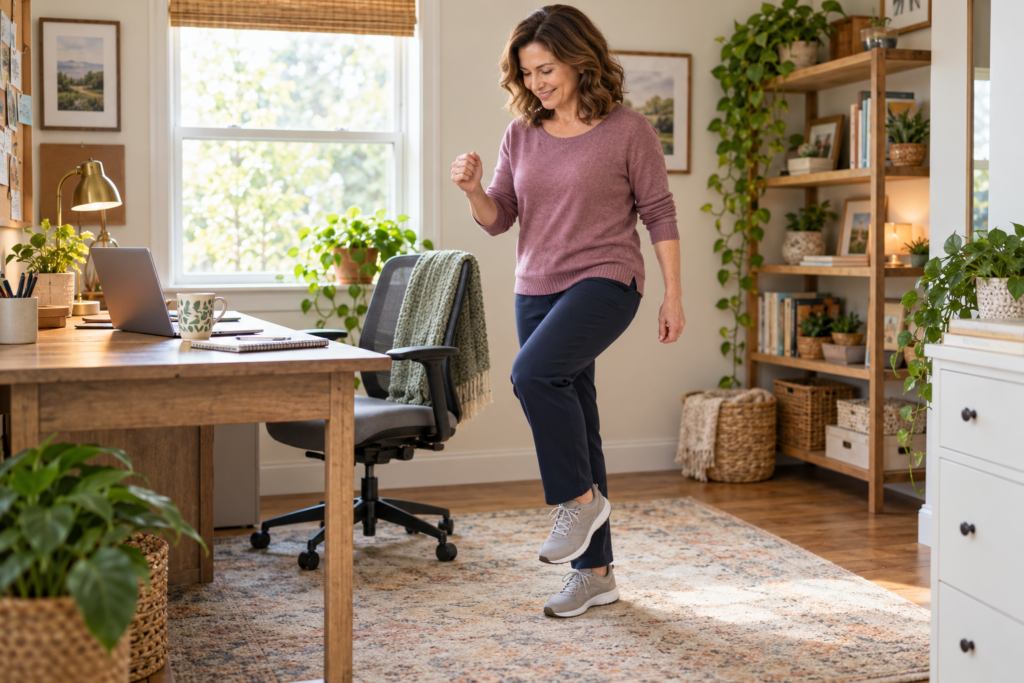
A work-from-home day can make it surprisingly easy to stay in one position for far too long. One minute you’re answering an email; the next, you’ve been folded over a laptop like a question mark for half the morning.
Low-impact movement breaks offer a simple way to interrupt that static routine. They don’t replace regular exercise, and they aren’t meant to push through pain. They’re just brief, gentle chances to stand up, change position, and move within a comfortable range before your next meeting notification appears.
1. March in Place
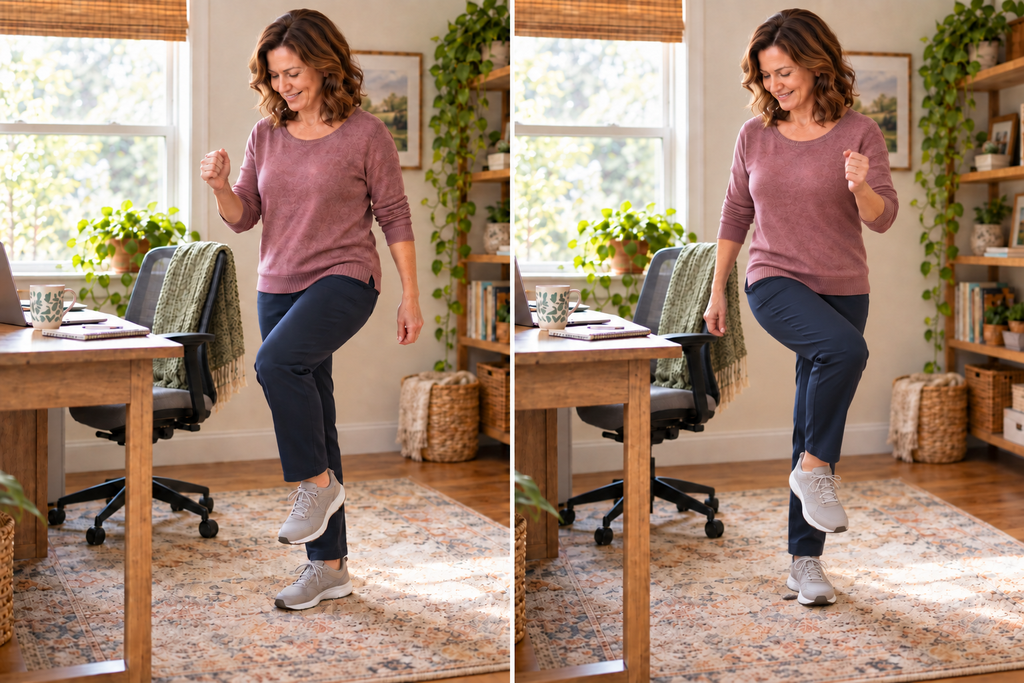
Marching in place is about as straightforward as a work-from-home movement break gets: Stand beside your desk, lift one foot at a time, and keep the pace comfortable. There’s no need for special shoes, a yoga mat, or the kind of workout outfit that makes you wonder whether laundry day has gotten out of hand.
This is a practical choice when you need to step away from a screen but don’t have time to leave the room. Let your arms swing naturally if that feels good, or keep a hand near a desk or sturdy chair for extra balance support. Smaller steps count, especially if you’re just getting started or working in a tight office corner.
The CDC includes marching in place among its simple workplace activity-break options. Try it briefly between tasks, then switch to another gentle move rather than treating it like a formal workout. The point is to break up a long period of sitting, not to turn your Tuesday spreadsheet into a boot camp.
If lifting your knees feels uncomfortable, keep the movement low and easy. If you have balance concerns, a recent injury, or a health condition that affects activity, ask a health-care professional or qualified physical-activity specialist which options may be appropriate.
Why it stands out: Marching in place gives you an easy, whole-body change of pace without requiring much space, equipment, or a complicated routine.
2. Reach Both Arms Up and Down
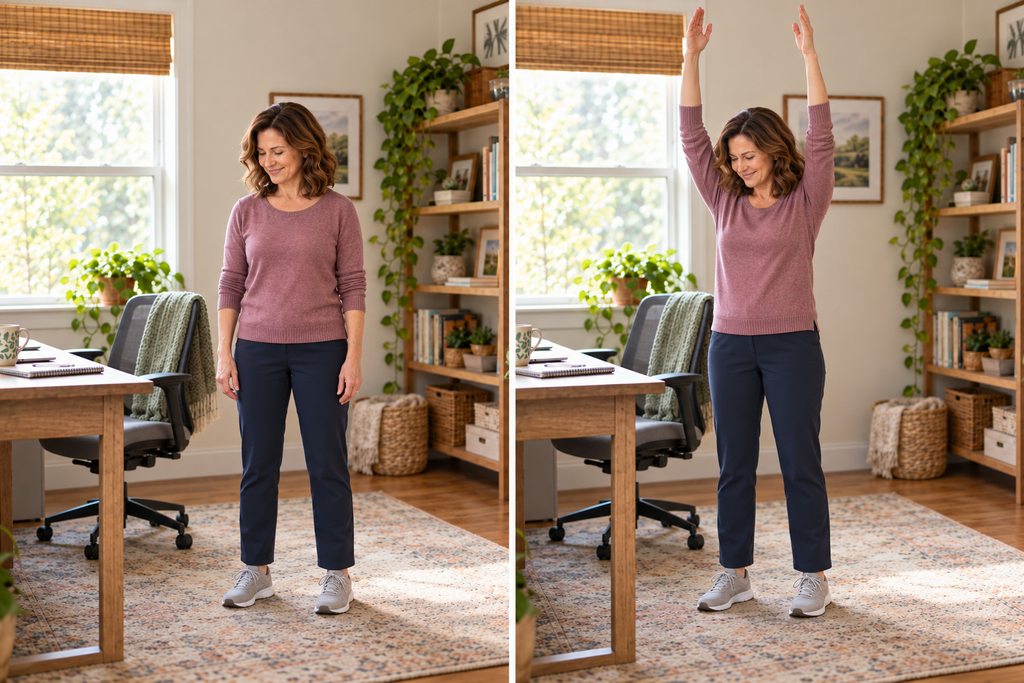
A simple overhead reach can be a welcome change after typing, scrolling, or leaning toward a screen. Stand tall or sit securely in a supportive chair, then slowly lift both arms overhead as far as is comfortable before lowering them again. Keep the motion relaxed—this is not the moment to audition for the ceiling fan.
Try pairing the movement with an unhurried breath: Breathe in as your arms rise and out as they lower. If raising both arms overhead isn’t comfortable, lift them only partway, reach one arm at a time, or skip the move.
This break is handy during a mouse- and keyboard-heavy workday because it changes your upper-body position without demanding much space or setup. You can do several comfortable repetitions while a document loads, before joining a video call, or during a quick break from computer tasks.
OSHA encourages workers to avoid holding static computer postures for too long by periodically standing, stretching, or walking. A reach-and-lower sequence is one small way to make that shift without rearranging your workspace.
Why it stands out: It provides a gentle change of position for an upper body that has spent too long hovering over a keyboard.
3. Gently Lean Side to Side
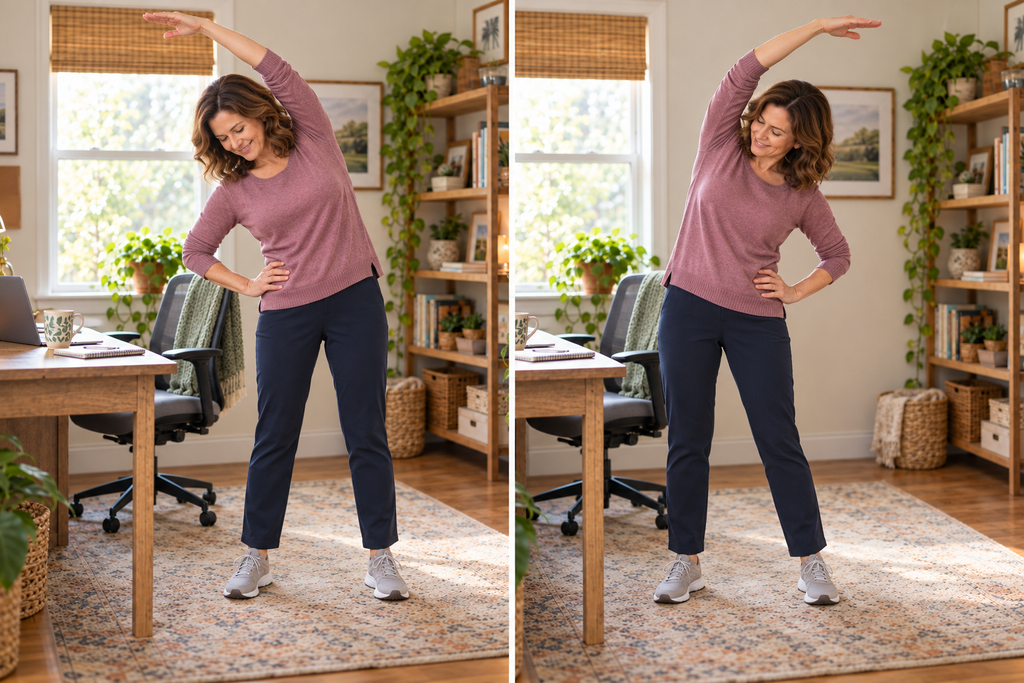
For this low-impact movement break, stand with your feet comfortably apart and lift one arm overhead if that feels good. Lean gently to the opposite side, return to center, and repeat on the other side. Keep the motion small and controlled; a comfortable side bend is plenty.
You don’t need to force a deep stretch. Think of this as a change of position rather than a contest with your range of motion. Keep your shoulders relaxed, avoid twisting, and skip the overhead arm if it causes discomfort. Placing one hand on a desk for light support can make the movement feel steadier.
Side-to-side leans fit naturally into a short sequence with arm reaches and shoulder rolls. The CDC’s workplace activity-break guide suggests periodically changing simple movements during a brief activity segment, so your break can stay varied without becoming a whole production.
This move may not suit everyone. If you have back, shoulder, balance, or mobility concerns, reduce the range, perform it seated if appropriate for you, or choose a different movement. Stop if anything hurts.
Why it stands out: The side bend changes your usual forward-facing desk position with a calm, adaptable motion.
4. Step Side to Side
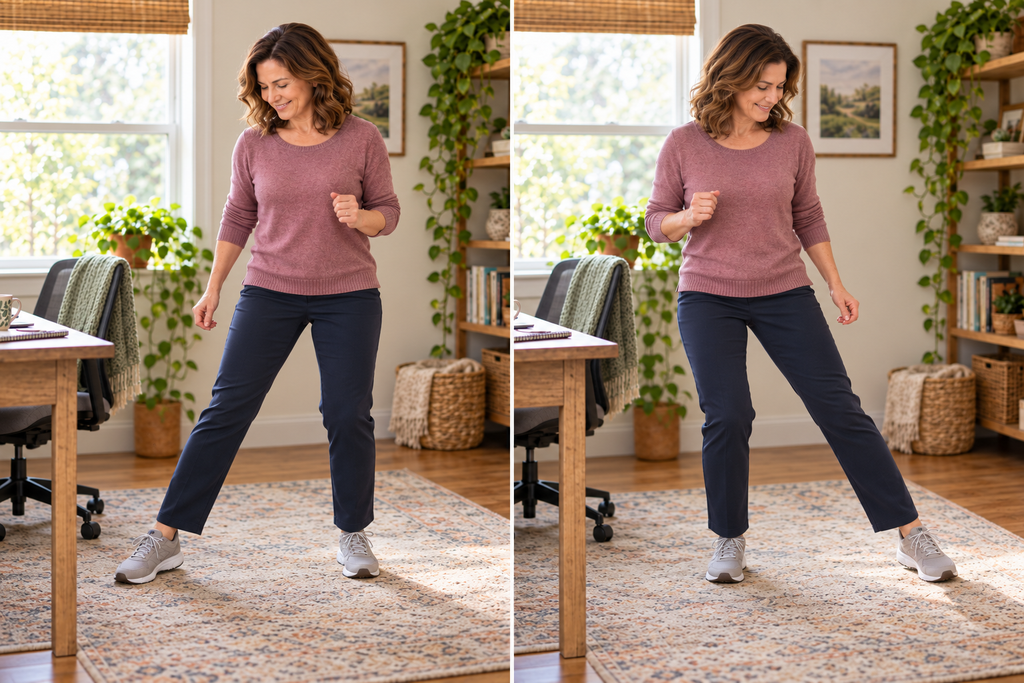
Side steps are a useful choice when marching in place starts to feel repetitive. Take one easy step to the right, bring the other foot in, and then reverse direction. Keep your knees soft, your steps modest, and your movements controlled enough that you could still answer a coworker’s message without accidentally launching your water bottle.
This movement needs only a small, clear patch of floor. Before starting, move charging cords, bags, pet toys, and suspiciously placed coffee mugs out of the way. Socks on a slick floor can also make a casual movement break more adventurous than necessary, so use a secure surface and stable footwear if needed.
You can step side to side at a gentle pace beside your desk, kitchen counter, or sturdy chair. If balance is a concern, keep one hand near a stable surface rather than trying to power through. There’s no prize for making a low-impact break high drama.
Federal physical activity guidance encourages adults to move more and sit less, noting that even small amounts of activity can provide benefits. These brief breaks don’t need to replace your planned walk, workout, or other activity; they simply add movement between long stretches of computer work.
Why it stands out: Side steps add variety while still fitting into a small home-office space.
5. Press Arms Forward, Then Draw Elbows Back
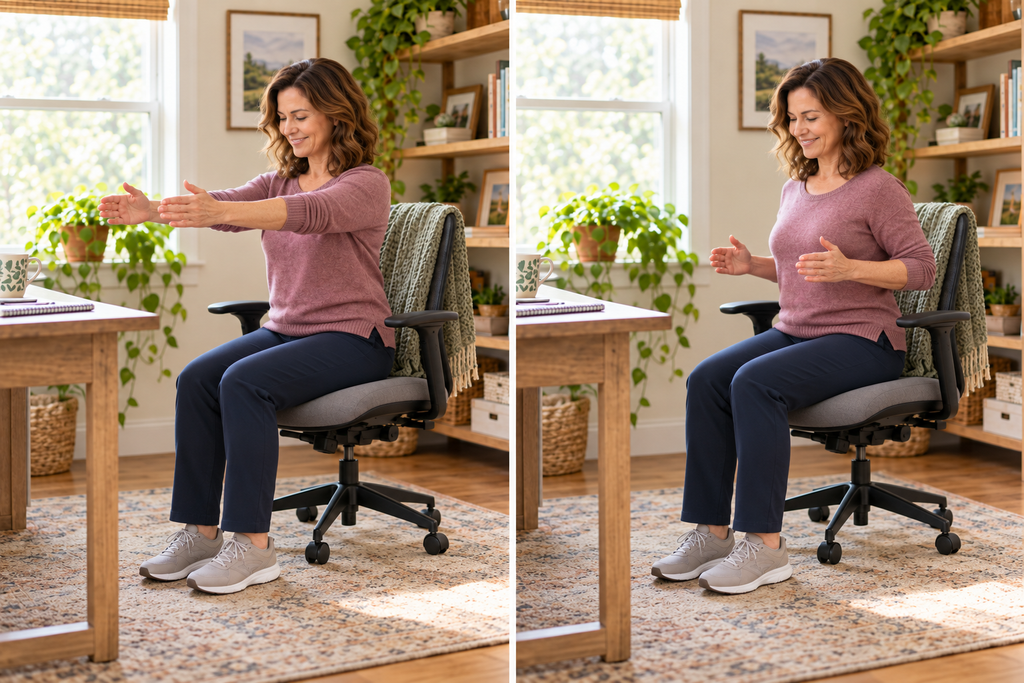
This move is simple but satisfying after a long spell of typing. Stand or sit upright, extend your arms forward at a comfortable height, and then draw your elbows gently toward your sides. Think of opening and closing the space across your chest and upper back rather than yanking your elbows behind you.
Keep your shoulders down instead of letting them creep toward your ears. Use a slow, controlled rhythm, and perform the movement with your elbows bent from the start if straightening your arms doesn’t feel comfortable.
It’s a useful desk-adjacent option because you can do it without getting on the floor, changing clothes, or finding a quiet corner of the house. That matters when your schedule is packed and the kitchen table is also serving as your office, mail station, and mysterious crumb collection zone.
Like the other ideas here, this is a gentle activity break—not a treatment for pain or an instant posture fix. If you have persistent discomfort, numbness, weakness, or other concerning symptoms, speak with a health-care professional rather than relying on desk movements alone.
Why it stands out: The forward-and-back arm motion is easy to control and works well in the limited space around a desk chair.
6. Roll the Shoulders Forward and Backward
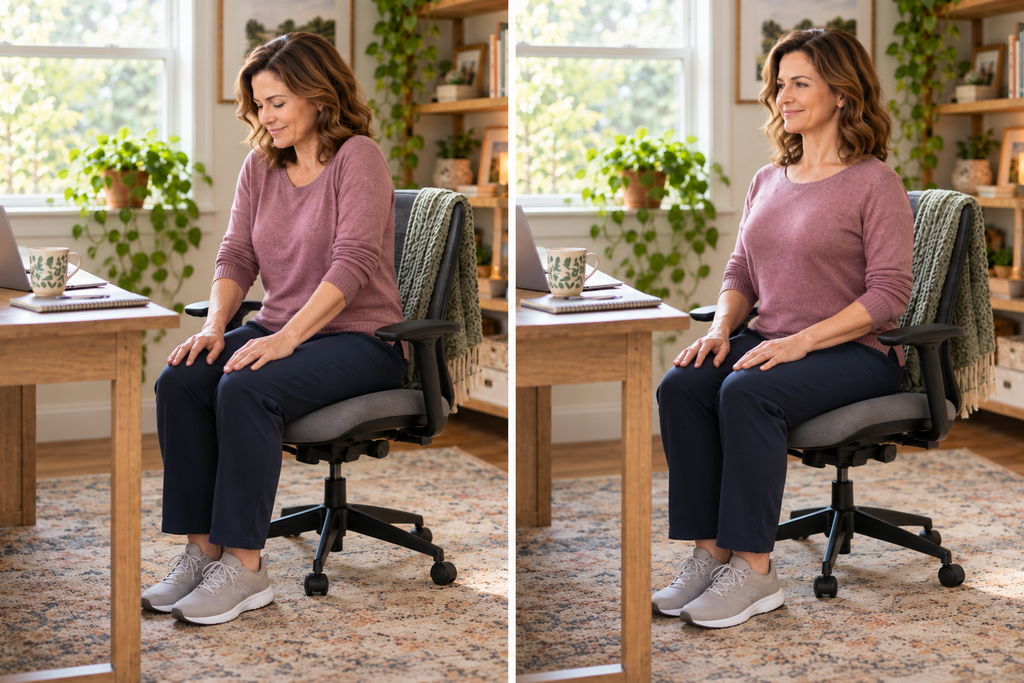
Shoulder rolls may look almost too simple to bother with, but that’s exactly why they’re useful during a busy day. You can do them seated or standing: Slowly lift your shoulders, roll them back and down, and then reverse direction if that feels comfortable.
Keep the circles gentle. Large, forceful rolls aren’t necessary, and neither is holding your breath while you do them. A few slow repetitions provide a quick change from staying in the same computer-working position, especially when you’ve been focused enough to forget your shoulders exist.
This is also one of the most discreet movement breaks available. It works while you’re waiting for a video call to begin, reading a long email, or pausing between tasks. No equipment is needed, which makes it realistic for small-space workers and anyone who doesn’t want a home office that resembles a fitness-equipment aisle.
OSHA’s computer workstation guidance recommends frequent short breaks from computer tasks to look away, stretch, stand, or walk. Shoulder rolls can be one easy part of that broader habit of changing position periodically.
Why it stands out: Shoulder rolls are a no-space, no-equipment option you can do almost anywhere without significantly interrupting your day.
7. Alternate Knee Lifts or Rise Onto Toes and Return to Heels
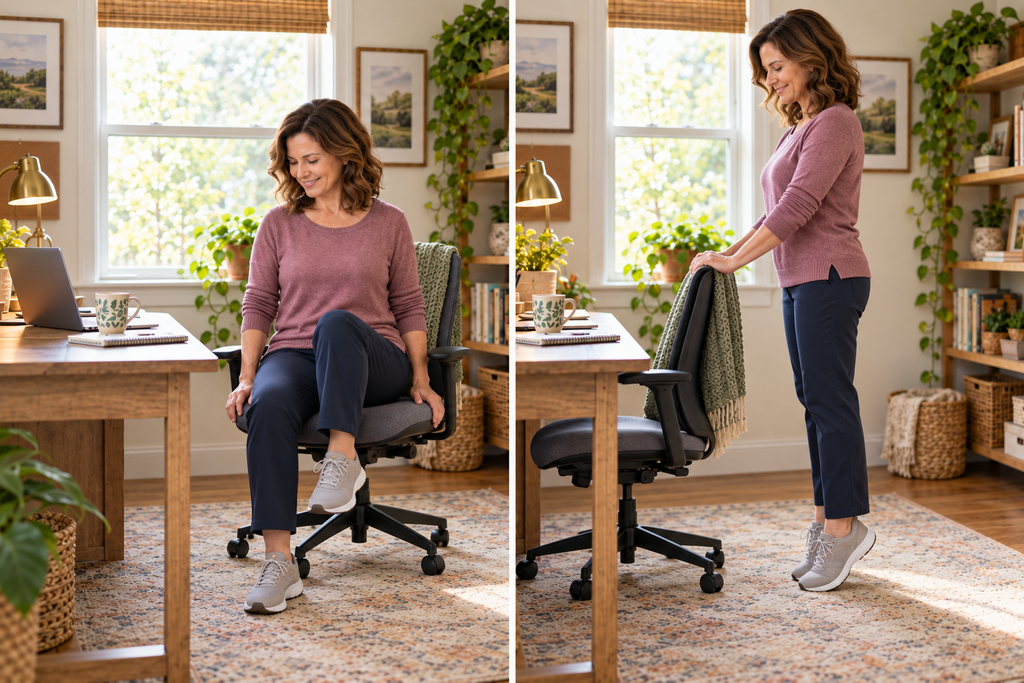
This final movement break gives you two flexible options. For alternating knee lifts, stand near a stable desk or chair and slowly raise one knee at a time to a comfortable height. For toe rises, gently lift your heels so you’re standing on the balls of your feet, then lower them with control.
Knee lifts can be a natural next step after marching in place, while toe rises may feel more manageable if you want to remain mostly in one spot. Neither movement needs to be big. A small, steady range is often the right call, particularly if you’re easing into more frequent movement breaks.
Balance matters here. Use a sturdy surface for support if needed, keep the area around your feet clear, and avoid rushing. If you feel unsteady, choose a seated arm movement instead. Adapting a movement is not “doing it wrong”; it’s simply making the break work for your body and home setup.
The CDC advises starting at a lower intensity and building gradually. That’s a sensible approach for low-impact movement at home, where the goal isn’t to finish a call sweaty and wondering why you made this harder than it needed to be.
Why it stands out: These two options let you choose between a gentle balance-focused move and a simple lower-leg movement without needing extra gear.
Final Thoughts
The best work-from-home movement break is usually the one you’ll actually take. Start with one or two comfortable moves between tasks, then build a small rotation that fits your schedule, space, and mobility. Even a brief pause can help break up a long stretch in one static computer posture.
For broader activity goals, the U.S. physical activity guidelines recommend 150 to 300 minutes of moderate-intensity aerobic activity each week, plus muscle-strengthening activity on two days. These quick breaks can contribute to a more active day, but stretching alone does not count as moderate- or vigorous-intensity aerobic activity. Keep the movements gentle, adapt as needed, and stop if anything hurts.