
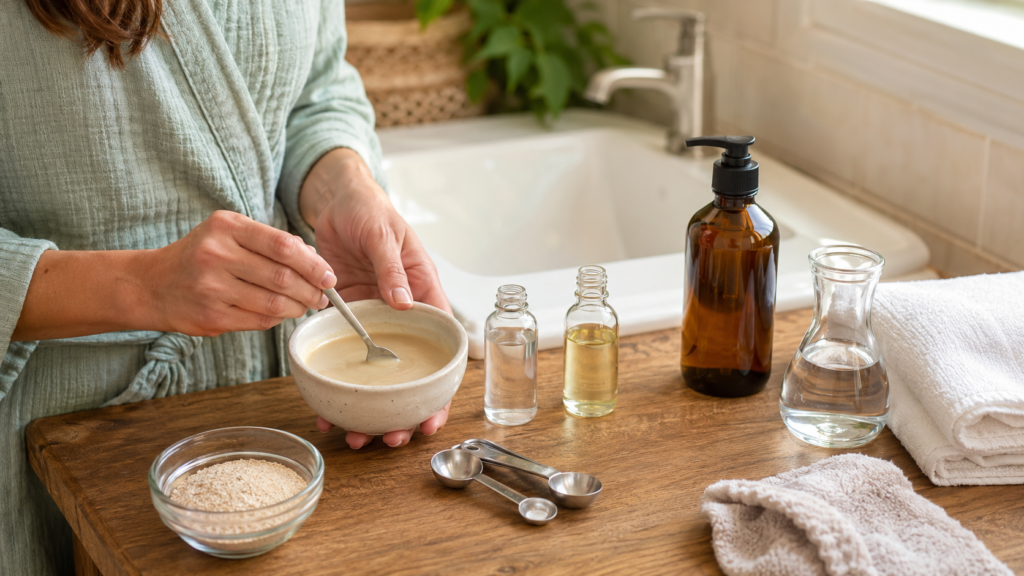
Making your own natural body wash can be a simple way to streamline your shower routine, especially if you prefer a short ingredient list and want to avoid heavily fragranced products. The key is keeping the project genuinely simple. A body wash does not need five oils, three extracts, and a tiny jar that will sit in the bathroom for six months collecting suspicious droplets.
The safest approach to DIY body wash is to make small, single-use batches. Once water, plant-based ingredients, or anything from the kitchen enters the mix, the formula can support microbial growth unless it contains a properly chosen preservative. That is why these recipes are designed to be mixed in a small bowl or cup right before use rather than stored in a pretty pump bottle indefinitely.
Affiliate disclosure: Some links in this article are affiliate links. If you make a purchase through an affiliate link, I may earn a commission at no additional cost to you. As an Amazon Associate I earn from qualifying purchases.
Start With a Simple, Skin-Friendly Setup
For basic natural body wash recipes, you do not need specialty equipment. A clean small bowl or cup, a spoon, and measuring spoons are enough.
The most useful base ingredient is unscented liquid castile soap. It creates lather, rinses away more easily than straight oils, and is widely available in grocery stores, pharmacies, and online. Because castile soap is concentrated, a little goes a long way.
A few practical ingredients can also add comfort or texture:
- Vegetable glycerin: Helps the wash feel less squeaky and adds a little slip.
- Finely ground colloidal oatmeal: Adds a soft, creamy feel, though it works best in a single-use mixture.
- Plain sunflower or jojoba oil: Useful in small amounts for a richer feel, particularly if your skin tends to feel dry after showering.
- Distilled water: A better choice than tap water when diluting soap, although it does not make homemade body wash shelf-stable.
Natural does not automatically mean gentle for everyone. Fragrance oils, essential oils, citrus extracts, and even some botanical ingredients can irritate sensitive skin. An unscented body wash may sound less exciting, but your skin is unlikely to complain about the lack of a “rainforest sunrise” scent.
A Basic Unscented Natural Body Wash
This is the most practical recipe if you want a straightforward cleanser with no added fragrance. It makes enough for one shower, so there is no need to worry about storage.
What you need
- 2 tablespoons unscented liquid castile soap
- 2 tablespoons distilled water
- 1 teaspoon vegetable glycerin
How to make it
Combine the castile soap, distilled water, and glycerin in a clean cup or small bowl. Stir gently rather than whisking aggressively; otherwise, you will create plenty of foam before the mixture reaches the shower.
Pour a small amount onto a wet washcloth, shower puff, or your hands, then work it over damp skin and rinse well. The mixture will be thinner than a store-bought gel body wash because commercial formulas often contain thickeners. That is normal. Keep the cup on a stable shower shelf rather than trying to balance it on the edge of the tub like a tiny science experiment.
The practical benefit here is control. You know exactly what is in the wash, and the simple mixture is easy to use and rinse away.
A Creamy Oat Body Wash for a Softer Feel
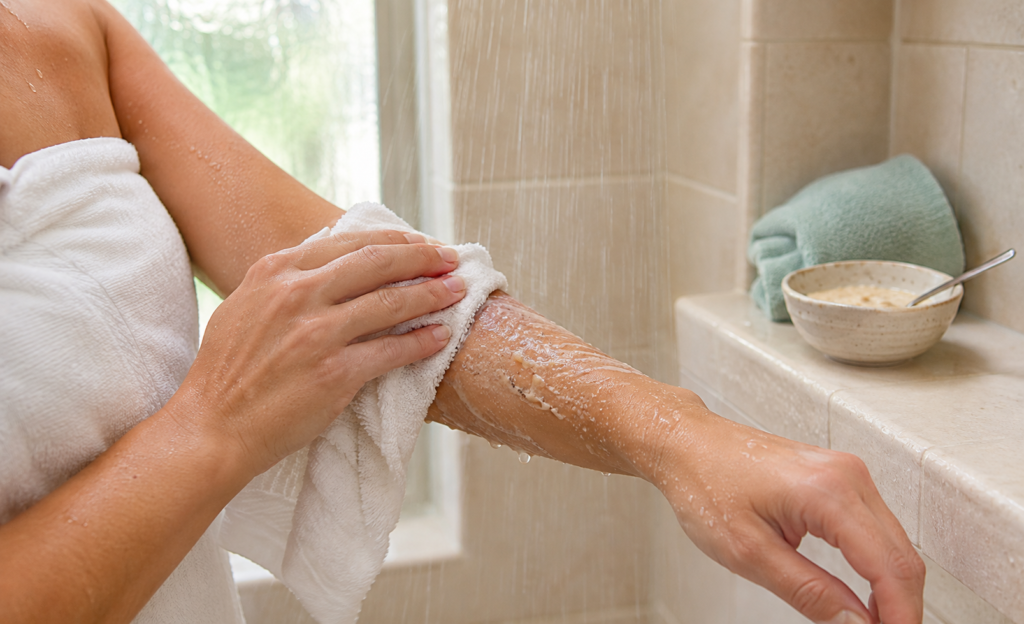
If you enjoy a body wash with a little more cushion, finely ground oatmeal can give a basic soap mixture a creamier texture. Choose colloidal oatmeal if possible. It is ground much finer than ordinary breakfast oats and mixes more smoothly with water.
What you need
- 2 tablespoons unscented liquid castile soap
- 1 tablespoon finely ground colloidal oatmeal
- 1 tablespoon distilled water
- 1 teaspoon vegetable glycerin
How to make it
Mix the oatmeal and water first, stirring until the mixture looks mostly smooth. Add the castile soap and glycerin, then stir gently until combined.
Use this body wash right away. Apply it with your hands or a soft washcloth, then rinse thoroughly. Because oatmeal can settle and leave residue, avoid sending large clumps down the drain. A quick rinse of the shower floor is worth the extra minute, especially if your tub has a textured surface where powdery ingredients like to linger.
This recipe is best if you prefer a creamy, low-lather cleanser. It is not the best choice if you want lots of bubbles or a very fast, no-fuss shower. In that case, the basic unscented version will be easier to use and clean up.
A Light Oil-Enhanced Body Wash
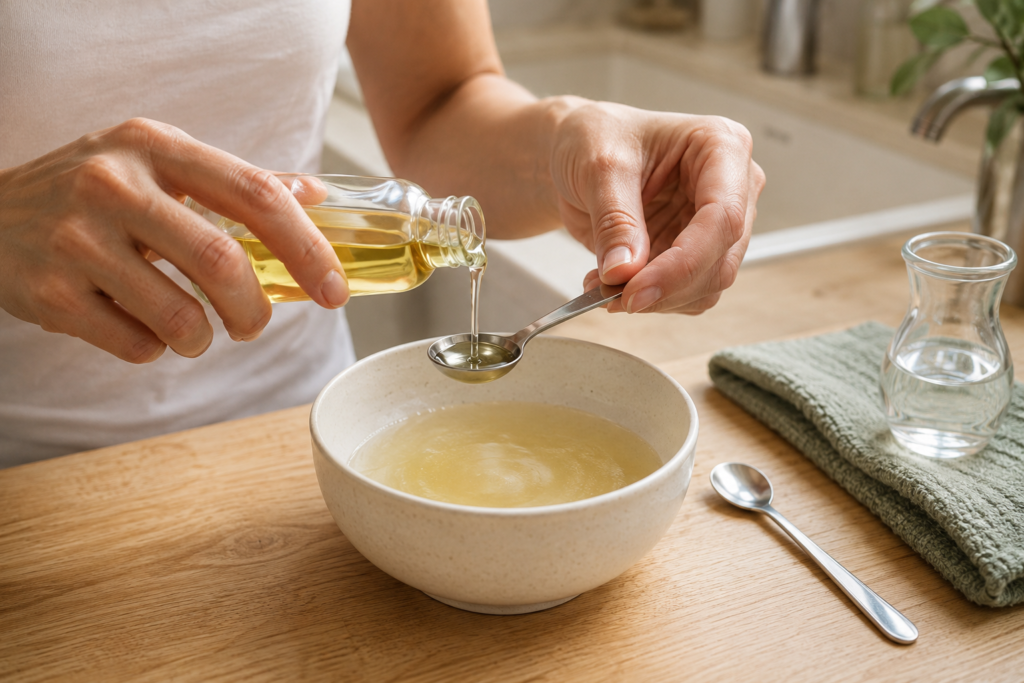
A little oil can make homemade body wash feel richer, but more is not necessarily better. Too much may leave a slippery shower floor and make the wash difficult to rinse away. Keep the amount modest and use the mixture immediately.
What you need
- 2 tablespoons unscented liquid castile soap
- 1 tablespoon distilled water
- 1 teaspoon jojoba oil or sunflower oil
- 1 teaspoon vegetable glycerin
How to make it
Add everything to a small cup and stir just before stepping into the shower. The oil may separate from the soap mixture—that is expected. Give it another quick stir or swirl before applying.
Use a washcloth or your hands to spread the mixture over wet skin, then rinse well. Rinse the tub or shower floor afterward to remove any remaining oil. This matters. A relaxing shower is great; an unexpectedly slick bathtub is not.
Jojoba oil is often chosen because it has a lighter feel, while sunflower oil is an accessible pantry option. If you use a kitchen oil, make sure it is fresh and properly stored. Oils can turn rancid over time, and a body wash is not where you want to discover that fact.
Keep Fragrance Optional
It can be tempting to add essential oils to every homemade body-care recipe, but they are entirely optional. Essential oils are concentrated plant extracts, not harmless drops of perfume, and they can cause irritation or allergic reactions.
Bramble Berry Oatmeal Milk Honey Fragrance Oil
For these simple body wash recipes, leaving essential oils out is the safest and easiest choice. They may not disperse evenly in a homemade mixture, which can expose your skin to concentrated droplets. Avoid applying essential oils to broken, freshly shaved, or irritated skin. Some citrus oils can also increase sensitivity to sunlight, depending on the oil and how it was processed.
An unscented formula lets your regular lotion, deodorant, or perfume do the heavy lifting on scent. You can also make your shower more pleasant with a clean towel, soft lighting, or music—no need to turn your soap recipe into a chemistry lab.
What Not to Add to Homemade Body Wash
Some popular DIY ingredients look appealing online but are not especially practical in body wash. Fresh fruit, milk, coconut milk, herbal tea, fresh aloe gel, and diluted honey can make a formula more difficult to preserve and clean up. When left in a warm, humid bathroom, mixtures containing these ingredients may spoil or support microbial growth.
Skip coarse sugar, coffee grounds, and large pieces of dried herbs, too. They can be abrasive, make a mess in the shower, and create drain cleanup you did not ask for.
If you want exfoliation, it is usually easier to use a separate washcloth, soft body brush, or gentle exfoliating glove occasionally, depending on what feels comfortable for your skin. That keeps your daily body wash simple and your shower drain less dramatic.
Storage, Cleanup, and Basic Safety
The easiest storage rule is this: make only what you plan to use that day. Small, single-use batches reduce contamination risk and waste while keeping the recipe manageable.
Do not store these water-based homemade body washes for weeks, even in a clean, capped container. Distilled water and clean equipment can reduce contamination, but they do not make an unpreserved formula shelf-stable. Discard any leftover mixture rather than saving it in the shower.
It is also smart to patch-test unfamiliar ingredients. Apply a small amount of the finished mixture to a limited area of skin, rinse it off, and pay attention to how your skin reacts. If it stings, burns, causes redness, or feels uncomfortable, stop using it.
Finally, liquid castile soap can be drying for some people, particularly in colder weather or after long, hot showers. If your skin feels tight afterward, use less soap, lower the water temperature, shorten your shower, or follow with a plain, fragrance-free moisturizer.
Final Thoughts
Simple natural body wash recipes work best when they stay simple: a soap base, a few optional additions, and a small batch mixed when you need it. There is no prize for creating a bathroom shelf full of half-used jars.
Start with the basic unscented version, then try adding oatmeal or a small amount of oil for a different texture. Homemade body wash should make your routine more pleasant—not give you another container to clean, store, and wonder about later.