
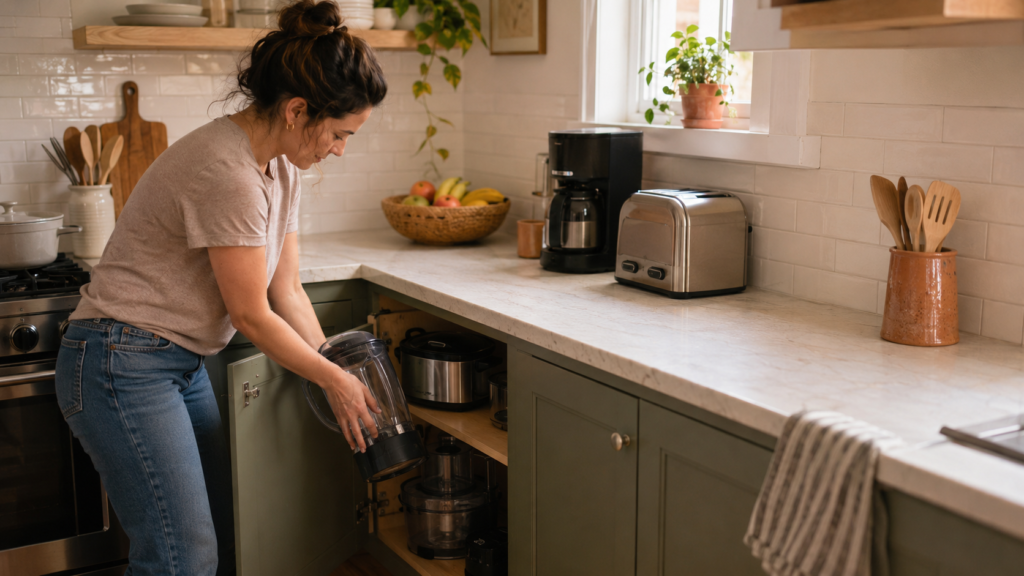
A small kitchen counter can become crowded surprisingly fast. One coffee maker turns into a coffee station, a toaster collects crumbs in the corner, and suddenly there’s nowhere to chop an onion without balancing a cutting board over the sink. The goal isn’t to make your kitchen look like no one cooks there. It’s to make the space work for the way you actually cook.
The best things to keep on the counter are items you use often enough to justify their footprint. Everything else can earn a cabinet, drawer, shelf, or pantry spot. That little bit of editing makes everyday cooking easier, speeds up cleanup, and keeps your kitchen from feeling like a game of appliance Tetris.
Affiliate disclosure: Some links in this article are affiliate links. If you make a purchase through an affiliate link, I may earn a commission at no additional cost to you. As an Amazon Associate I earn from qualifying purchases.
Start With the Counter Space You Actually Have
Before deciding what stays out, take a realistic look at your usable workspace. A counter next to the stove may be technically available, but if it gets splattered with oil every time you sauté, it’s not the ideal home for a blender base or bowl of fruit. Likewise, the strip beside the sink is often valuable for washing and prep, even if it seems like a convenient place to park dishes forever.
In a small kitchen, it helps to think of the counter in zones:
- Prep zone: Ideally near the sink, where you can wash produce, chop ingredients, and set out mixing bowls.
- Cooking zone: The area closest to the stove, useful for utensils and ingredients you need while cooking.
- Drink zone: Often where a coffee maker, electric kettle, or water filter works best.
- Landing zone: A small designated place for groceries, mail, or items that need to be put away—not a permanent pile with its own weather system.
Try to preserve at least one clear section for meal prep. It doesn’t need to be huge. Even a cutting-board-sized open area makes weeknight cooking feel much more manageable. If every inch is occupied by appliances and containers, putting together a simple meal becomes unnecessarily annoying.
Keep Daily-Use Appliances Within Reach
Countertop appliances deserve space when they genuinely earn it. The simplest rule is this: If you use an appliance most days or several times a week, keeping it out can make sense. If it comes out twice a year for a specific recipe, it probably doesn’t need front-row seating.
A coffee maker is the classic example. If coffee is part of your morning routine, storing it in a cabinet between uses creates extra steps for little benefit. The same can apply to an electric kettle if you regularly make tea, oatmeal, instant soup, or pour-over coffee.
A toaster may also be worth keeping on the counter, especially in a household where toast, bagels, frozen waffles, or reheated pastries are frequent breakfast players. Leave enough clearance around it, follow the manufacturer’s placement guidance, and empty the crumb tray regularly. Crumbs have an impressive ability to migrate into places they were never invited.
A blender, stand mixer, air fryer, or food processor is more situational. These can be helpful tools, but they take up substantial physical and visual space. Consider keeping one out only if it matches your regular cooking habits:
- Keep a blender out if you often make smoothies, sauces, soups, or dressings.
- Keep a stand mixer out if you bake regularly and have a stable corner where it won’t interfere with prep space.
- Keep an air fryer out if it’s one of your primary cooking tools, not just something you rediscover when you want crispy leftovers.
- Store a food processor away unless you use it frequently for chopping, shredding, dips, doughs, or sauces.
If you’re uncertain, put an appliance away for two weeks. If you pull it out repeatedly, it has made its case. If you forget it exists, the cabinet was probably the right call.
Keep the Cooking Basics Handy, But Don’t Build a Countertop Store
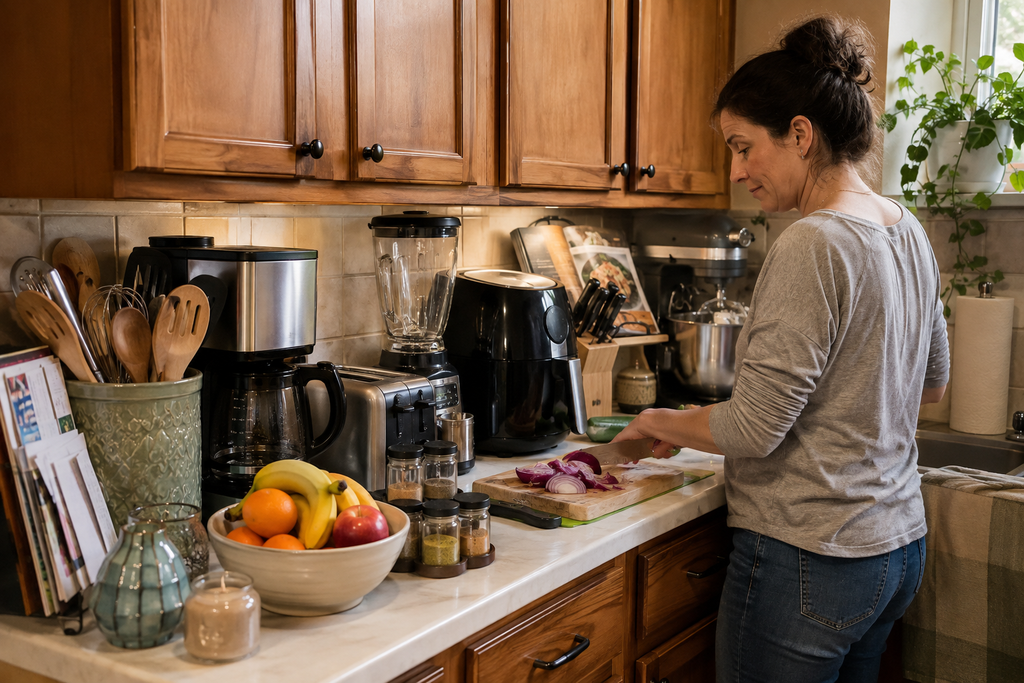
A few cooking essentials can make your kitchen more functional when they stay close to the stove. A small container of frequently used utensils—such as a spatula, wooden spoon, tongs, and ladle—can save you from rummaging through a drawer while something is sizzling.
Choose a utensil crock or holder that’s easy to wash and large enough that the tools don’t jam together. Overstuffed containers defeat the purpose; you’ll still be digging around for the one turner that isn’t coated in mystery residue from last Tuesday’s pasta night.
A small bottle of cooking oil can also be practical if you use it regularly. Keep it away from direct heat and sunlight when possible, and wipe the outside occasionally. Oil bottles tend to develop a slippery film over time, particularly near a busy range.
Salt and pepper can stay out if you use them constantly, but avoid displaying an entire seasoning collection unless your kitchen has generous counter space. Spices lose quality faster when exposed to heat, humidity, and direct sunlight, so the area above or beside the stove is usually not the best long-term storage spot. A drawer, cabinet, or pantry shelf offers more protection and makes cleaning around the cooktop easier.
The same goes for knife blocks. They can be convenient, but they occupy valuable space and collect dust and crumbs around the slots. If counter space is tight, a drawer insert, a wall-mounted magnetic strip installed safely away from small children, or cabinet-mounted knife storage may be a better fit. Whatever method you use, make sure the blades are protected and dry rather than loose in a drawer.
A Few Food Items Belong Out—With Some Boundaries
Not all food needs to disappear into the pantry. A fruit bowl can be useful and inviting, especially for produce that can ripen at room temperature, such as bananas, avocados, peaches, pears, and tomatoes. Seeing fruit may also make you more likely to eat it before it becomes an accidental science project.
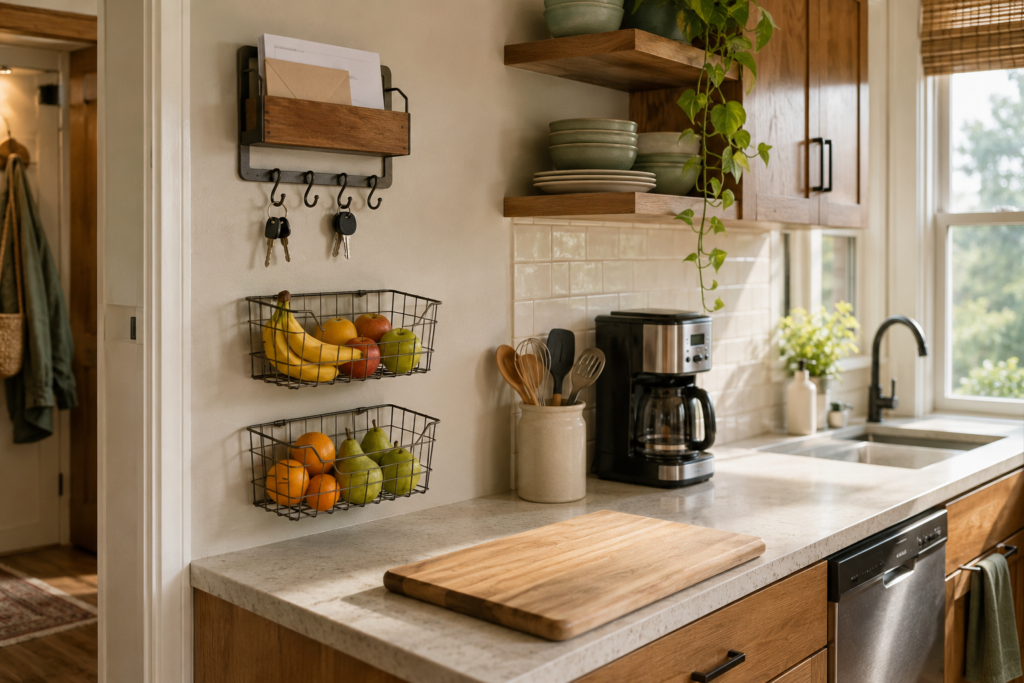
That said, a fruit bowl or wall-basket isn’t the right answer for every piece of produce. Many fruits last longer in the refrigerator once ripe, and some release ethylene gas that can speed up ripening in nearby items. Bananas, apples, pears, and avocados are common ethylene producers. Separating them from ethylene-sensitive produce can help reduce premature spoilage.
Potatoes, onions, garlic, and winter squash are generally best kept in a cool, dry, dark place with airflow. The counter may work only if it stays relatively cool and out of direct sunlight. Store potatoes and onions separately, as keeping them together can shorten their storage life. A ventilated basket or bin in a pantry or suitable cabinet is usually more practical than a prominent counter display.
Bread can stay on the counter in a bread box or bag if you’ll use it within a few days. Keep it dry and away from heat. For longer storage, freezing bread is often more practical than refrigerating it, which can cause it to stale faster. Sliced bread can usually be toasted straight from frozen, one of those small kitchen wins that feels oddly satisfying.
Store Away the Appliances With Occasional Jobs
Small kitchens benefit from being honest about “someday” tools. A waffle maker, panini press, slow cooker, rice cooker, ice cream maker, and electric griddle may all be useful, but usefulness alone doesn’t mean they need to live on the counter.
Store occasional appliances where you can still reach them without an archaeological dig. A lower cabinet, pantry shelf, or labeled bin works well for heavier pieces. If lifting a bulky appliance from a high shelf feels awkward or unsafe, choose a lower spot instead. Convenience matters, but so does not dropping a slow cooker on your toes.
Before putting an appliance away, let it cool completely, clean it according to its care instructions, and dry all removable parts thoroughly. Trapped moisture can lead to unpleasant odors or mildew, particularly in appliances with lids, seals, or narrow crevices.
It’s also worth keeping cords tidy. A simple hook-and-loop strap, built-in cord wrap, or loose loop secured with a reusable tie can prevent the cabinet from turning into a knot of power cords and grudges.
Move Paper, Packaging, and Decorative Extras Off the Work Surface
Some counter clutter has nothing to do with cooking. Mail, school papers, charging cables, prescription bottles, reusable shopping bags, and unopened packages often land in the kitchen because it’s the center of household traffic. Understandable. Still not helpful when you need room to roll dough.
A small tray can create a temporary landing spot for items that genuinely need attention soon. The key word is temporary. Sort it regularly so it doesn’t become a decorative basket of postponement.
Decor can also take up more room than expected. A candle, oversized vase, cookbook stand, faux plant, framed sign, and decorative tray may each seem harmless, but together they can consume the last usable stretch of counter. In a small kitchen, one or two decorative elements are usually enough. A bowl of fruit, a small plant placed safely away from the stove, or a favorite ceramic utensil holder can add warmth without sacrificing function.
Cookbooks are best stored on a shelf unless you actively use one throughout the week. If you like cooking from a book, pull it out for the recipe and return it when you’re done. That also protects it from splashes, flour dust, and the inevitable sauce drip.
Make Cleaning Easier by Leaving Some Breathing Room
An uncluttered counter isn’t just about appearances. It’s easier to clean thoroughly, which matters when you handle raw meat, eggs, unwashed produce, or messy ingredients. A crowded surface makes it harder to wipe up spills promptly and easier for crumbs, grease, and moisture to collect behind appliances.
Before preparing food, clear away nonessential items. Wash your hands, clean the counter, and use separate cutting boards for raw meat and ready-to-eat foods, or wash boards thoroughly between uses. Don’t put grocery bags, phones, or mail in the middle of your prep area. Those items travel through the world collecting whatever the world has to offer, and your dinner doesn’t need to meet all of it.
For everyday maintenance, wipe the counter after cooking and periodically move countertop appliances to clean underneath them. Check the manufacturer’s instructions before using cleaning products on appliance exteriors, natural stone, wood, or specialty finishes. A damp cloth and mild dish soap are often enough for routine messes, followed by a dry cloth where needed.
Let Your Kitchen Habits Decide
There isn’t one perfect list of what to keep on the counter in a small kitchen. If you bake bread every weekend, you may want a stand mixer within reach. If you mainly make simple stovetop meals, you may get more value from a clear prep area, a utensil holder, and a kettle.
Before an item claims permanent counter space, ask a few practical questions: Do you use it at least weekly? Is it difficult or unsafe to retrieve from storage? Does it make cooking easier enough to justify the space it takes? Can you clean around it without a hassle?
If the answer is mostly no, store it away. That doesn’t mean you made a bad purchase or need to get rid of it. It simply means your counter has a more important job.
Final Thoughts
A small kitchen works better when the counter supports your next meal rather than displaying every tool you own. Keep out the things that make your daily routine smoother, and give everything else a clean, accessible home.
The goal isn’t a bare showroom kitchen. It’s a kitchen with enough room to make coffee, chop vegetables, plate dinner, and maybe set down a grocery bag without triggering a minor avalanche.