
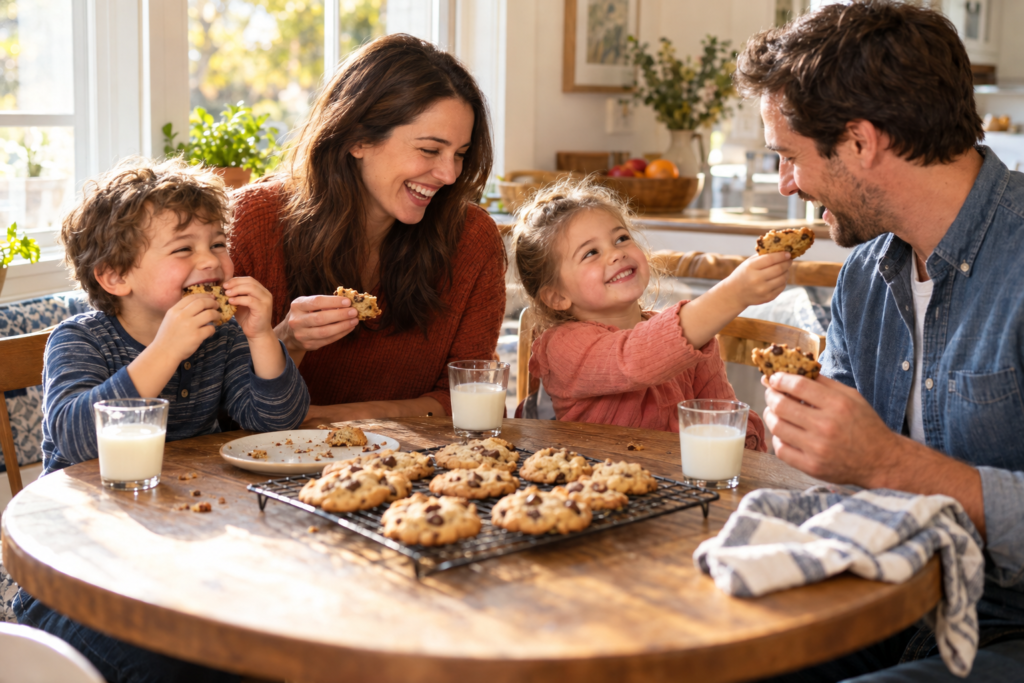
Baking with a preschooler is rarely a tidy, silent activity. There may be flour on the counter, one sprinkle in a sock, and a very serious debate over whether three blueberries count as “a lot.” But simple baking projects can give your child a real role in the kitchen without turning the afternoon into a complicated production.
The best baking projects for preschoolers keep the child-friendly jobs clear: pouring premeasured ingredients, stirring in a sturdy bowl, placing paper liners, spooning batter with help, and decorating treats after they’ve fully cooled. Adults handle the oven, hot pans, sharp tools, electric mixers, and anything involving hot sugar or glaze.
Along the way, baking creates natural moments to talk about measuring, counting, new words, and what happens when ingredients go into the oven. The goal isn’t a picture-perfect batch of cupcakes. It’s a shared kitchen activity with a snack at the end, which is honestly a pretty good deal.
Set Up the Kitchen for Fewer Spills and More Helpful Hands
A little setup makes preschool baking calmer for everyone involved. It also helps your child focus on one task at a time instead of trying to reach over a bowl, a bag of flour, and the family dog, who has suddenly developed a deep interest in pastry.
A child-height table is often the simplest workspace. If your child will stand at the counter, use a wide, secure learning tower or non-slip stool designed for children, with an adult remaining beside them. Place a damp kitchen towel or non-slip mat beneath a wide mixing bowl so it is less likely to slide while your child stirs. A larger bowl is usually more useful than a cute child-size one; it gives ingredients room to stay inside when the stirring gets enthusiastic.
Before calling your helper into the kitchen, measure ingredients into small cups or bowls. This lets them enjoy the satisfying pour without needing to manage a heavy flour canister or a full carton of milk. Small prep bowls, measuring cups with handles, a silicone spatula, and a large spoon are the essentials. A child-size apron, silicone baking mat, or squeeze bottle for frosting can be handy, but they are optional conveniences—not requirements for a happy baking day.
Keep the project short enough to suit the moment. One bowl, one pan, and one decorating step is plenty. A boxed mix can be a perfectly practical choice, especially if the point is participation rather than making every ingredient from scratch.
Before beginning, build in a simple routine: wash hands with soap and water for at least 20 seconds. Wash them again after handling raw eggs, and clean utensils and surfaces that touched raw egg before using them for anything else. The USDA’s food-safety guidance on cleanliness in the kitchen is worth keeping in mind, particularly when little hands are involved.
Banana Muffins Make Pouring and Stirring Feel Manageable
Banana muffins are a friendly first project because many recipes come together in one bowl and bake in individual portions. They also don’t need frosting to feel finished, which means less cleanup when you’re short on time.
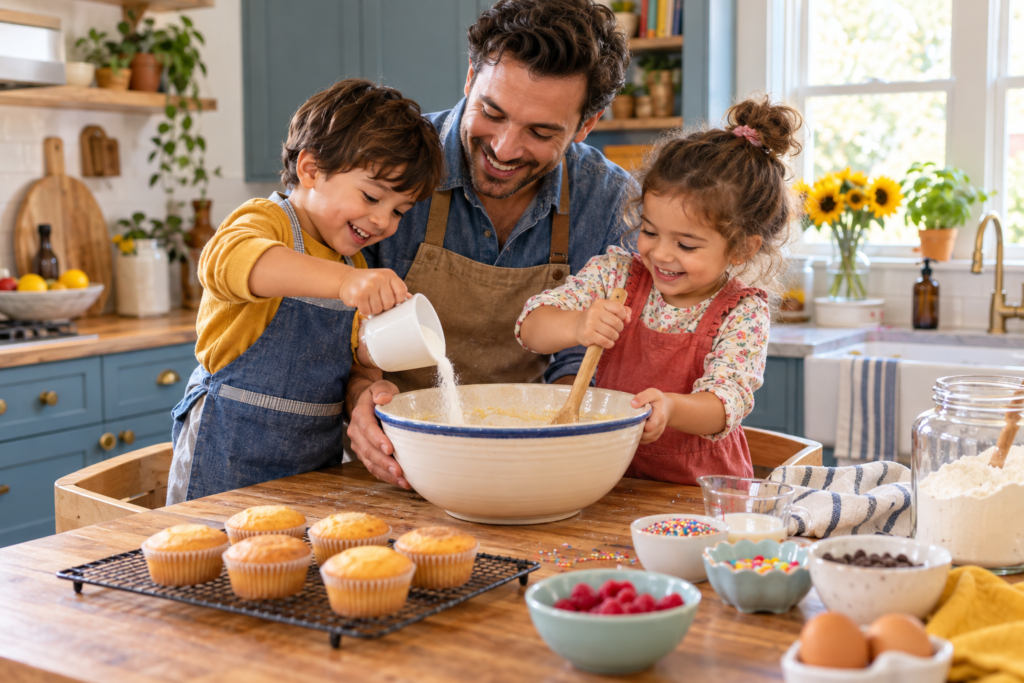
An adult can mash ripe bananas ahead of time, measure the ingredients, and prepare the muffin tin. Your preschooler can then help with several low-risk steps:
- Pour premeasured dry ingredients into the bowl
- Add mashed banana and other measured ingredients
- Stir with a large spoon or silicone spatula
- Place paper liners into the muffin pan
- Sprinkle a small amount of oats, cinnamon sugar, or finely chopped soft fruit on top, if the recipe allows
Give your child a simple instruction such as, “Stir until the white flour mostly disappears.” There is no need to demand perfectly smooth batter. In fact, stopping before the batter is overmixed is often a better outcome than turning stirring into a 10-minute upper-body workout.
The adult should fill the muffin cups or closely guide the spooning if you want your child to participate. Once the pan is ready, the adult should carry it to the oven and handle it while it’s hot. Let the baked muffins cool before serving or storing.
Place cooled muffins in an airtight container. If they won’t be eaten within a couple of days, freezing some can prevent the familiar “Why did we make 12?” situation. Separate layers with parchment or wax paper to avoid a sticky pileup.
No-Fuss Cookies Give Kids a Clear Decorating Job
Cookies can be especially satisfying for preschoolers because the transformation is easy to see: dough goes in, cookies come out, decorations happen. For a low-stress version, use a simple drop-cookie recipe, refrigerated dough, or a mix that does not require complicated shaping.
Preschoolers can pour measured ingredients into the bowl and help stir with a sturdy spoon. Once the raw dough is ready, the adult can portion it onto the lined baking sheet. Save the child’s biggest job for after the cookies have baked and cooled: decorating. Wash hands after handling the raw dough, and remind your child that tasting waits until the cookies are baked.
The baking stage belongs entirely to the adult. Keep children away from the open oven, hot baking sheets, and dangling appliance cords. The American Academy of Pediatrics recommends assigning kitchen tasks based on a child’s abilities and keeping young children supervised around kitchen hazards. Its guidance on cooking with children is a useful reminder that helping does not need to include every step.
Once the cookies are fully cooled, decorating becomes the main event. Offer two or three choices rather than a full bakery-counter spread. For example, set out a small bowl of frosting, a few spoonfuls of sprinkles, and finely crushed freeze-dried fruit or cereal. A butter knife with a rounded edge can work for spreading soft frosting when an adult is nearby, though a small spoon or silicone spatula may be easier for many children.
Skip hard, round, gummy, or chewy candy decorations for younger preschoolers. The CDC identifies foods such as hard candy, jelly beans, gumdrops, caramels, and gummy candies as potential choking hazards for young children. Soft frosting, finely crushed toppings, and sprinkles used lightly are better options. You can review the CDC’s choking-hazard guidance when planning toppings.
Cupcake Decorating Lets Preschoolers Be the Finishing Crew
Cupcakes offer the most obvious decorating payoff, but they work best when you separate baking day from decorating day—or at least take a generous cooling break between the two. Hot cupcakes and frosting are a slippery, melty mess, and nobody needs that kind of drama before lunch.
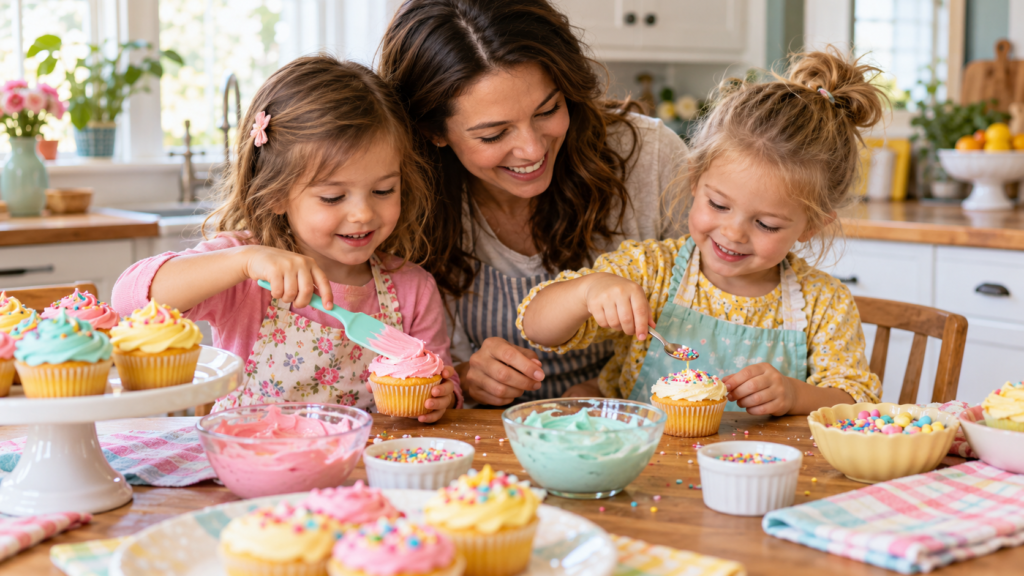
Bake the cupcakes yourself or let your child help with the low-risk mixing and pouring steps, then handle the oven and hot pan yourself. Allow the cupcakes to cool completely before decorating. You can store unfrosted cupcakes in an airtight container if you plan to decorate them later. This approach can make the activity more realistic for a busy afternoon: the baking happens earlier, while the decorating happens when your child is ready to help.
For preschool-friendly decorating, keep it simple:
- Spread frosting with a small spoon or blunt spatula
- Add sprinkles by pinching them between fingers
- Press small pieces of soft fruit onto the frosting
- Use a squeeze bottle of frosting with adult help
- Arrange a few mini chocolate chips or finely crushed cookie crumbs on top
A piping bag can be fun, but it is not essential. It also tends to create impressive frosting piles in one spot, which is charming once and less charming on the fourth cupcake. A spoon works just fine.
If you use store-bought frosting, mixes, or toppings, check the label each time you buy them. The FDA notes that the full ingredient list matters for identifying major allergens because a separate “Contains” statement is not required on every package. For a child with a diagnosed food allergy, follow the family’s established medical or allergy plan rather than improvising substitutions. The FDA’s food-allergy label guidance can help you know what to look for.
Fruit Crisp Is a Good Choice for Gentle Mixing and Topping
A fruit crisp is less about precise decorating and more about pouring, stirring, and scattering. It is a nice option when you want a warm baked dessert without frosting, piping bags, or a countertop that looks like a sprinkle factory afterward.
The adult can wash and cut the fruit, since knives are not a preschool task. Apples, berries, peaches, or another fruit suitable for your recipe can work. Your child can help pour the prepared fruit into a baking dish and stir together an oat topping in a bowl.
The topping is often where preschoolers can have the most fun. Premeasure oats, flour, sugar, and spices into separate small containers, then let your child pour them in. If the recipe uses softened butter, an adult can add the softened butter, then the child can use a sturdy fork or pastry blender with close supervision. Because the topping contains raw flour, keep little hands out of the mixture and wash hands and surfaces after preparation.
Your preschooler can scatter the crumble topping over the fruit while you make sure the dish goes into and comes out of the oven. Let the crisp cool before serving; fruit fillings hold heat longer than they look like they should. It is one of those kitchen facts that feels mildly rude but is useful to remember.
Store leftover crisp in a covered container in the refrigerator. Reheat only the portion you plan to serve, then let it cool to a comfortable eating temperature before offering it to your child.
Keep Raw Batter Off the Menu
It can be tempting to treat batter tasting as the traditional reward for helping bake. For preschoolers, it is better to make the finished treat the reward instead.
Raw flour is not typically treated to kill germs, and raw batter can also contain uncooked eggs. FoodSafety.gov advises against eating raw dough or batter, and children under 5 are among the groups at higher risk from foodborne illness. A cheerful “We taste after it’s baked” rule keeps the message simple and consistent.
If your child wants a kitchen job while waiting for the oven timer, try one of these instead: wipe the table with a damp cloth, count cupcake liners, choose a serving plate, or help put unopened ingredients away. They still get to be part of the process without hovering near a hot oven door.
Final Thoughts
The most successful baking projects with preschoolers are usually the ones that leave room for small imperfections. A lopsided muffin, uneven frosting, or extremely sprinkle-heavy cookie still counts as a finished project—and often becomes the one your child is most proud to serve.
Keep the tasks appropriate for your child’s abilities, supervise closely, and handle the heat, sharp tools, appliances, and hot pans yourself. Choose recipes with a few clear jobs your child can genuinely do. That is enough for a sweet, useful afternoon in the kitchen.