
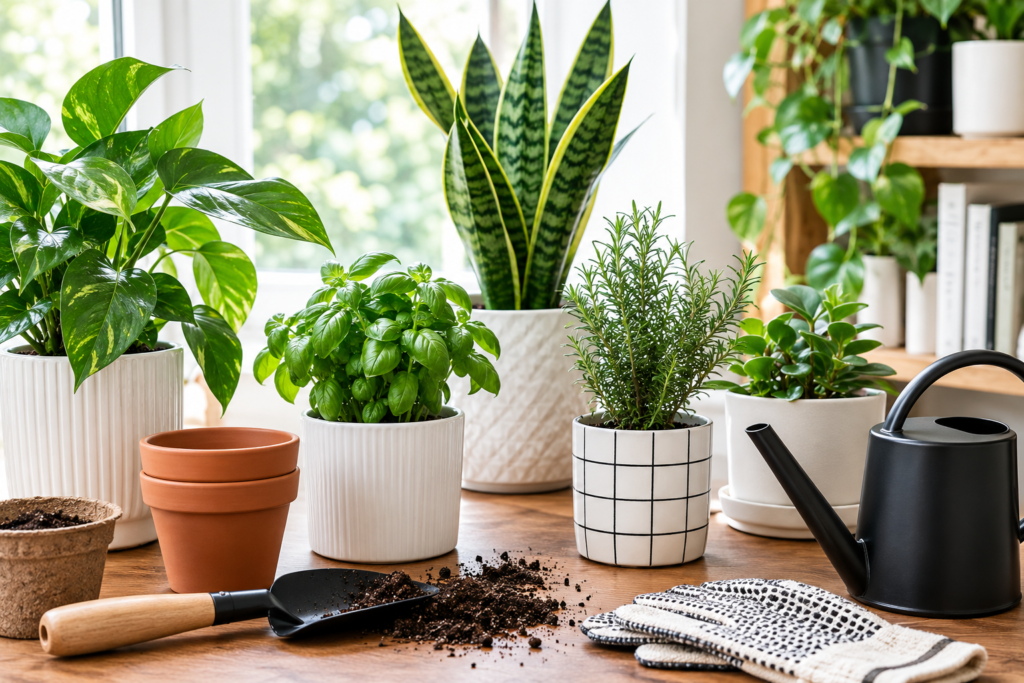
Bringing a bit of greenery indoors is a popular way to enhance living spaces while also connecting with nature. Indoor gardening offers a rewarding experience that combines aesthetics, fresh air, and even a touch of homegrown flavor for those who cultivate herbs or edible plants, and this indoor gardening guide will help you get there. For beginners, starting an indoor garden might seem intimidating, but with the right guidance, it can become an enjoyable and manageable hobby.
Indoor gardening is more than just placing a few pots by a window; it involves understanding the unique needs of indoor plants, including light, water, soil, and space requirements. Whether it’s a sunny kitchen windowsill with herbs or a decorative setup of tropical houseplants, the basics remain consistent. This guide aims to introduce practical ideas and tips to help beginners confidently grow plants in the comfort of their own homes.
Affiliate disclosure: Some links in this article are affiliate links. If you make a purchase through an affiliate link, I may earn a commission at no additional cost to you. As an Amazon Associate I earn from qualifying purchases.
Choosing the Right Plants for Indoor Gardening
Starting with the right plants is crucial for success in indoor gardening. Not all plants thrive equally well indoors, so selecting varieties that adapt to typical home environments makes the process smoother and more rewarding.
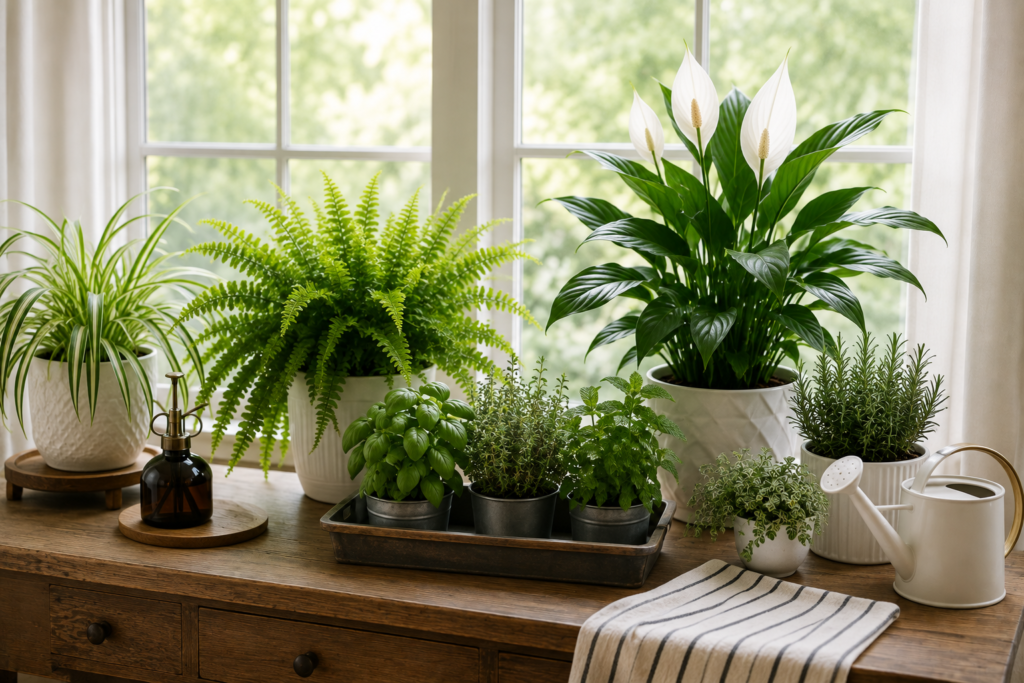
- Low-Maintenance Plants: For beginners, plants like snake plants, pothos, and spider plants are commonly recommended because they tolerate a range of light conditions and require minimal watering. These plants can survive occasional neglect, making them forgiving for new gardeners.
- Herbs for the Kitchen: Culinary herbs such as basil, mint, parsley, and chives are popular choices for indoor gardeners who want fresh ingredients at their fingertips. These herbs generally need bright, indirect sunlight and regular watering, fitting well on kitchen windowsills or small indoor garden shelves.
- Air-Purifying Plants: Many indoor plants also improve air quality by filtering toxins. Peace lilies and Boston ferns are examples that combine beauty with functional benefits, although they may need a bit more attention regarding humidity and watering.
Understanding each plant’s light and water needs helps avoid common pitfalls like overwatering or placing a shade-loving plant in direct sunlight.
Shop Lowe’s for all your herb needs
Setting Up Your Indoor Garden Space
Creating the right environment within the home is essential for healthy plant growth. Since indoor conditions differ from outdoor conditions, some adjustments and planning are advisable.
- Light Considerations: Most indoor plants prefer bright, indirect light. South- or east-facing windows typically provide suitable lighting. For rooms with limited natural light, investing in grow lights designed for indoor plants can supply the necessary spectrum to support photosynthesis.
- Containers and Drainage: Choosing pots with drainage holes is important to prevent waterlogged soil, which can cause root rot. If decorative containers lack drainage, placing a smaller pot with holes inside can help manage excess water.
- Soil Selection: Using a high-quality potting mix formulated for indoor plants ensures proper aeration and moisture retention. Avoid using garden soil, which may be too dense and introduce pests.
- Humidity and Temperature: Indoor plants often thrive best in stable temperatures between 65°F and 75°F. Some tropical plants benefit from occasional misting or a humidity tray, especially in drier indoor environments during winter.
Arranging plants thoughtfully based on their specific environmental needs maximizes their growth potential while keeping the setup manageable.
Watering and Maintenance Basics
Proper watering and regular maintenance are foundational to indoor gardening success. Both overwatering and underwatering are common mistakes that beginners encounter.
- Watering Frequency: Water needs vary by plant type, pot size, and environmental conditions. A general approach is to check the top inch of soil—if it feels dry, it’s time to water. Using a watering can with a narrow spout allows for controlled watering, minimizing mess and water waste.
- Fertilizing: Indoor plants benefit from occasional feeding during their growing season, typically spring through early fall. Using a balanced, water-soluble fertilizer diluted to half strength can support healthy growth without overwhelming the plants.
- Cleaning and Pruning: Dust can accumulate on leaves, reducing light absorption. Gently wiping leaves with a damp cloth keeps plants healthy. Pruning dead or yellowing leaves promotes new growth and maintains an attractive appearance.
- Pest Prevention: Indoor plants can attract pests such as spider mites, aphids, and fungus gnats. Regularly inspecting plants and isolating any new additions can help prevent infestations. Simple treatments, such as insecticidal soap, are often effective and safe for indoor use.
Consistent care routines build confidence and encourage a thriving indoor garden.
Maximizing Space with Creative Indoor Gardening Ideas
Limited space is a common challenge for indoor gardeners, especially in apartments or smaller homes. Fortunately, there are plenty of clever ways to maximize greenery without overcrowding.
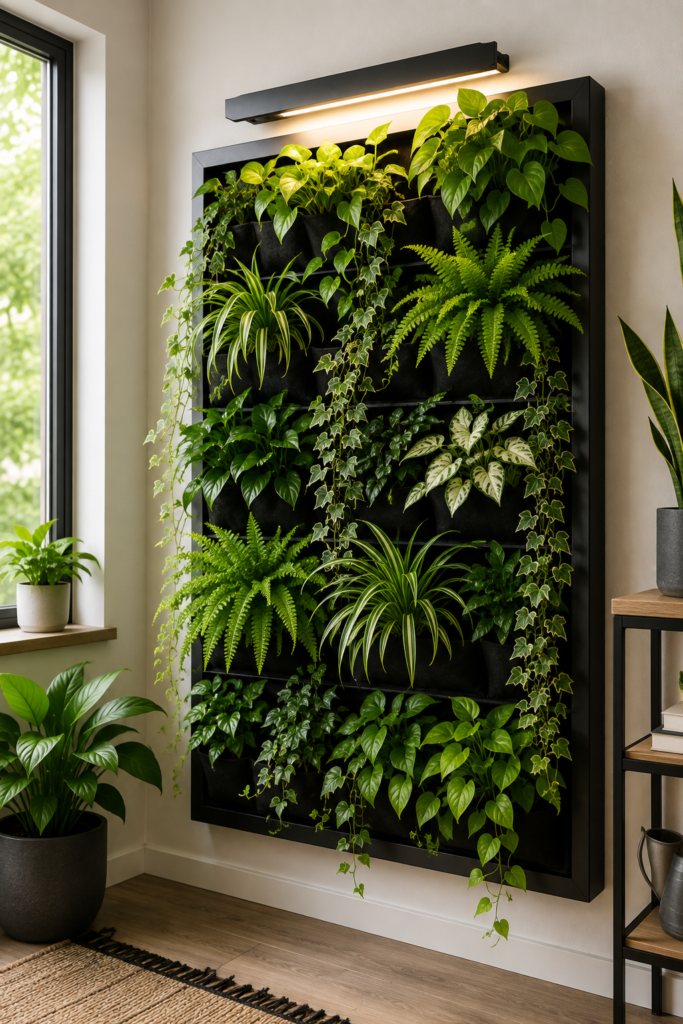
- Vertical Gardens: Wall-mounted planters or tiered shelves use vertical space, allowing multiple plants to flourish without occupying much floor space.
- Window Boxes and Hanging Planters: These options bring plants closer to natural light and add a dynamic visual element to rooms. Hanging planters also keep plants out of reach of pets or small children.
- Terrariums and Miniature Gardens: Small glass containers with succulents or air plants create low-maintenance, stylish displays that fit on desks or countertops.
- Herb Kits and Self-Watering Planters: For kitchen gardeners, compact herb kits often include everything needed to get started, such as seeds, soil pods, and containers. Self-watering planters reduce the frequency of watering by providing a consistent moisture supply.
These ideas accommodate different lifestyles and preferences while making indoor gardening accessible and enjoyable.
Understanding the Time and Effort Commitment
Indoor gardening requires a realistic understanding of the time and effort involved. While it can be a relaxing and rewarding hobby, it also demands regular attention.
- Daily or Weekly Checks: Spending a few minutes each day or week inspecting plants for watering needs, pests, or changes in growth helps prevent problems.
- Seasonal Adjustments: Light availability varies with the seasons, sometimes necessitating plant relocation or the use of artificial light. Growth rates may slow during winter, temporarily reducing care demands.
- Cleanup and Upkeep: Repotting plants every 1 to 2 years refreshes the soil and supports growth. Maintaining cleanliness around pots prevents mold or mildew buildup.
Recognizing these rhythms encourages patience and helps beginners avoid feeling overwhelmed.
Final Thoughts
Indoor gardening offers a wonderful blend of beauty, practicality, and a touch of nature in everyday life. For beginners, choosing adaptable plants, setting up the right environment, and establishing simple care routines are key steps toward success. By embracing space-saving ideas and understanding care requirements, indoor gardeners can enjoy lush greenery year-round, even in small or low-light homes.
This journey not only enhances living spaces but also brings a sense of accomplishment and calm. With practical guidance and a bit of patience, growing plants indoors becomes a fulfilling addition to everyday life, brightening rooms and routines alike.