
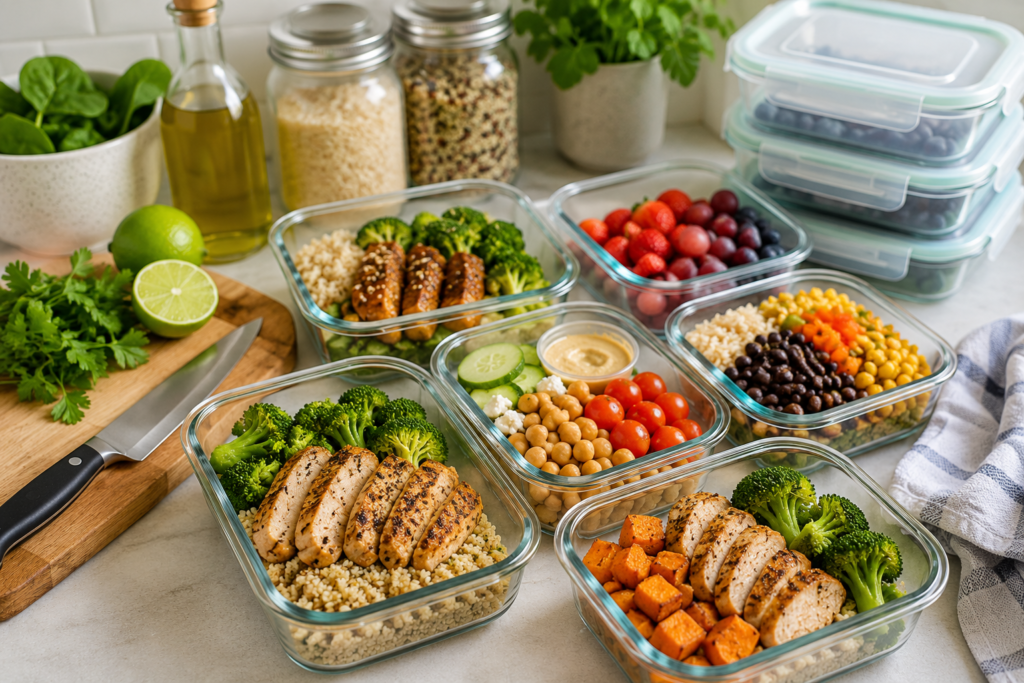
Meal prepping can make a busy week a whole lot easier. Instead of figuring out what to cook every night when you’re already hungry and tired, you can have meals—or at least some of the ingredients—ready to go ahead of time.
If you’ve never tried meal prepping, though, the idea of cooking several days’ worth of food at once can sound like a project in itself. The good news is that it doesn’t have to mean spending your entire Sunday in the kitchen or lining your refrigerator with a week’s worth of identical meals.
The best way to start is small. A little planning, a few reliable containers, and an hour or two of prep can save time later in the week, help you use the groceries you buy, and make it easier to reach for a home-cooked meal when life gets busy.
Affiliate disclosure: Some links in this article are affiliate links. If you make a purchase through an affiliate link, I may earn a commission at no additional cost to you. As an Amazon Associate I earn from qualifying purchases.
Understanding Meal Prep and Its Benefits
Meal prep simply means getting some of your cooking done ahead of time. You might prepare complete meals that only need reheating, or you might wash and chop vegetables, cook a batch of rice, roast some chicken, or prepare other ingredients that can be used in different meals throughout the week.
There’s no single right way to do it.
For some people, meal prep means packing several lunches on Sunday night. For others, it’s having enough ingredients ready to throw together a quick dinner after work. Either approach can reduce the time and decision-making involved in getting food on the table.
Planning ahead can also help you make better use of your groceries. When you know what you’re going to cook, you’re less likely to buy ingredients without a plan for using them. Prepping those ingredients before they disappear into the back of the refrigerator can also help cut down on food waste.
And perhaps the biggest benefit? When you’re hungry and already have something ready to eat, dinner becomes a lot easier.
Getting Started: Essential Tools and Containers
You don’t need a collection of fancy kitchen gadgets to start meal prepping. A few basics will handle most of the work.
- Quality Food Storage Containers: A good set of airtight containers makes storing individual meals and prepared ingredients much easier. Glass containers are durable and resist staining, while plastic containers are lighter and often easier to stack. Whatever you choose, check that they’re suitable for the refrigerator, freezer, microwave, or dishwasher based on how you plan to use them.
- Sharp Chef’s Knife and Cutting Board: You’ll do plenty of chopping during meal prep, so a dependable knife and sturdy cutting board are worth having. A sharp knife also makes prep faster and easier than struggling with a dull one.
- Measuring Tools: Measuring cups and spoons are handy for following recipes, making sauces, or portioning ingredients.
- Slow Cooker or Instant Pot (Optional): If you like meals that can cook with minimal attention, a slow cooker or pressure cooker can do much of the work while you prepare other ingredients.
- Mixing Bowls and Baking Sheets: Large bowls make it easier to toss and combine ingredients, while sheet pans are great for roasting vegetables, potatoes, and proteins in larger batches.
Start with what you already own before buying anything new. After you’ve meal prepped a few times, you’ll have a much better idea of which tools would actually make the process easier for you.
Planning Your Meals Without Making It Complicated
Good meal prep starts before you turn on the stove. Taking a few minutes to decide what you’ll actually eat during the week can save a lot of time—and prevent you from preparing food that nobody wants by Wednesday.
If you’re just getting started, keep it simple.
- Start with 2 or 3 Days: You don’t have to prepare an entire week’s worth of meals. Try a few lunches or dinners first and see how it fits into your routine.
- Choose Ingredients You Can Use More Than Once: Rice, quinoa, roasted vegetables, chicken, beans, tofu, and other basics can be combined in different ways, rather than locking you into the exact same meal every day.
- Build Balanced Meals: Try combining a protein, carbohydrate, vegetables, and a source of healthy fat. It doesn’t need to be complicated or perfectly portioned to be useful.
- Use Simple Meal Formulas: A grain or other base + protein + vegetables + sauce is an easy place to start. Change the sauce, seasoning, or toppings and the same basic ingredients can taste completely different.
- Choose a Regular Prep Time: Find a block of time that works with your schedule. That might be Sunday afternoon, a weekday evening, or even two shorter prep sessions during the week.
Before making your shopping list, take a quick look through the refrigerator, freezer, and pantry. Building a few meals around ingredients you already have can save money and keep forgotten groceries from going to waste.
Step-by-Step Guide to Meal Prepping
Once you’ve decided what you’re making, working in a simple order keeps the kitchen from turning into chaos.
- Create a Meal Plan: Decide which meals you want to prepare and how many servings you’ll need.
- Make a Shopping List: Write down the ingredients you don’t already have, including basics such as oils, spices, sauces, and seasonings.
- Do Your Shopping: Pick up your produce, proteins, grains, and other ingredients. Seasonal produce and sale items can be easy ways to keep costs down.
- Prepare Your Ingredients: Wash and chop produce, cook grains and proteins, and mix any sauces or dressings you’ll need.
- Assemble Your Meals: Divide complete meals into containers or store ingredients separately so you can mix and match them later. Keep dressings and other wet ingredients separate, as they can make food soggy.
- Store Everything Properly: Put the meals you’ll eat soon in the refrigerator and freeze appropriate portions you plan to keep longer.
- Label Your Containers: Adding the contents and date takes only a few seconds and saves you from playing “What’s in this container?” later.
You also don’t have to do every step at once. Even washing produce, chopping vegetables, or cooking one large batch of protein ahead of time counts as meal prep if it makes the rest of your week easier.
Storage and Food Safety Considerations
Making meals ahead of time also means paying attention to how they’re cooled, stored, thawed, and reheated.
- Refrigerate Promptly: Don’t leave cooked food sitting at room temperature for long periods. Shallow containers can help larger batches cool more quickly.
- Know How Long Food Keeps: Many cooked leftovers are generally refrigerated for about 3 to 4 days, although storage recommendations vary depending on the food.
- Freeze Meals You Won’t Eat Soon: Freezer-safe containers or bags are useful for portions you plan to save longer. Removing excess air can also help protect food quality in the freezer.
- Thaw Safely: The refrigerator is a convenient way to thaw frozen meals in advance. Some foods can also be safely thawed or reheated in the microwave.
- Reheat Thoroughly: Previously cooked foods should be reheated properly before eating. Stirring food during microwave reheating can help avoid cold spots.
- Prevent Cross-Contamination: Keep raw meat and poultry away from ready-to-eat foods, and clean cutting boards, utensils, counters, and your hands as you work.
Food safety recommendations can vary depending on what you’ve prepared, so check current guidance for specific foods when you’re unsure.
An Optional Tool for Freezer Meal Prep
If you start preparing larger batches or regularly freezing food, a vacuum sealer may be worth considering.
Vacuum Sealer Machine with Automatic Vacuum Sealer Bag Detection and Starter Kit
Vacuum sealing can be useful for portioning foods and reducing the amount of air around items stored in the freezer. It’s certainly not something you need to begin meal prepping, though. Regular freezer-safe containers and bags work just fine for getting started.
Keep Your Meal Prep From Getting Boring
Eating the exact same chicken-and-rice bowl five days in a row is one way to make yourself abandon meal prepping pretty quickly.
Instead, prepare a few basic ingredients that can work together in different ways.
- Make a batch of quinoa or rice that can become a bowl one night and a side dish the next.
- Roast several vegetables at once and pair them with different proteins.
- Change the flavor with different sauces, dressings, herbs, and seasonings.
- Keep some fresh ingredients—such as greens, avocado, herbs, or crunchy toppings—to add just before eating.
- Try flavors from different cuisines while using many of the same basic ingredients.
You don’t need five completely different recipes to create variety. Sometimes changing the seasoning or sauce is enough to make yesterday’s ingredients feel like a different meal.
Final Thoughts
Meal prepping doesn’t have to mean spending your entire Sunday cooking or eating the same lunch five days in a row. It’s simply a way to do a little work ahead of time so meals are easier when the week gets busy.
Start with two or three meals, pay attention to what actually saves you time, and adjust from there. You may discover that you love having complete meals ready to reheat—or that simply having vegetables chopped, a protein cooked, and a few basics ready to go is enough.
The best meal-prep routine isn’t the most impressive one. It’s the one that makes your week easier and that you’ll actually want to keep doing.