
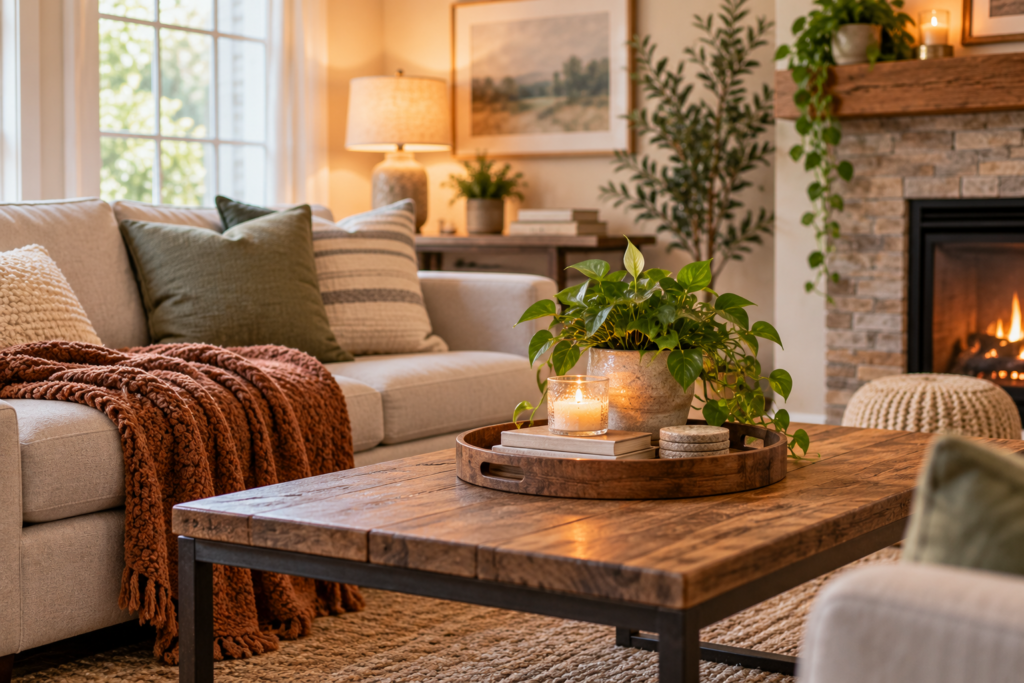
You can make your home feel cozy without adding more clutter. In fact, one of the fastest ways to make a room feel less restful is to keep adding things in the name of making it “warm.” A few extra pillows become a chair no one can sit in. Decorative baskets become mysterious storage for more mysterious stuff. Suddenly, the room has ambiance but nowhere to set down a cup of tea.
The good news is that coziness is less about having more décor and more about making your space comfortable, useful, and easy to live in. Light, texture, clear surfaces, familiar objects, and a layout that supports your routine can do a lot of the heavy lifting.
Whether you live in a small rental, a busy family home, or a place that simply feels a little unfinished, these ideas can help your home feel cozy without turning every corner into a storage problem.
Start With the Room’s Real Job
Before adding anything, consider what the room needs to do for you. A living room might be where you read, watch movies, host friends, fold laundry, and occasionally lose the remote under a blanket. A bedroom should support rest and getting ready, not become a holding zone for unopened mail and everything that doesn’t have another home.
When a room’s function is clear, it becomes easier to spot what makes it feel chaotic rather than cozy.
For example, a cozy living room may need:
- Comfortable seating that people can actually use
- A reachable place for drinks, remotes, or books
- Lighting that works after dark
- Clear paths for moving through the room
- A small amount of personality
That doesn’t necessarily require more furniture or decorative accessories. It may mean moving one side table closer to the sofa, clearing a crowded coffee table, or giving blankets one designated home.
A room usually feels more inviting when it supports the way you live in it. That’s a much more reliable goal than trying to make it look like a staged photo that has never encountered a phone charger, snack wrapper, or Tuesday night.
Let Lighting Create the Atmosphere
Lighting can change the feel of a home without taking up shelf space, floor space, or mental space. Instead of buying several new decorative objects, look at the light sources already in the room.
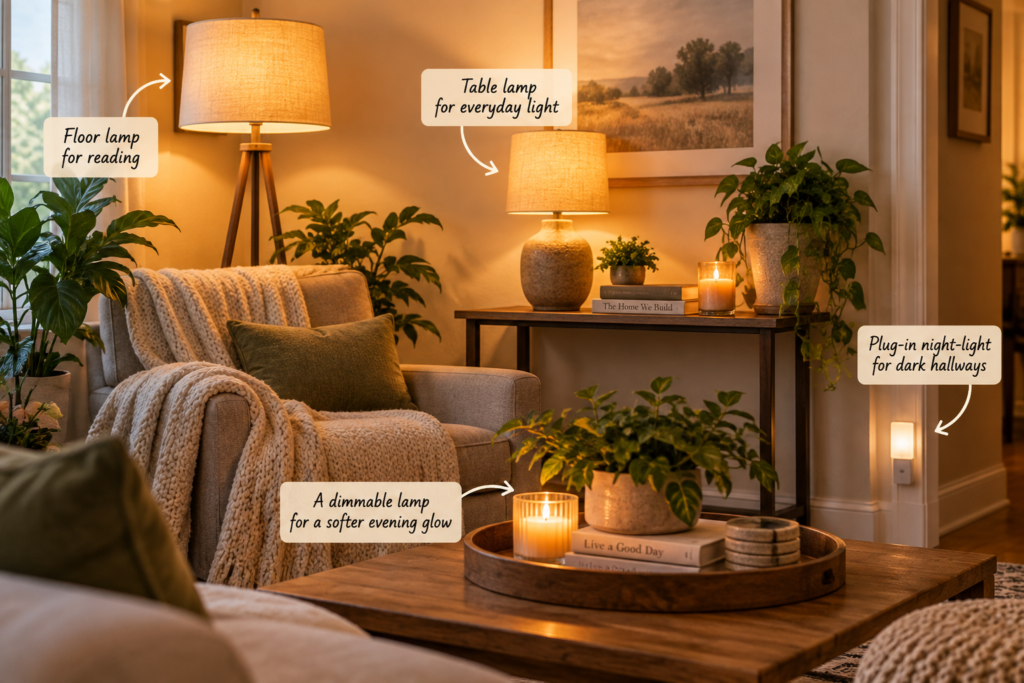
Overhead lighting is useful, especially for cleaning, cooking, and finding the earring that rolled under a chair. But relying on one bright ceiling fixture can make a room feel flat or harsh in the evening. Moving a lamp you already own, changing its placement, or using a warmer-looking bulb can create a softer, more layered effect.
Try using light at different heights:
- A floor lamp beside a reading chair
- A table lamp on a stable side table or dresser
- A small plug-in night-light for a dark hallway
- Under-cabinet lighting in a kitchen work area
- A dimmable lamp near a sofa or bed
Warm-looking light is a common design choice for creating a softer evening atmosphere. The U.S. Department of Energy notes that some dim-to-warm LED products begin around 2700 to 3000 kelvin and become warmer in appearance as they dim, with certain products reaching about 1800 kelvin—similar to candlelight. If you prefer that look, a dim-to-warm LED option can add atmosphere without adding another decorative item.
Renters don’t need to rewire anything to make this work. Plug-in lamps, battery-operated puck lights in dark cabinets, and bulbs that fit existing fixtures can all make a difference. The goal isn’t to keep your home dim all the time. It’s to give yourself better options than “bright enough for surgery” or complete darkness.
Clear the Visual Noise Before Adding Texture
Texture is one of the easiest ways to make a home feel cozy, but it works best when it has room to be noticed. A soft throw, woven shade, wooden tray, or fabric headboard can get lost when every surface is already crowded.
Rather than buying new accents, start by editing what’s visible. This doesn’t mean stripping your home until it looks like nobody enjoys anything. It means keeping the items that make a room feel personal and putting away the extras that create visual static.
A useful approach is to choose a few “comfort anchors” for each room. These are the things that make the space feel like yours: a favorite quilt, a framed family photo, a piece of art, a few books you’re currently reading, or a handmade bowl used for keys.
Everything else should earn its place by being useful, meaningful, or genuinely pleasing to look at.
In a small room, this might mean displaying one meaningful object on a shelf instead of arranging seven tiny ones. In a larger home, it could mean leaving breathing room on a mantel or console table instead of filling every inch. Empty space isn’t unfinished. It gives your favorite things a chance to feel intentional.
Use Softness Where It Helps Most
Cozy textures don’t require a mountain of throw pillows. The most useful soft elements are the ones that improve comfort where you already spend time.
A washable throw blanket on the sofa can make movie night more comfortable. Curtains can soften a bedroom and define the window area. A fabric basket can hold blankets you regularly use. A cushioned bench may make sense near an entry if it gives you a stable place to sit while putting on shoes.
Choose materials that suit your household and your tolerance for maintenance. A beautiful cream-colored knit blanket may not be the best choice if it will spend most of its life under a shedding pet or beside a toddler with crackers. There’s no prize for choosing the most delicate textile in the room.
For a lower-cost refresh, try rearranging textiles you already own:
- Move a spare quilt from a closet to the back of the sofa.
- Use coordinating pillow covers from another room.
- Fold an extra towel neatly in a guest bathroom.
- Put a washable runner where bare floors feel cold, as long as it lies flat and stays secure.
- Bring out a tablecloth for meals or weekend gatherings instead of leaving it on the table year-round.
Softness works when it’s accessible and easy to care for. If every cozy item needs special laundering, constant fluffing, or a complicated storage plan, it may create more work than comfort.
Keep Floors and Walkways Open
An open path through a room can make it feel calmer almost immediately. It also matters for everyday safety. Extra stools, floor baskets, stacks of magazines, loose charging cords, and small rugs can slowly turn a comfortable room into an obstacle course.
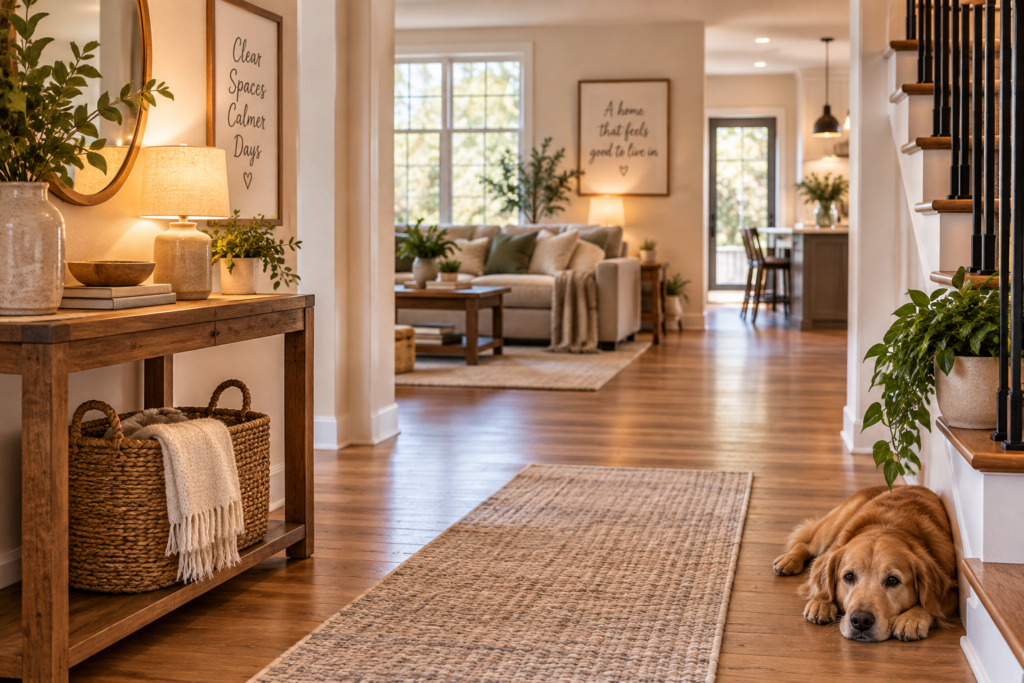
The CDC’s home fall-prevention guidance recommends keeping floors clear, securing or removing throw rugs, and ensuring lights are easy to reach. Those basics are especially important in homes with older adults, young children, people with low vision, or anyone with mobility concerns. They’re also useful for anyone who has tried to walk through a dark hallway while carrying laundry.
If you use rugs, choose them deliberately. One larger rug that lies flat and is properly secured often works better than several small, loose rugs scattered around the room. Avoid placing a rug where its edge will curl, slide, or catch underfoot.
Look at the routes you use every day: from the bed to the bathroom, from the sofa to the kitchen, and from the front door to wherever bags and shoes tend to land. These paths don’t need to be wide and empty like a hotel lobby. They just need to be clear enough for normal life.
That openness can make a home feel more peaceful than another piece of furniture ever could.
Make Daily Essentials Easier to Put Away
Clutter often appears when frequently used items don’t have an easy landing spot. This isn’t a character flaw. It’s usually a systems problem.
If mail always piles up on the kitchen counter, a giant decorative bowl may hide it for a day or two, but it won’t solve the issue. A better fix might be one small tray for incoming mail, paired with a regular time to sort it. If shoes gather by the door, a narrow shoe rack or designated mat may be more useful than a decorative basket that overflows by Thursday.
The key is to contain only what needs to live in that area. Storage should reduce loose items, not give every random object a prettier place to multiply.
Consider the friction points in your home:
- Where do coats, bags, and shoes land?
- Which surfaces collect chargers, receipts, and mail?
- What gets left out because putting it away takes too many steps?
- Which items are used daily but stored too far from where they’re needed?
A small solution may be enough. A hook behind a door, a drawer divider, a lidded box for remote controls, or a tray by the entry can reduce clutter without changing the room’s appearance much at all.
Maintenance matters here, too. Choose systems you can reset in a minute or two. A complicated organizing method is unlikely to survive a busy week, and that isn’t a moral failure. It’s just a sign that the system asks too much.
Add Personal Touches, Not Random Filler
A cozy home should feel lived in, not generic. Personal items can create that feeling without requiring dozens of accessories.
Display things you already have a connection to: a framed postcard from a trip, a child’s drawing, a record you love, a ceramic mug collection you actually use, or a favorite cookbook on a kitchen stand. These details add warmth because they tell a small story.
The trick is editing. You don’t need every sentimental object visible at once. Rotating a few pieces seasonally—or whenever you feel like a change—can keep your home personal without making it feel crowded.
Wall space can be especially helpful in small homes because it adds character without taking up valuable surfaces. One larger piece of art, a simple gallery of meaningful photos, or a wall-mounted shelf for a few favorite books can bring life to a room while leaving tables and counters open.
For renters, removable picture-hanging products or framed art placed on a sturdy dresser can offer flexibility. Make sure any leaning piece is stable and unlikely to fall, especially in a high-traffic area.
Treat Scent and Candlelight as Optional Extras
Scent can be pleasant, but it isn’t required for a cozy home. Fresh air, clean textiles, and a kitchen that is reasonably under control can be plenty. If you enjoy fragrance, use it in a way that suits your household, keeping in mind that guests and family members may have sensitivities or simply different preferences.
Candles deserve a little more care than their cozy reputation sometimes gets. Flameless candles can create a warm glow without an open flame. If you use real candles, the National Fire Protection Association advises keeping them at least 1 foot away from anything combustible, placing them on a sturdy, uncluttered surface, and extinguishing them when you leave the room or go to bed. Its candle safety guidance also recommends flameless candles as an alternative.
In other words, a candle doesn’t need to be nestled into a tray of dried flowers, books, blankets, and decorative paper to look inviting. It needs space. Cozy should never come with a fire hazard.
Build in a Gentle Reset
A comfortable home doesn’t stay that way because someone maintains it perfectly. It stays workable because it has a few simple reset habits.
Try a short evening reset in the rooms you use most. Put cups in the kitchen, return remotes to one spot, fold the blanket, clear the main walkway, and move anything that obviously belongs elsewhere. Even five or ten minutes can make the next morning easier.
The goal isn’t spotless. A home can have toys on the floor, dishes waiting to be washed, and a chair with a sweater on it while still feeling warm and welcoming. The reset simply prevents small piles from becoming permanent furniture.
If daily tidying isn’t realistic, choose a rhythm that fits your life: once every few days, before company comes over, or on the weekend. A cozy home should support your routine, not demand a new personality.
Final Thoughts
Making your home feel cozy without adding clutter is mostly about noticing what already helps you feel comfortable. Better lighting, clearer surfaces, practical storage, soft layers, and a few personal touches can make a bigger difference than another cart full of décor.
Start with one room and one change that makes everyday life easier. The coziest spaces aren’t perfectly styled. They’re the ones where you can settle in, find what you need, and relax without moving three decorative pillows first.