
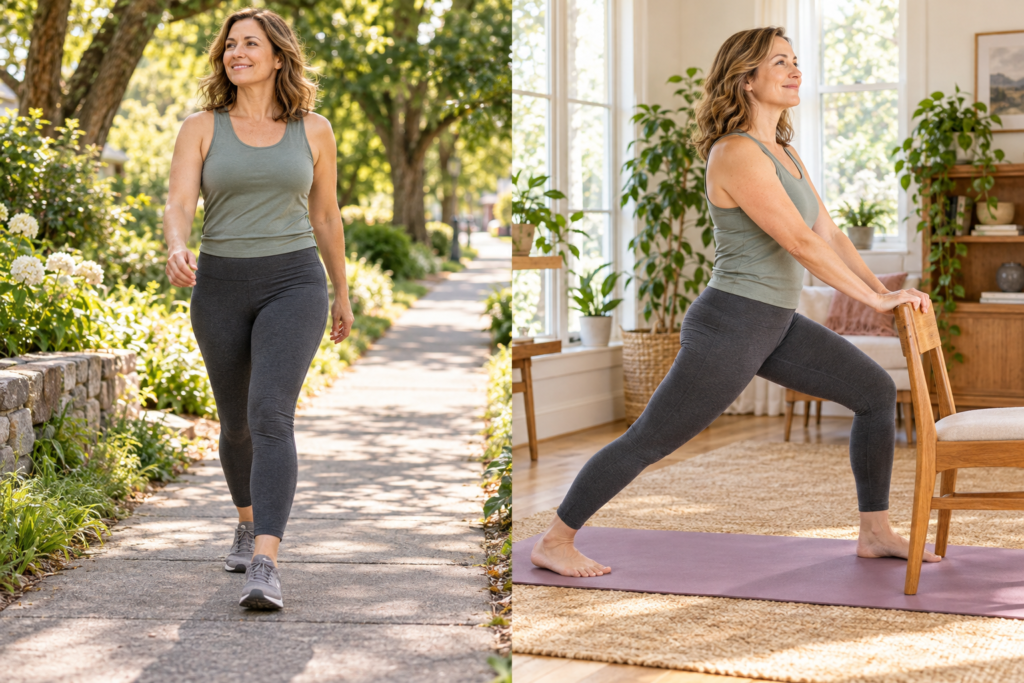
Walking workouts and beginner yoga are both approachable ways to add more movement to your week without signing up for a boot camp or buying a closetful of gear. The better fit depends on what you want from that time: a clearly aerobic session, a calming indoor practice, help with flexibility and balance, or simply something you’ll realistically do when the day gets busy.
The comparison is less about finding a universal winner and more about matching the exercise to your routine. Brisk walking offers a straightforward route to moderate-intensity aerobic activity, while beginner yoga provides a slower, more varied practice that may emphasize movement quality, balance, and flexibility. Both can be useful. Neither has to become a personality trait.
Walking Workouts vs. Beginner Yoga: Comparison Overview
Walking workouts and beginner yoga often appeal to the same person: someone looking for gentle exercise that feels manageable rather than punishing. Both can be adapted for short sessions, require relatively little equipment, and can work at home or near home. They also let you start slowly instead of trying to “catch up” to a fitness routine overnight.
The key difference is the kind of movement each option prioritizes. A brisk walk is a recognized form of moderate aerobic activity, especially when you can talk but not sing comfortably. Beginner yoga varies widely by class and style; it may be very gentle, more active, or focused mainly on poses and breathing. That variety is useful, but it means yoga should not automatically be treated as equivalent to a cardio workout.
Side-by-Side Comparison
| Criteria | Walking Workouts | Beginner Yoga |
|---|---|---|
| Main movement focus | Steady, repetitive movement that can build aerobic activity when paced briskly | Poses, transitions, breathing, flexibility, balance, and body awareness |
| Cardio potential | Brisk walking is a standard example of moderate-intensity aerobic activity | Varies substantially by style; gentle classes may not provide the same aerobic challenge as brisk walking |
| Typical setting | Outdoors, on a treadmill, or indoors with a walking routine | Indoors at home, in a studio, or in a quiet open space |
| Equipment needs | Supportive shoes and weather-appropriate clothing for outdoor walks | A nonslip mat is helpful; a sturdy chair, wall, or supportive props can assist with modifications |
| Balance and flexibility focus | Involves balance and mobility but does not naturally include dedicated flexibility or balance practice | Often includes balance-focused poses and flexibility work |
| Scheduling flexibility | Easy to divide into short walks or fit between errands and appointments | Can be brief, but a session may feel more practical when you have uninterrupted floor space and time |
| Common limitations | Weather, route safety, uneven surfaces, traffic, and poor lighting | Pose modifications, wrist or knee comfort, and finding a beginner-appropriate class or routine |
Key Differences
Aerobic Activity and Intensity
Walking has the clearer advantage if your goal is to build moderate-intensity aerobic minutes. The CDC lists brisk walking as moderate activity and suggests a simple intensity check: During moderate exercise, you can talk but not sing. That pace differs from person to person, so there is no need to chase someone else down the sidewalk like you’re late for a train.
Yoga’s aerobic effect depends on the style and pace. More active forms can reach moderate intensity, but a gentle beginner practice may focus on slower movements, stretches, and rest periods. That does not make it less worthwhile; it simply serves a different purpose.
Balance, Flexibility, and Body Awareness
Beginner yoga usually gives more direct attention to balance, flexibility, posture, and controlled movement. The National Institute on Aging includes yoga among activities that can incorporate balance exercise, which can be especially relevant for older adults. A thoughtful class may also introduce modifications that make poses more accessible.
Walking involves balance too, particularly on uneven ground or hills, but it is not designed around balance practice. If you want dedicated time to work on standing steadily, moving through a fuller range of motion, and noticing how your body feels, yoga is often the more natural fit.
Convenience and Environment
Walking can be the easier choice when you have 10 spare minutes and a safe place to move. You can walk outside, use indoor hallways, or follow an indoor walking routine when the weather turns dramatic. No floor setup is required, and you do not have to rearrange the furniture just to exercise.
Yoga is often more convenient when outdoor conditions are unpleasant or local walking routes do not feel safe. It does require enough clear floor space to extend your arms and lie down comfortably. That can be a living room corner, bedroom, or even a cleared patch beside the bed—though moving the laundry pile first may improve the mood.
Safety Considerations
Neither activity is automatically risk-free. Outdoor walking brings practical concerns, including uneven pavement, traffic, low visibility, weather, and footwear. The National Institute on Aging recommends sturdy shoes, awareness of walking surfaces, and adjustments for poor conditions. Indoor walking or yoga can be sensible alternatives when the route is icy, poorly lit, or simply not a place where you feel comfortable.
Yoga can involve strains or sprains, especially when beginners force a pose or follow an instructor whose pace does not suit them. The National Center for Complementary and Integrative Health advises beginners to avoid extreme poses and forceful breathing. People with balance problems, pain, recent injuries, or certain health conditions may need individualized guidance and modifications.
Structure Versus Variety
Walking is pleasantly simple. Pick a route, choose a pace, and go. That repeatability can make it easier to build a routine, track time, or add movement around daily obligations. The downside is that some people find it monotonous, particularly if every walk follows the same loop past the same three barking dogs.
Beginner yoga usually offers more variety within one session. A routine might include standing poses, seated movement, balance work, and relaxation. That variety can keep things interesting, but it may feel less straightforward if you prefer a clear, no-decisions-needed workout.
How Each Exercise Fits Into Everyday Life
For Short Movement Breaks
Walking is usually the more practical option for short breaks. A quick walk before work, after lunch, or between household tasks can fit into your day without much preparation. Short sessions can still contribute to your overall activity, particularly when longer workouts are hard to schedule.
Yoga can work in short blocks too, but a five-minute practice may feel more purposeful when it has a clear focus, such as gentle standing movements or a few supported poses. It is less ideal if you need to be out the door in six minutes and are still looking for your mat.
For Indoor Routines
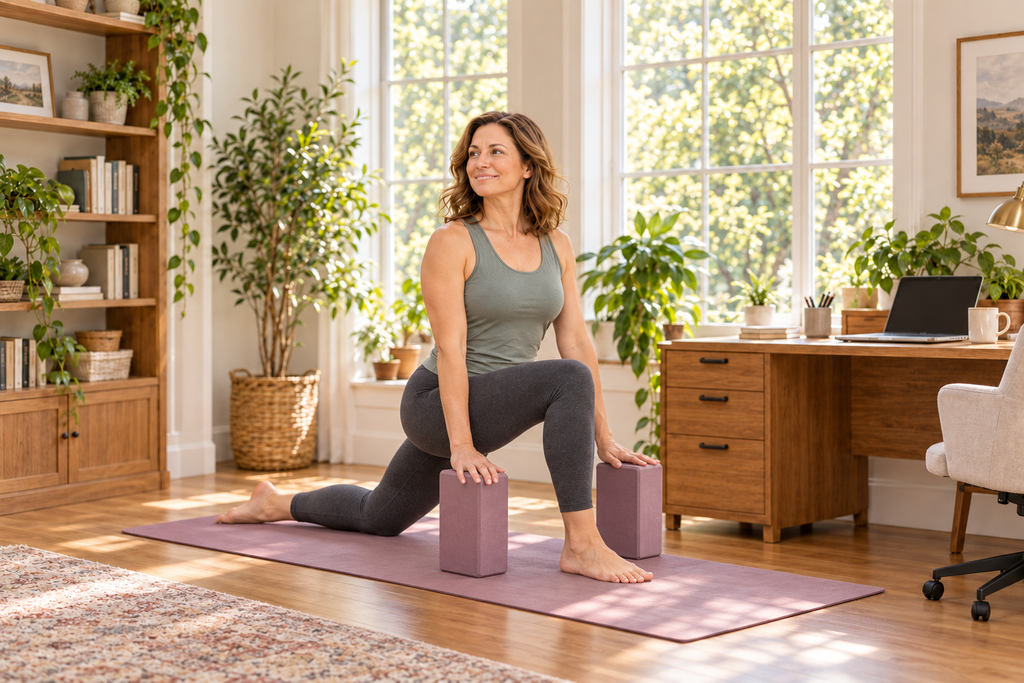
Beginner yoga has an advantage for reliable indoor exercise. It does not depend on daylight, sidewalk conditions, or the forecast. A mat can help with grip and comfort, but a stable, clear, nonslip surface matters most.
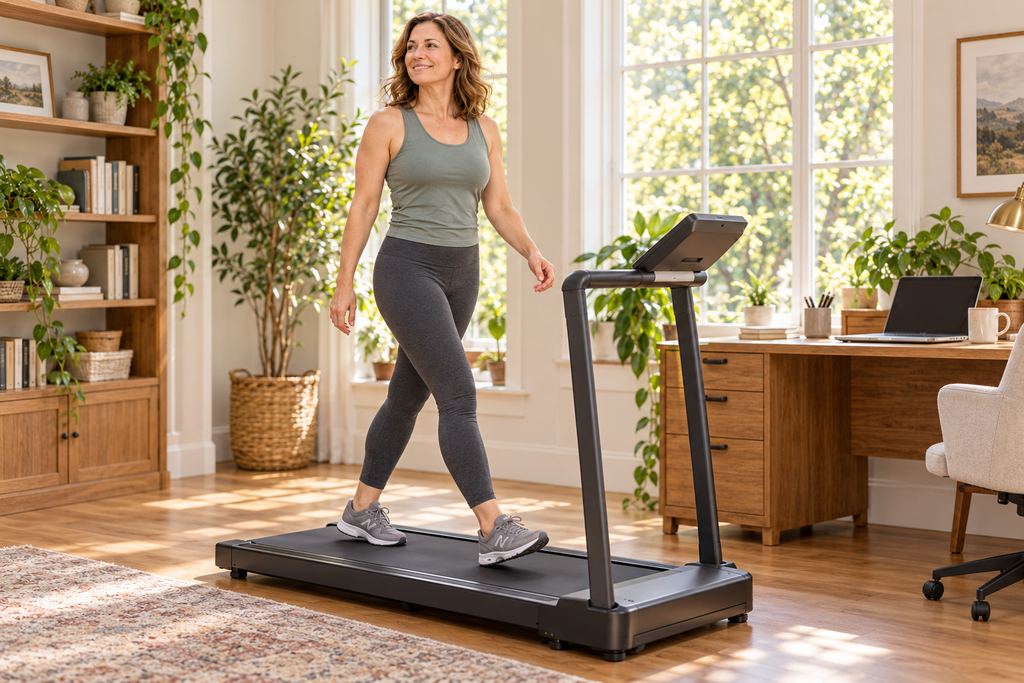
Indoor walking is also an option, especially with a hallway, open room, or guided routine. It may feel less engaging in a small space, but it can be a practical substitute for outdoor walking when conditions are unsafe or uncomfortable.
For Building a Well-Rounded Routine
Walking is particularly useful for the aerobic portion of an activity plan. Federal guidance recommends that adults aim for 150 to 300 minutes of moderate aerobic activity each week, along with muscle-strengthening activity on two days. Walking can help with the aerobic side, but it does not automatically cover strengthening or dedicated balance work.
Yoga can complement walking by adding balance and flexibility, although it should not be assumed to meet every exercise need either. A gentle practice may not provide substantial aerobic or muscle-strengthening activity. Combining the two can make sense: walks for steady movement and yoga sessions for a slower, more varied change of pace.
For Beginners Who Need Modifications
A walking workout is easy to scale by changing the route, duration, pace, or number of breaks. Flat, well-lit paths are generally easier starting points than steep trails or cracked sidewalks. Supportive footwear matters more than fancy workout clothing.
Yoga can be highly adaptable, but beginners benefit from clear instructions and permission to modify. A chair, wall, or other sturdy support can help with balance work. If a movement causes pain, dizziness, or substantial discomfort, stop rather than trying to earn points for determination. If you have a chronic condition, a history of falls, or new symptoms, seek individualized advice from a clinician or physical therapist.
Equipment and Practical Upkeep
Walking has almost no equipment maintenance beyond keeping your shoes clean, dry, supportive, and appropriate for the conditions. Shoes wear down over time, especially with frequent use on hard surfaces. Route “maintenance” is more about planning: Check the weather, choose safe paths, and avoid treating poor lighting or icy pavement as a character-building opportunity.
Yoga equipment is similarly low-maintenance. Clean and dry your mat according to its care instructions to help preserve its surface and grip. Mats can lose traction or begin to flake with use, while blocks, straps, and bolsters are optional rather than essential. A simple mat rolls up for storage, but even that may be more gear than you want to manage in a small space.
Cost and Overall Value
Walking can be the lower-cost starting point if you already own comfortable, supportive shoes and have access to a safe place to walk. There is no required membership, mat, or special setup. Investing in suitable walking shoes may make sense if you plan to walk regularly, need more support, or often cover longer distances, but the activity itself does not demand expensive extras.
Beginner yoga can also be inexpensive, particularly with a basic mat and free or low-cost guided routines. Paying for an in-person beginner class may be valuable when you want instruction on positioning, pacing, and modifications. If you prefer quiet exercise at home and will use the mat regularly, that modest investment can be practical. If floor space is scarce and your routine is inconsistent, walking may offer better value.
Who Should Choose Each Option
Choose Walking Workouts if Your Main Goal Is Aerobic Activity
Brisk walking is the better starting point if you want a clear path toward moderate-intensity aerobic exercise. It is simple to understand, easy to adjust, and can be divided into shorter sessions throughout the day. Choose a pace that feels challenging but still allows conversation.
Choose Beginner Yoga if You Want an Indoor, Slower-Paced Practice
Yoga may fit better if you prefer to move indoors, want a quieter routine, or feel drawn to balance and flexibility work. Look for classes or videos clearly labeled for beginners, and favor instructors who demonstrate modifications rather than treating every pose as a test.
Choose Walking if You Need Maximum Scheduling Flexibility
For unpredictable days, walking is often easier to repeat consistently. A short walk can happen before an appointment, during a break, or while running an errand. It asks very little of your home setup and does not require a dedicated block of floor time.
Choose Beginner Yoga if Balance Is a Priority
Yoga is often the stronger fit when you want deliberate balance-focused movement alongside flexibility and controlled transitions. Use a wall, chair, or other sturdy support if you feel unsteady. For ongoing balance concerns or a history of falls, individualized professional guidance is the safer place to start.
Final Verdict
Walking workouts are the more direct choice if you want moderate aerobic activity, especially when you can maintain a brisk, sustainable pace. They are flexible, low-fuss, and easy to fit into a crowded day. Their main drawbacks are environmental: weather, route safety, uneven ground, and the fact that walking alone does not cover every type of exercise.
Beginner yoga is the better match when you value an indoor routine with more emphasis on balance, flexibility, and a slower pace. It can be a useful complement to walking, not necessarily a replacement for it. Choose walking when cardio and convenience lead the list; choose yoga when controlled movement and indoor comfort matter more. If both sound appealing, alternating them may be the most realistic answer.
Frequently Asked Questions
Is walking or beginner yoga better for cardio?
Brisk walking is the clearer cardio choice because it is recognized as moderate-intensity aerobic activity. Gentle yoga may not raise your effort level to the same degree, though more active yoga styles can be more aerobically demanding.
Can beginner yoga help with balance?
It can be part of balance-focused activity because many yoga practices include standing poses and controlled transitions. Use modifications or sturdy support if you feel unsteady.
Does an easy walk count as exercise?
An easy walk is still movement, but it may not reach moderate intensity. For moderate effort, the CDC’s practical guide is being able to talk but not sing.
Do I need a yoga mat to start beginner yoga?
A mat is helpful for comfort and grip, but it is not mandatory. A clear, stable, nonslip surface is the more important starting point.
Can I combine walking workouts and beginner yoga?
Yes. Walking can support aerobic activity, while yoga can add variety, balance, and flexibility work. Together, they can create a more rounded routine than relying on either one alone.