House & Home

Pull-Out Cabinet Shelves vs. Shelf Risers
House & Home

Pull-Out Cabinet Shelves vs. Shelf Risers: Which Creates More Usable Space in a Small Kitchen?

Small kitchens rarely lack shelves; they lack reachable shelves. That’s why pull-out cabinet shelves and shelf risers are so often compared. Both can make a cramped cabinet more useful, but they solve different problems: one improves access to items in the back, while the other creates an extra level for things that would otherwise form a slightly alarming stack.

The better choice depends on what you store, how often you cook, and whether you’re ready to modify your cabinets. Pull-out shelves can turn deep lower cabinets into accessible storage, while shelf risers offer a simpler way to divide vertical space in upper cabinets, pantries, and even on counters. Neither is magic, sadly. But either can stop the “Where did that pan go?” routine.

Affiliate disclosure: This article contains affiliate links. If you make a purchase through one of these links, I may earn a commission at no additional cost to you. As an Amazon Associate I earn from qualifying purchases.

Comparison Overview

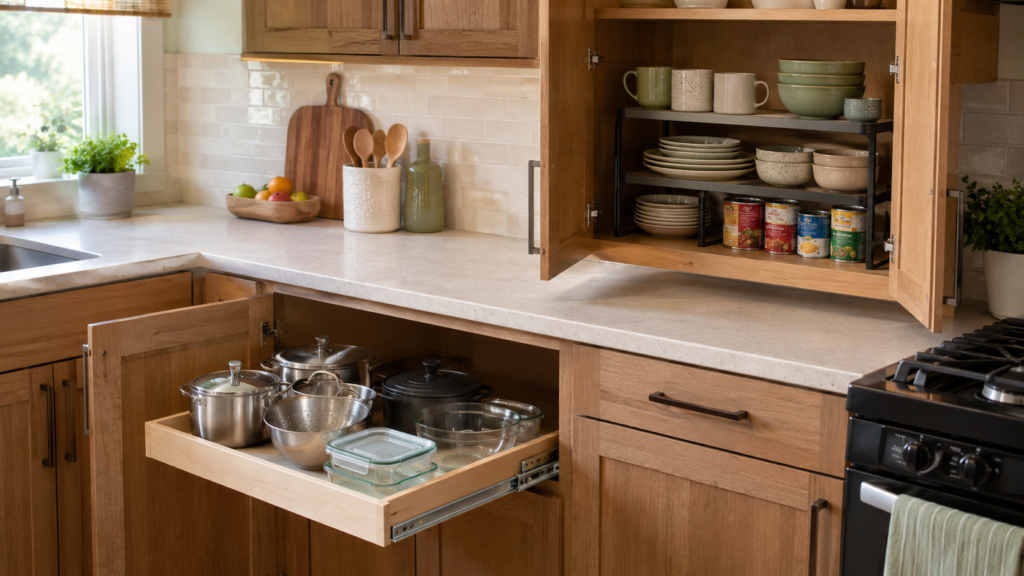
Pull-out cabinet shelves are trays or shelves installed inside a cabinet that slide forward on hardware. They are most useful in deep cabinets where canned goods, cookware, small appliances, or food containers tend to disappear behind whatever is in front. By bringing the contents toward you, they reduce reaching, kneeling, and unloading half the cabinet just to find one ingredient.

Shelf risers are freestanding platforms that sit on an existing shelf and create a second tier. They work best for shorter items such as mugs, bowls, plates, canned food, spices, snack boxes, and food-storage containers. They don’t pull anything closer, but they can prevent wasted air space above a short stack of dishes or pantry staples.

Side-by-Side Comparison

CriteriaPull-Out Cabinet ShelvesShelf Risers
Main purposeImproves access to items stored deep inside cabinetsCreates an additional level of vertical storage
Best cabinet locationDeep lower cabinets, pantry cabinets, and hard-to-reach shelvesUpper cabinets, shallow pantry shelves, and open shelving
InstallationUsually requires measuring and mounting hardwareGenerally sits directly on an existing shelf
AccessibilityBrings stored items forward for easier viewing and retrievalMakes stacked items easier to separate, but items in the back may still be hard to reach
Storage strengthsPots, pans, small appliances, dry goods, containers, and heavier everyday items when properly supportedMugs, dishes, canned goods, snack items, spices, and shorter containers
FlexibilityMore permanent once installed, though some systems can be adjusted or removedEasy to move, reposition, or reuse in another cabinet
Impact on shelf heightUses some vertical clearance for the shelf and sliding hardwareRequires enough room above and below the riser to make both levels practical
Cleanup considerationsCrumbs and spills can collect in the tray and around slide hardwareEasy to lift out and wipe down along with the cabinet shelf

Key Differences

Access Versus Extra Vertical Space

The biggest difference is simple: pull-out shelves improve access, while shelf risers improve vertical organization. A pull-out shelf is especially helpful when your cabinet is deep enough for items to migrate toward the back and establish a new life there. Instead of reaching over front-row cookware, you slide the contents toward you.

A shelf riser does not fix a deep-cabinet problem. It can make the front portion of a cabinet more organized, but it won’t bring that forgotten bag of rice forward. Its strength is preventing short items from sitting beneath a large pocket of unused space.

Installation Commitment

Shelf risers are the low-commitment option. Most require no drilling, hardware, or cabinet modifications. You measure your shelf, choose a riser that fits, place it inside, and reorganize. If your mugs turn out to be too tall or your cabinet isn’t as roomy as it looked in your imagination, you can move the riser elsewhere.

Pull-out cabinet shelves demand more planning. You’ll need accurate interior cabinet measurements, including width, depth, door clearance, hinges, and any obstructions. Some installations may be manageable as a DIY project, while others may be better handled by a cabinet professional. The prep matters because a poorly fitted pull-out shelf is just an expensive drawer that refuses to cooperate.

What They Can Store Well

Pull-out shelves suit a wide range of kitchen storage needs. They can make everyday cookware, baking dishes, mixing bowls, dry goods, and food containers easier to access. In lower cabinets, they can be particularly useful for heavier items that are awkward to retrieve from a low, deep shelf.

Shelf risers are better for lighter, stackable, or easily visible items. Think drinking glasses, bowls, canned tomatoes, tea boxes, lunch containers, or rows of spices. They are not always ideal for large pots, tall bottles, or bulky appliances because those items can make the levels feel cramped or unstable.

Space Efficiency Depends on the Cabinet

A riser may create more usable space in an upper cabinet that holds mugs or dishes because it divides open vertical space into two practical levels. If the shelf is tall enough, one riser can make room for two neat rows where there was previously one short stack and a lot of empty air.

In a deep lower cabinet, however, a pull-out shelf may create more usable space even if it does not add another level. A cabinet packed from front to back is not particularly helpful if you can reach only the first few items without crouching and excavating. Pull-outs make the cabinet’s full depth easier to use.

Cabinet Compatibility and Clearance

Shelf risers require enough height to work. A riser that technically fits but leaves only an inch or two above the lower level won’t help much. Before choosing one, measure the cabinet’s interior height and the items you plan to store.

Expandable adjustable stackable kitchen cabinet organizer

Pull-out shelves require different kinds of clearance. The cabinet needs enough interior width and depth for the shelf and its sliding mechanism, and the door must open wide enough for the shelf to extend. Face-frame cabinets, exposed hinges, plumbing, and fixed shelf supports can all affect compatibility. Measuring first is not glamorous, but neither is returning a storage solution that almost fits.

Performance and Everyday Use

Daily Cooking and Meal Prep

If you cook often, pull-out cabinet shelves can make daily kitchen work smoother. Keeping mixing bowls, pans, food containers, or dry ingredients on pull-outs means less reaching and rearranging before dinner. They are particularly useful when you use the same cabinet items several times a week.

Shelf risers work well for frequently grabbed pantry items and dishes. A riser can give breakfast bowls their own level, keep lunch containers from collapsing into a plastic avalanche, or make canned goods easier to scan. They are less useful in a cabinet full of large cookware, where the riser may simply get in the way.

Deep Cabinets and Low Storage

Deep, low cabinets are where pull-out shelves shine. Fixed shelves often force you to choose between storing items in front, where they’re accessible, or using the full depth and accepting that the back section may become a mystery zone. Pull-outs reduce that trade-off.

Expandable Pull Out Cabinet Organizer

Shelf risers can still help in lower cabinets, but only in certain situations. They may work for lightweight pantry goods or short containers if there is enough vertical room. They are usually less practical for heavy Dutch ovens, stacks of pans, or oversized serving pieces that need stable, open storage.

Upper Cabinets and Pantry Shelves

Upper cabinets often favor shelf risers because vertical space is commonly the issue. If one shelf holds short glasses, mugs, or small bowls with a large gap above them, a riser can help the cabinet hold more without making it feel overstuffed.

Pull-out shelves can work in pantry cabinets and some upper cabinets, especially when the shelves are deep. Still, their installation and added structure may not be necessary for a shallow cabinet. In that situation, a riser can provide a quicker, less involved improvement.

Flexibility for Changing Kitchens

Shelf risers are easy to adapt as your kitchen changes. You can move them from a dish cabinet to a pantry shelf or repurpose them outside the kitchen. This flexibility is useful for renters, temporary living arrangements, or anyone still figuring out how their kitchen works.

Pull-out shelves are more of a long-term organizational decision. They can be worthwhile when a cabinet has a clear, ongoing job, such as holding cookware or pantry staples. But if you frequently change cabinet layouts or expect to move soon, a removable riser may make more sense.

Durability and Maintenance

Pull-out cabinet shelves have more components to maintain. The shelf surface should be wiped regularly, especially if it holds dry goods, baking supplies, or containers that may leak. Sliding hardware can collect dust and crumbs over time, so it should stay clear of loose debris to keep the shelf moving smoothly. If a track, mounting point, or drawer mechanism becomes damaged, repairs may require replacement parts or more involved cabinet work.

Shelf risers are generally simpler to maintain because they have no moving parts. Most can be removed, wiped clean, and returned to the cabinet in minutes. Their long-term durability depends on the material, construction, and weight placed on them. Avoid overloading a riser or using it to support items that feel unsteady, particularly glassware or tall stacks of dishes. A simple organizer is helpful only until it becomes a tiny elevated hazard.

Cost and Overall Value

Shelf risers are often the better value when your main issue is wasted vertical space. They require little installation effort and can be moved if your needs change. For a cabinet of mugs, canned goods, or small dishes, a basic riser may solve the problem without turning it into a larger storage project.

Pull-out shelves can justify a higher investment when access is the bigger frustration. If you regularly struggle to reach cookware, pantry goods, or containers in the back of deep cabinets, better access may be more valuable than adding another shelf level. Their value increases when they improve a cabinet you use every day, not one reserved for the once-a-year roasting pan.

Who Should Choose Each Option

The Renter or Low-Commitment Organizer

Shelf risers are usually the better fit if you rent, want to avoid cabinet modifications, or need a solution you can move later. They provide a noticeable storage improvement without permanent installation and can be repositioned as your kitchen setup evolves.

The Frequent Home Cook With Deep Lower Cabinets

Pull-out cabinet shelves are likely the better choice if you cook often and keep pans, bowls, ingredients, or containers in deep lower cabinets. They make those items easier to reach and can reduce the repeated reaching and shifting that fixed shelves tend to require.

The Small-Pantry Household

Shelf risers work well for a small pantry filled with short packaged foods, canned goods, snacks, tea, and jars. They can help you use open vertical space while keeping labels visible. Just avoid creating crowded levels that make items difficult to remove safely.

The Cookware Collector

Pull-out shelves are generally more useful for cookware, bakeware, and heavier kitchen tools, provided the cabinet and hardware are designed to support the load. A riser may help separate lids or small pans in some cases, but it is rarely the most practical answer for a cabinet packed with bulky pieces.

The Upper-Cabinet Space Maximizer

Shelf risers are usually the more sensible option for upper cabinets holding mugs, glasses, bowls, or plates. They can turn a single tall shelf into two accessible zones without requiring a more complex overhead installation.

Final Verdict

Pull-out cabinet shelves and shelf risers create usable space in different ways. Pull-outs make deep storage easier to reach, which can be a major improvement in lower cabinets and heavily used pantries. Shelf risers add vertical levels, making them especially helpful in upper cabinets and for collections of shorter kitchen items.

Choose pull-out cabinet shelves when accessibility is the real problem: items are buried, cabinets are deep, and everyday cooking involves too much reaching or rearranging. Choose shelf risers when you have unused vertical room and want a simple, flexible way to organize lighter items. The best small-kitchen upgrade is the one that fixes the frustration you actually have, not the one that merely looks organized for five minutes.

Frequently Asked Questions

Do pull-out shelves create more space than shelf risers?

Pull-out shelves usually create more usable space in deep cabinets because they make the back area accessible. Shelf risers may create more vertical storage capacity when there is unused height above shorter items.

Are shelf risers safe for dishes and glassware?

They can be, as long as the riser is stable, placed on a level shelf, and not overloaded. Store heavier items on the lower level when possible, and avoid stacking glassware where it could be easily knocked over.

Can pull-out shelves be installed in any cabinet?

Not always. Cabinet width, depth, door clearance, hinges, interior frames, plumbing, and fixed shelves can affect whether a pull-out system will fit and operate properly.

Are shelf risers useful in lower cabinets?

They can be useful for lightweight pantry goods or containers, but they are often less effective in deep lower cabinets or for heavy cookware. Pull-out shelves are usually more practical when access is the main issue.

Which option is easier to clean?

Shelf risers are usually easier because they can be lifted out and wiped down. Pull-out shelves also need regular cleaning, but crumbs and spills may collect around the sliding hardware and inside the cabinet.

You Might Also Enjoy

Standing Desk vs. Traditional Desk
House & Home

Standing Desk vs. Traditional Desk: Which Desk Is Right for You?

When comparing a standing desk vs. traditional desk, the right choice comes down to more than whether you prefer sitting or standing. Your available space, work routine, equipment, budget, and willingness to adjust your setup all matter. A desk is one of those everyday items that can quietly make a room easier to use—or become the place where cables, paperwork, and mystery mugs gather.

Adjustable standing desks let you change your work height, while traditional desks provide a fixed surface designed mainly for seated use. Neither is automatically better. The right desk is the one that fits how you actually work, study, create, plan meals, pay bills, or occasionally open your laptop while pretending you are not also watching a recipe video.

Comparison Overview

Standing desks and traditional desks serve the same basic purpose: giving you a dedicated work surface. The main difference is flexibility. Most standing desks can be raised or lowered to support different working positions, while a traditional desk stays at one fixed height.

For many households, the decision also affects the surrounding room. An electric standing desk needs access to power, and any adjustable model requires enough clearance to move upward safely. A traditional desk is often simpler to place, especially in a small office, bedroom, kitchen corner, or multipurpose room where furniture needs to stay put.

Side-by-Side Comparison

CriteriaStanding DeskTraditional Desk
Work positionSupports sitting and standing when adjustablePrimarily supports seated work
Height adjustmentMay use manual or electric adjustmentFixed height
Setup complexityCan require assembly, power access, and cable planningUsually has a simpler setup
Moving partsAdjustable models include mechanisms that may need occasional attentionTypically has fewer moving parts
Space needsRequires overhead and surrounding clearance when raisedNeeds a consistent footprint
Desk accessoriesMay benefit from monitor arms, cable management, or adjustable accessories at different heightsWorks easily with standard seated office accessories
Budget rangeAdjustable mechanisms can increase the costBasic fixed desks are often the simpler, lower-cost option
Best fitPeople who want position flexibility during the dayPeople who prefer a straightforward, stable seated setup

Key Differences

Adjustability Versus Simplicity

The central difference is obvious but important: adjustable standing desks can change height, while traditional desks cannot. That flexibility is useful if your day includes long stretches of computer work and you want to switch positions without leaving your workspace.

A traditional desk keeps things refreshingly uncomplicated. There is no control panel, crank, lifting column, or question about whether the desktop is high enough for your monitor setup. If you are comfortable working seated and do not need regular height changes, fixed furniture may be all you need.

Room Layout and Clearance

A standing desk needs room to travel upward. That sounds simple until you place it beneath shelves, wall cabinets, a window ledge, or a low ceiling feature. In a compact apartment or kitchen-adjacent workspace, measure the intended location carefully before choosing an adjustable model.

Traditional desks are easier to plan around because their height never changes. They can fit neatly under wall shelves or into a built-in nook without causing a surprise collision later. That predictability is especially helpful in shared rooms where every inch has a job.

Stability at Different Heights

A well-designed standing desk should provide a stable work surface throughout its intended height range, but wobble can become more noticeable when the desktop is raised. A tall monitor, heavy desktop computer, uneven floor, or less-rigid frame can all affect how steady the setup feels.

Traditional desks have the advantage of a fixed, lower work surface. That does not mean every fixed desk is rock-solid—construction and assembly still matter—but there are fewer variables once it is in place. For detailed tasks such as drawing, writing, gaming, or working with small tools, that consistency may be appealing.

Accessories and Ergonomic Fit

Changing the desk height also changes how your accessories are positioned. Your monitor, keyboard, mouse, laptop stand, and task light should remain comfortable to use whether you are seated or standing. Monitor arms and adjustable keyboard trays can make the transition smoother, though they are not essential for every setup.

With a traditional desk, you can arrange one seated workstation and leave it alone. A supportive chair and sensible monitor placement still matter, but you do not have to make the same workstation suit two different heights. Less adjusting can be a real benefit if you value a tidy, low-fuss setup.

Mechanical Features and Long-Term Considerations

Standing desks with lifting mechanisms offer more flexibility but also include more components. Electric models need a nearby outlet and add cords to manage. Manual models avoid the power requirement but may take more effort to adjust. Neither approach is inherently troublesome, but both are worth considering before you buy.

Traditional desks generally rely on straightforward construction: legs, a frame, a desktop, drawers, and perhaps a cable opening. Fewer mechanical components can make them easier to understand, assemble, and maintain over time. Sometimes boring furniture is exactly what you want. Boring furniture rarely asks for troubleshooting.

Performance and Everyday Use

Switching Positions During a Workday

A standing desk is useful when you want to alternate between seated and standing work. That does not mean you need to stand all day, and it does not require turning every email into a fitness event. The practical benefit is choice: you can raise the surface for part of the day, then lower it when you want to sit.

A traditional desk is better suited to a mostly seated routine. It provides a consistent setup without interruption, which can work well for focused computer tasks, handwriting, online classes, or projects that require you to remain in one position for a while.

Managing Technology and Cables

Standing desks require more cable planning because monitor, charger, lamp, and computer cords need enough slack to move safely with the surface. Cable trays, clips, and mounted power strips can keep cords from dangling or catching, but they add another step to the setup process.

Traditional desks simplify cable management because the equipment remains at the same height. If your workspace includes a printer, external drives, speakers, or other connected equipment, a fixed desk can make it easier to keep everything connected and contained.

Working in Small or Shared Spaces

In a dedicated office, a standing desk may be easy to accommodate. In a shared bedroom, dining room, or compact kitchen-adjacent corner, its changing height can be less convenient. The desk needs clear space above it, along with enough room for a chair when the surface is lowered.

Traditional desks work well in rooms that pull double duty. Their fixed profile can sit beneath shelves, beside a dining table, or against a wall without changing the layout each time someone uses the space. If your desk needs to blend into daily household life rather than dominate it, that can be a meaningful advantage.

Durability and Maintenance

Standing desks benefit from occasional basic care. Keep the lifting area clear, stay within the manufacturer’s stated weight capacity, check that fasteners remain secure, and arrange cables so they do not snag during height changes. With electric models, the power connection and control system are also part of long-term ownership. A desk mat or coasters can help protect the desktop from drink rings, scratches, and the inevitable drip from a rushed lunch at the keyboard.

Traditional desks usually need simpler maintenance, such as dusting, wiping up spills promptly, tightening hardware, and caring for the desktop according to its finish. Drawers and hinges may eventually need adjustment, but fixed desks generally have fewer parts to inspect. If easy repairs and minimal upkeep are priorities, a sturdy traditional desk can be the more straightforward long-term choice.

Cost and Overall Value

Standing desks can cost more because adjustable frames and lifting systems add complexity. Paying more may make sense if you expect to use the height adjustment regularly or need the desk to support a larger monitor setup or multiple work tools. The value comes from using that flexibility, not simply owning a desk that goes up and down.

A traditional desk may offer better value when you need a dependable surface for seated work and do not expect to change positions often. The money saved can go toward a comfortable chair, useful lighting, storage, or cable management—items that can improve a workspace just as much as a more elaborate desk frame. A less expensive desk may be all you need if it fits your room, supports your equipment, and feels stable.

Who Should Choose Each Option

The Person Who Wants More Position Flexibility

A standing desk is likely the better fit if you want to change your work position throughout the day. It can suit remote work, study sessions, creative projects, and household administration when you do not want to remain seated for every task. Just make sure you have room for the desk to rise, along with a plan for cords and accessories.

The Seated Worker With a Stable Routine

A traditional desk is a strong choice if you do most of your work while sitting and prefer a set-it-and-forget-it arrangement. It can be especially practical if you use a desktop computer, write by hand, game, sew, or complete detailed work that benefits from a stable surface at one familiar height.

The Small-Space Household

A traditional desk may fit better in a small home office, bedroom, kitchen corner, or shared living area. Its fixed dimensions make room planning easier, and it can often sit beneath shelves or cabinets that would limit a standing desk’s movement.

The Dedicated Home Office User

A standing desk can make sense in a dedicated office where you have enough clearance, power access, and space for a chair and other equipment. If the room is built around work rather than shared with meals, guests, or storage, it is easier to take full advantage of an adjustable setup.

The Budget-Conscious Buyer

A traditional desk is often the more sensible starting point when your budget is limited. Look for a stable design with enough surface area and storage for your actual needs. Height adjustment is useful, but it is not essential for every workspace.

Final Verdict

Standing desks are best for people who value the ability to move between sitting and standing and have enough space for an adjustable workstation. They require more planning around cables, clearance, accessories, and possible mechanical upkeep, but that flexibility can be worthwhile when it matches your daily routine.

Traditional desks remain an excellent choice for seated work, smaller rooms, stable setups, and simpler budgets. Choose a standing desk if adjustable height is a feature you will genuinely use. Choose a traditional desk if consistency, simplicity, and easy placement matter more.

Ultimately, the standing desk vs. traditional desk decision depends on how you work, how much room you have, and whether you will genuinely use the adjustable height.

Frequently Asked Questions

Is a standing desk better than a traditional desk?

Not universally. A standing desk is better if you want adjustable working positions, while a traditional desk is better if you prefer a simple, stable setup for seated work.

Do standing desks require electricity?

Some do. Electric standing desks need power, while manual models may use a crank, lever, or other non-electric adjustment method.

Can you use a regular chair with a standing desk?

Yes, provided the desk can be lowered to a suitable seated height. An adjustable chair can make it easier to create a comfortable seated setup.

Are traditional desks easier to maintain?

Generally, yes. They usually have fewer moving parts, so routine care often involves cleaning the surface and occasionally tightening the hardware.

How much space does a standing desk need?

It needs enough floor space for the desk and chair, plus clear vertical space above the desktop when raised. Measure around shelves, cabinets, windows, and wall décor before choosing one.

You Might Also Enjoy

Organize a Small Pantry
House & Home

How to Organize a Small Pantry Closet When Space Is Tight

When you have only one closet for pantry storage, every shelf has to work a little harder. The goal isn’t to create a picture-perfect row of matching jars; it’s to make everyday food easy to find, easy to put away, and far less likely to disappear behind a half-used bag of rice.

This small pantry organization approach works for renters, apartment dwellers, dorm kitchens, and compact homes. Containers and bins can help if they solve a specific problem, but a more functional closet often starts with sorting what you already have.

Affiliate disclosure: This article contains affiliate links. If you make a purchase through one of these links, I may earn a commission at no additional cost to you. As an Amazon Associate, I earn from qualifying purchases.

Quick Overview

A small pantry closet needs a simple system based on how often you use items, what fits safely, and what your household can realistically maintain. You’ll learn how to empty and sort the closet, create practical food categories, use vertical space wisely, and set up a layout that makes restocking easier.

This guide is best for a small single-door pantry closet that stores dry goods, canned foods, snacks, baking ingredients, or meal staples. If your closet is especially narrow, deep, or difficult to reach, the same basic method still applies; you may simply need fewer categories and more attention to accessibility. The pantry doesn’t need to hold every food item you own. It needs to hold the foods that make daily meals easier.

What You’ll Need

  • A clear nearby surface, such as a table, counter, or clean towel on the floor
  • A damp cloth or all-purpose cleaner suitable for your pantry interior
  • A small bag or box for expired, unwanted, or damaged food
  • Optional baskets, bins, shelf risers, turntables, or clear containers
  • Optional labels and a marker
  • A rough idea of the foods your household uses most often

Before You Begin

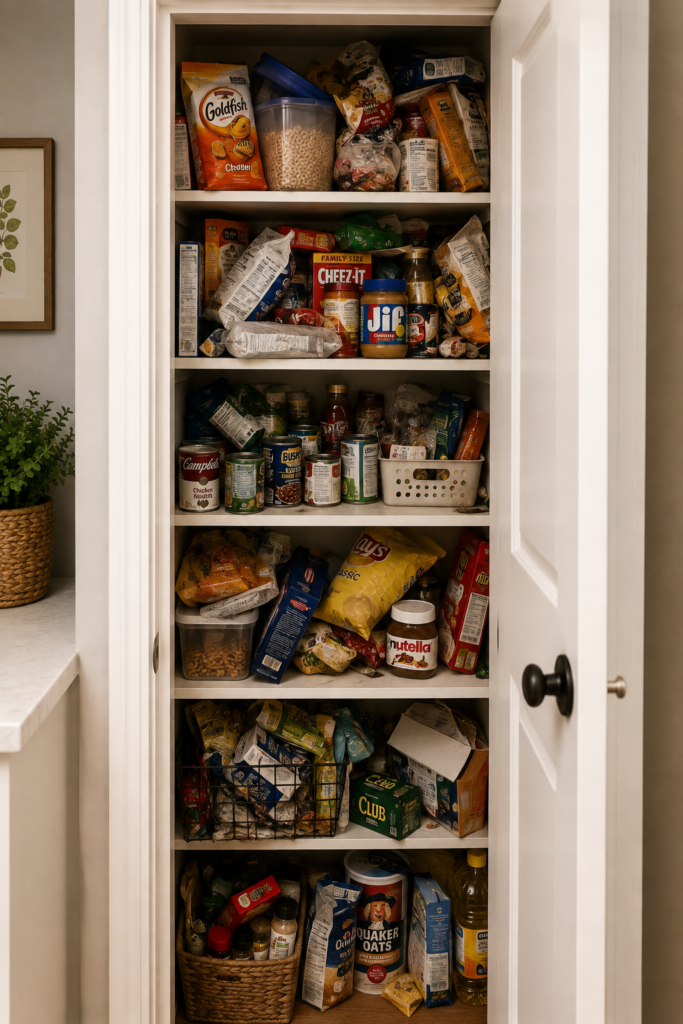
Organize a Small Pantry_before

Choose a time when you can leave the closet empty for a little while. This is not a major renovation, but trying to organize around stacks of groceries while someone needs cereal immediately can make the process more annoying than necessary.

Check the shelves for loose hardware, peeling liner, moisture, crumbs, or signs of pests before putting food back. Remove damaged packages, clean up sticky spills, and discard anything that no longer appears safe to eat. Food should be stored in sealed containers or intact packages, especially in a closet exposed to heat, moisture, or curious pets.

It also helps to set realistic expectations before you start. A single small closet has limits. If it currently holds pantry staples, oversized serving platters, water bottles, backup cleaning products, and three years of mystery spice blends, it may need fewer items—not simply more organizers.

Step-by-Step Instructions

Step 1: Empty the Closet Completely

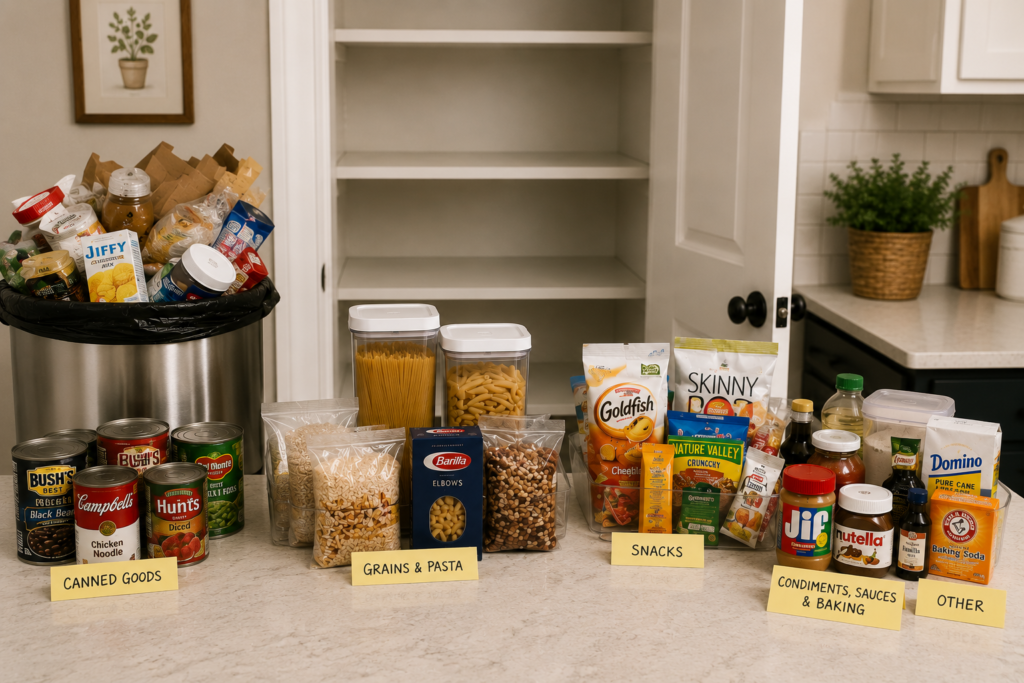
Take everything out of the closet, including items tucked into the back corners and anything balanced on top of other food. Place similar items near one another as you remove them: canned goods in one area, snacks in another, baking supplies together, and so on.

Seeing everything at once reveals what the closet is actually holding. You may discover five open pasta boxes, duplicate spices, or ingredients purchased with excellent intentions and then forgotten. That happens in even the nicest kitchens.

Keep food off wet or dirty surfaces, and return any perishable items to proper storage if they ended up in the closet by mistake. The focus here is pantry-safe food such as shelf-stable cans, grains, snacks, and baking ingredients.

Organize a Small Pantry_during

Step 2: Check Dates, Packaging, and What You Actually Use

Go through each item before deciding where it belongs. Set aside food that is past its safe-use date, packages with tears or signs of pests, and items you know your household will not use. If unopened food is still suitable to eat and accepted by a local food donation program, place it in a separate donation box rather than returning it to the closet out of guilt.

For the remaining food, group duplicates together. This makes it easier to spot multiple open packages and decide whether they can be safely consolidated. If you transfer or combine food, avoid mixing products with different ingredients or cooking instructions, and keep any useful date and preparation information.

There is no need to throw away perfectly good food simply because it looks untidy. The point is to reduce the closet to useful, safe items that earn their space.

Step 3: Clean and Assess the Closet Space

Wipe crumbs, dust, and sticky spots from the shelves. Let the closet dry fully before restocking it, particularly if you plan to use bins or shelf liners that could trap moisture underneath.

Next, look at the closet itself. Notice how many shelves it has, how much vertical height each shelf offers, and whether the door opens wide enough for pull-out bins. A deep closet has different challenges than a narrow one. Deep shelves tend to hide food in the back, while tall shelves often waste usable space above short cans and boxes.

Think about access, too. Items used every day should not require reaching above shoulder level, moving a heavy stack, or kneeling on the floor. If someone in your household has limited reach, grip strength, or mobility, keep their most-used foods on the easiest shelf to access.

Step 4: Create a Few Useful Food Categories

A small pantry closet works best with broad categories rather than lots of tiny, complicated zones. Choose categories based on how your household cooks and eats. For example, your closet might include:

  • Breakfast foods
  • Snacks
  • Pasta, rice, and grains
  • Canned and jarred meal ingredients
  • Baking supplies
  • Tea, coffee, or drink mixes
  • Quick lunch or dinner staples

Not every pantry needs every category. Someone who rarely bakes may need only one small baking section, while a household that packs lunches may need a larger snack area. Give space to the foods that support your actual routines, not the version of you who makes homemade bread every weekend in a sunlit kitchen.

Try to keep each category within one shelf zone, bin, or section. These visual boundaries make putting groceries away much simpler later.

Simple Houseware 3-Tier Stackable Can Organizer Rack Hold 36 Cans

Step 5: Assign Shelf Space by Frequency and Weight

Place your most-used items on the shelf that is easiest to reach. For many people, that is around eye or waist level. Daily breakfast foods, coffee supplies, snacks, or cooking staples usually belong here.

Put heavier items, such as canned goods, large jars, and bags of flour, on a lower shelf. This keeps the pantry safer and prevents an upper shelf from becoming a precarious canned-food avalanche. Lighter, less frequently used items can go on higher shelves, provided you can still remove them safely.

Keep backstock modest in a small pantry closet. One spare box of a staple may be practical; six backups can quickly crowd out foods you need this week. If you have additional storage elsewhere, reserve this pantry for open packages and items currently in use.

Step 6: Use Simple Organizers Only Where They Help

Organizers can make a small pantry closet more functional, but they are not mandatory. Start by noticing what is difficult to see, reach, or keep together.

A shallow basket or bin can hold snack packets, seasoning envelopes, or baking decorations so they do not drift across the shelf. If you have a deep pantry, a turntable may help with small jars, condiments, or oils, allowing you to reach items in the back without unloading the front. Shelf risers can create a second level for cans or short jars when there is unused vertical space.

Clear containers are helpful for loose dry goods such as flour, rice, oats, or cereal if the original packaging is bulky or hard to reseal. Make sure each container is food-safe, closes properly, and is labeled with the item name. If you transfer food, keep any necessary cooking instructions and date information from the original package.

Avoid buying organizers before you know the pantry’s trouble spots. A collection of beautiful bins that do not fit your shelves is just clutter with better posture.

Airtight Food Storage Containers with Lids

Step 7: Put Food Back With Labels Facing Forward

Return food category by category. Place frequently used items toward the front and less-used items behind them. Keep like items together, but do not force everything into rigid lines. A little flexibility helps when package sizes change.

Turn labels toward the front whenever possible. It takes only a few extra seconds and prevents the familiar experience of picking up four identical-looking cans before finding the tomatoes. For items in bins or opaque containers, add a simple label such as “Snacks,” “Baking,” or “Pasta.”

If multiple people use the kitchen, make the labels obvious rather than overly clever. “Breakfast” will remain helpful long after “Morning Magic” loses its charm.

Step 8: Create a Simple Restocking Routine

Once the pantry is organized, make it easy to keep that way. When you unpack groceries, place new items behind older ones whenever practical. This helps you use older food first without turning pantry management into a part-time job.

After cooking or grabbing a snack, return items to their category instead of setting them on the nearest open shelf. If a category starts overflowing, treat it as useful information: that food may need more space, another category may need less, or you may be buying more than the pantry can comfortably hold.

A quick check every few weeks is usually enough. Look for nearly empty staples, open packages that need sealing, and foods that have migrated away from their designated area.

Helpful Tips

  • Keep a small “use first” area for open packages and foods nearing their best-by or use-by dates.
  • Store packets and small pouches upright in a bin or small box so they remain visible instead of getting buried.
  • Use the closet door only if it can safely support an appropriate organizer and still close fully. Avoid overloading it with heavy jars or cans.
    Over The Door Pantry Organizer
  • Decant only the foods that regularly create mess or take up awkward space. Original packaging is often perfectly fine.
  • If your shelves are deep, keep backup items toward the back and everyday items toward the front.
  • Consider storing rarely used appliances, party supplies, or serving dishes somewhere else if they are taking over the area designated for food.
  • Leave a little open space. An overfilled pantry is hard to maintain because every new grocery item becomes a tiny game of shelf Tetris.

Common Mistakes to Avoid

  • Buying containers before measuring the pantry. Check shelf height, width, and depth first so organizers fit without wasting space.
  • Organizing food without sorting it. Bins cannot solve expired items, duplicates, or foods nobody plans to eat.
  • Putting heavy cans on high shelves. Store heavier items low where they are safer and easier to lift.
  • Creating too many categories. A small pantry closet needs simple zones that are easy to remember.
  • Hiding everyday staples behind backstock. Keep active-use foods within easy reach and reserve the back for extras.
  • Ignoring open packages. Use clips, containers, or resealable bags to keep dry goods fresh and prevent spills.
  • Treating the system as permanent. Grocery habits change, so adjust your categories when the pantry stops working well.

Final Thoughts

The best way to organize a small pantry closet is to make the space support your real meals and routines. A clear system matters more than matching containers, perfect labels, or shelves that look untouched by human life.

Once each category has a home and the most-used items are easy to reach, the pantry will feel larger simply because you can finally see what you have. That is the kind of pantry organization that earns its keep.

Frequently Asked Questions

Can I organize a small pantry closet without buying anything?

Yes. Start by removing food you cannot use, grouping similar items, placing heavy foods low, and keeping everyday staples at the front. Containers and bins can help with specific problems, but they are not required for a functional system.

What should go on the top shelf of a small pantry closet?

Use the top shelf for lightweight items you do not need every day, such as backup snacks, specialty baking ingredients, or seasonal foods. Avoid storing heavy cans, large glass jars, or anything difficult to remove safely.

Are clear containers necessary for a small pantry?

No. Clear containers are most useful for loose dry goods or packages that do not reseal well. If packaged food is easy to identify, stays fresh, and fits neatly, leaving it in its original packaging is often the simplest option.

How often should I reorganize the pantry?

A full reorganization is usually needed only when your household routines change or the current setup no longer works well. A brief check every few weeks for expired food, nearly empty staples, open packages, and misplaced items can keep the system manageable.

You Might Also Enjoy

Stuff We Keep Buying
House & Home

The Stuff We Keep Buying for Our Homes—and Probably Don’t Need

There are things in my house I genuinely need.

A refrigerator.

A bed.

A coffee maker. Very important.

And then there are the things I apparently believed would transform my life when I put them in my shopping cart. You know what I’m talking about. The stuff we keep buying.

The organizer that was going to fix the junk drawer.

The kitchen gadget that performs one incredibly specific task.

The decorative basket that now contains…other decorative things.

Somehow, our homes keep collecting stuff that’s supposed to make life easier, prettier or more organized.

Sometimes it does.

And sometimes we eventually realize we’re buying stuff to organize the stuff we already bought.

If your cabinets are full, your closets are packed, and yet another “must-have” home product is calling your name, these might be worth skipping.

1. Kitchen Gadgets That Only Do One Thing

You know these.

The avocado slicer.

The banana slicer.

The special tool that removes strawberry stems.

The tiny appliance designed exclusively to make one food you apparently believed you’d start eating four times a week.

Some single-purpose kitchen tools are fantastic if you actually use them. But plenty end up buried behind the mixing bowls because a knife, spoon or pan already does the same job.

Before buying another kitchen gadget, ask:

Would I use this often enough to give it permanent cabinet space?

Because cabinet space is valuable real estate.

And the strawberry probably wasn’t that difficult.

2. More Storage Bins Before We Get Rid of Anything

This one is sneaky because buying organizers feels productive.

Look at us!

We’re getting organized!

Except sometimes we’re not organizing.

We’re purchasing attractive containers for things we don’t need.

Before buying another set of matching bins, pull everything out of the space and decide what actually belongs there.

Then buy storage—if you still need it.

Otherwise, you may end up with beautifully labeled containers full of things nobody has touched since 2018.

That’s not organization.

That’s clutter with excellent branding.

3. Decorative Pillows That Spend Half Their Lives on the Floor

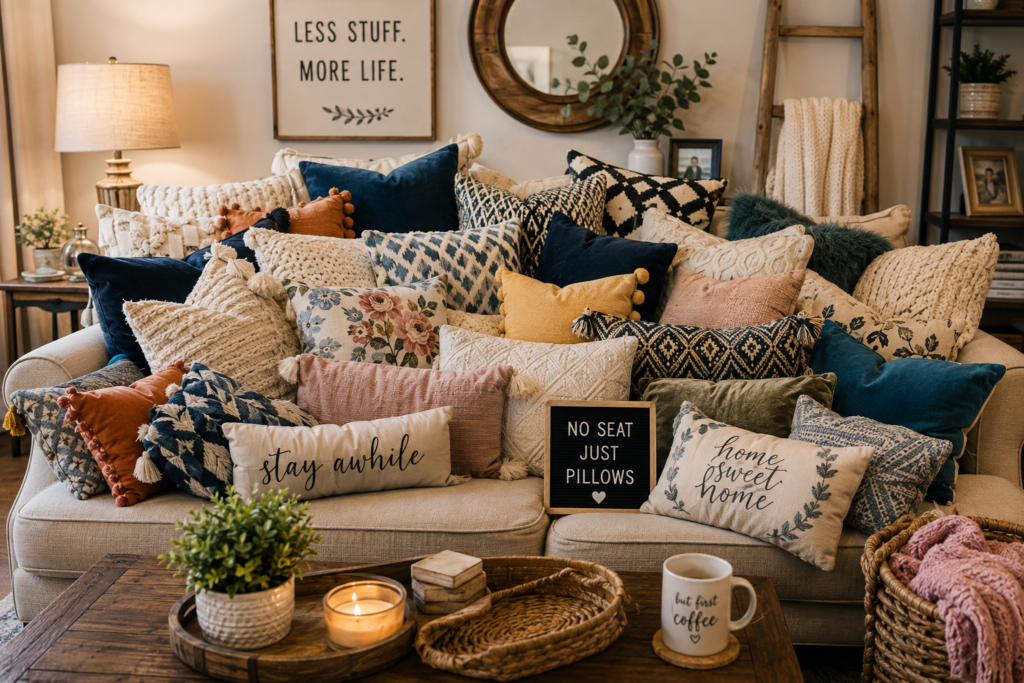
Stuff We Keep Buying_pillows

I like throw pillows.

I’m not coming for your throw pillows.

But there is a point where a sofa stops being somewhere to sit and becomes a pillow storage facility.

If everyone entering the room has to relocate six pillows before sitting down, perhaps the sofa has reached capacity.

Keep the ones you love.

Keep enough to make the room comfortable.

But when the nightly routine involves removing an entire decorative bedding installation before you can get into bed?

We may have crossed a line.

4. Cleaning Products for Every Individual Surface

Kitchen cleaner.

Bathroom cleaner.

Glass cleaner.

Stainless-steel cleaner.

Appliance cleaner.

Cabinet cleaner.

Special cleaner for the cleaner cabinet.

Okay, maybe not that last one.

Different surfaces absolutely can require different care, and manufacturer instructions matter. But many households accumulate bottles bought for one specific problem and never use them again.

Before buying another specialty product, check what you already own and whether it’s appropriate for the surface you’re cleaning.

You may not need twelve bottles under the sink.

And if you do need something specialized, at least you’ll know you’re buying it for an actual job rather than because the bottle promised REVOLUTIONARY SHINE.

5. Organizers for Drawers We Barely Open

Not every drawer needs a system.

Sometimes it’s okay for the batteries to just…live in a drawer.

Social media has convinced us that every cabinet should open to reveal identical containers, matching labels and objects arranged according to height and color.

Beautiful?

Absolutely.

Necessary?

Nope.

Organize the places that cause problems in your everyday life.

If you can already find the tape when you need it, the tape drawer is doing fine.

Leave it alone.

6. Seasonal Decor We Don’t Even Love Anymore

Stuff We Keep Buying_christmas stuff

Holiday decorations have an interesting ability to multiply while they’re in storage.

Every year another wreath appears.

Another pumpkin.

Another Christmas sign.

Another plastic storage tub gets carried into the garage.

And because it’s seasonal, we can go years without really asking whether we still like any of it.

When you decorate this year, pay attention to what stays in the box.

If you’ve skipped something for the last three Christmases, Easters or falls, there’s a decent chance you’re storing it out of habit rather than affection.

You don’t have to decorate every surface just because you own enough stuff to do it.

7. Matching Sets When We Only Needed One Piece

Towels.

Food-storage containers.

Cookware.

Bedding.

Kitchen utensils.

Sometimes the set is genuinely the better deal.

Other times we buy twelve pieces because we needed three—and then spend the next decade storing the other nine.

Before automatically grabbing the set, compare the price of buying only what you’ll actually use.

Because “but it came with six!” isn’t much of a bargain if four of them never leave the cabinet.

8. Trendy Decor We Like Mostly Because We Keep Seeing It

This happens to all of us.

You see something once.

Cute.

You see it ten times.

Interesting.

You see it forty-seven times on Pinterest, Instagram and every store display within a 20-mile radius.

Apparently I need one.

Maybe you genuinely love it.

Or maybe your brain has simply been subjected to an extremely effective marketing campaign.

Give trendy purchases a little time before buying them. If you still love the thing after the initial EVERYBODY HAS THIS wave passes, great.

Bring it home.

If you forget about it three days later?

You just saved money.

9. Duplicate Items Because We Can’t Find the One We Own

Scissors.

Tape.

Phone chargers.

Batteries.

Measuring tapes.

Screwdrivers.

Food-storage containers.

Sometimes we’re not buying too much.

We just can’t find our stuff.

So we buy another one.

And another.

Then one glorious Saturday we clean out a cabinet and discover that we apparently own seven pairs of scissors.

Before replacing a basic household item, do a quick search of the places where it logically—and illogically—might be hiding.

The missing screwdriver may simply be enjoying an extended vacation in the junk drawer.

10. “Someday” Hobby Supplies

Someday I’m going to make candles.

Someday I’m going to bake elaborate cakes.

Someday I’m going to scrapbook.

Someday I’m going to grow herbs indoors, learn calligraphy, make homemade pasta and become the sort of person who owns a pottery wheel.

Trying new hobbies is wonderful.

Buying an entire hobby before discovering whether you actually like doing it is expensive.

Start small.

Borrow equipment when possible. Buy beginner supplies. Try the activity a few times.

Then upgrade when you know you’ve found something you’ll keep doing.

Otherwise “future hobby” has a funny way of becoming “current closet problem.”

11. Backup Items for Things That Rarely Break

Having backups of essentials makes sense.

Toilet paper?

Yes.

Light bulbs?

Sure.

The exact shampoo you use every day when it’s on sale?

Reasonable.

But sometimes the backup mentality spreads to things that don’t need backups.

We buy another serving platter because we might need it.

Extra mugs in case fourteen unexpected coffee drinkers arrive simultaneously.

Three unopened versions of something that takes two years to use.

There’s preparedness.

And then there’s running a small warehouse from your linen closet.

12. Things We Buy Because a Room Feels “Empty”

This may be the biggest one.

An empty wall doesn’t automatically need art.

An open corner doesn’t automatically need a chair.

A clear countertop doesn’t automatically need decor.

A shelf doesn’t have to be full.

Sometimes the room is finished.

We’re just uncomfortable with empty space.

Before buying something to fill a spot, live with the space for a while.

If you eventually find something you love that belongs there, wonderful.

But don’t buy a random object simply because there’s room for a random object.

Empty space is allowed to exist.

The Question to Ask Before Bringing Something Home

I’m not interested in turning this into a minimalist challenge where we own one spoon and experience spiritual enlightenment because the countertop is empty.

I like stuff.

Most of us do.

Our homes contain things that make life easier, things that make us comfortable and things that serve absolutely no practical purpose but make us happy.

Those things have value too.

The goal isn’t to stop buying anything for your home.

It’s to stop automatically buying things because they’re trendy, on sale, supposedly life-changing or filling an empty spot.

Before buying, try asking:

Where will this live?

What problem will it solve?

Do I already own something that does this?

Would I still want it if it weren’t on sale?

And my favorite:

Do I actually want this—or do I want the life the advertisement made me imagine I’d have after buying it?

Ouch.

That last one gets me too.

Final Thoughts

A comfortable home doesn’t have to be an empty home.

And a beautiful home doesn’t have to contain only things that are practical.

Keep the ridiculous mug that makes you laugh.

Keep Grandma’s serving bowl even if you use it twice a year.

Keep the blanket everybody fights over and the decorative thing that serves no earthly purpose except that you love looking at it.

The problem isn’t owning stuff.

It’s accumulating things we don’t use, don’t love and sometimes don’t even remember buying.

So the next time a clever organizer, adorable seasonal decoration or revolutionary kitchen gadget tries to jump into your cart, give it a minute.

Maybe it’s exactly what your home needs.

Or maybe you can go home, open a cabinet and discover you already own two.

You Might Also Enjoy

Making Your Home Look More Dated
House & Home

10 Things Making Your Home Look More Dated Than It Really Is

Have you ever walked into a house, learned when it was built, and thought:

Wait. Seriously?

Sometimes a 30-year-old house looks fresh and current while a much newer home somehow feels like it hasn’t changed since everybody had a landline in the kitchen.

And it isn’t necessarily because the house needs remodeling.

Often, it’s the little things.

A light fixture. A window treatment. Cabinet hardware. Something hanging on the wall that you stopped noticing approximately twelve years ago.

The good news is that many of the things making your home look more dated are also some of the easiest things to change.

Before you start dreaming about knocking down walls, take another look at these ten.

Affiliate disclosure: This article contains affiliate links. If you make a purchase through one of these links, I may earn a commission at no additional cost to you. As an Amazon Associate, I earn from qualifying purchases.

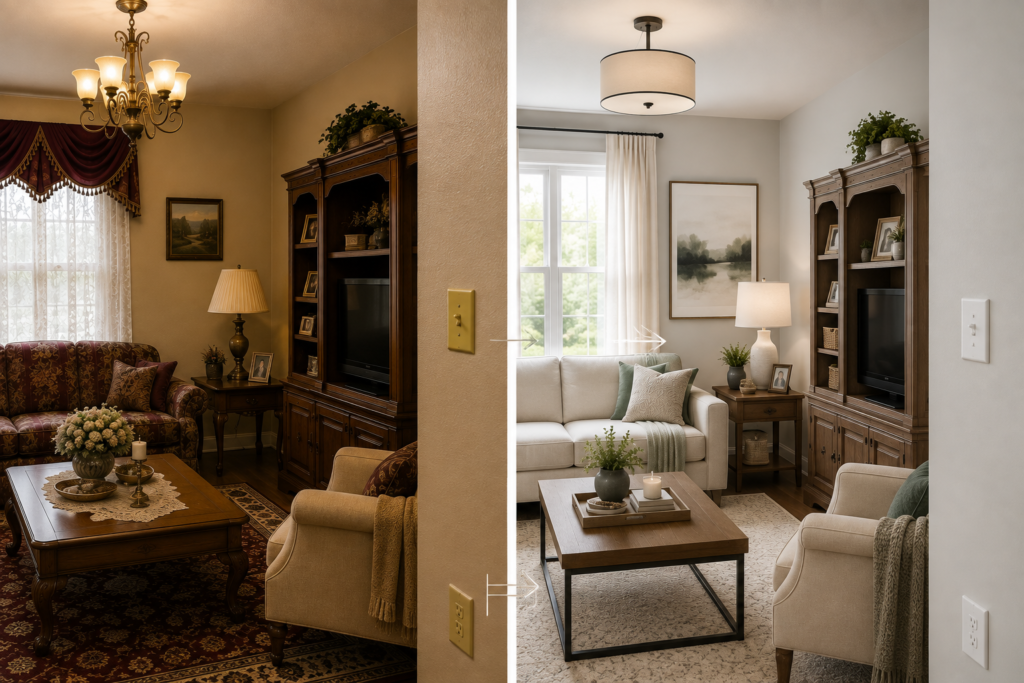
1. Your Window Treatments Belong to Another Decade

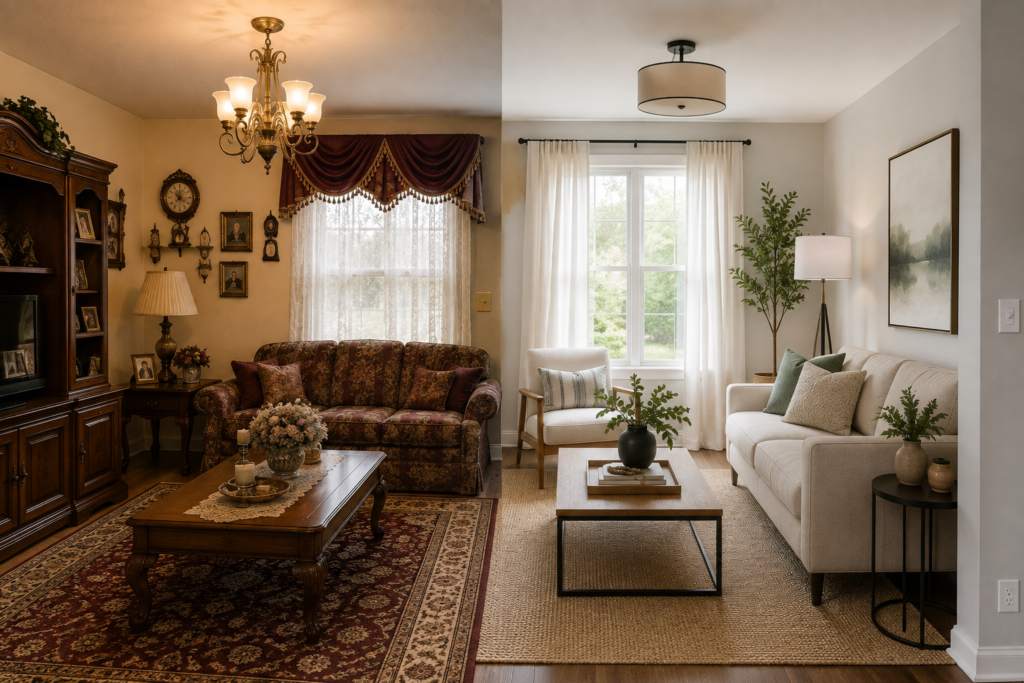
Curtains can quietly date an entire room.

We’re not talking about curtains simply because they’re old. We’re talking about very recognizable styles that immediately announce the era they came from.

Think:

  • Heavy swag valances
  • Puffy balloon shades
  • Layers of fabric covering most of the window
  • Very ornate curtain rods and finials
  • Curtains that are too short for the window
  • Old vertical blinds with missing or crooked slats

Sometimes simply removing an elaborate valance and letting more of the window show changes the entire room.

If you’re replacing curtains, simple panels hung higher and wider than the window can make the window appear larger and allow more natural light into the room.

You don’t have to choose plain white curtains, either.

Current doesn’t have to mean colorless.

See Sheer Linen Curtains on Amazon

2. Your Light Fixtures Are Time Capsules

This may be one of the fastest ways to guess when a house was last updated.

Builders install thousands of perfectly functional light fixtures that stay right where they are for decades.

And eventually nobody who lives there even sees them anymore.

Take a fresh look at:

  • Entryway chandeliers
  • Dining-room fixtures
  • Bathroom vanity lights
  • Ceiling fans
  • Flush-mount hallway lights
  • Kitchen pendants

You may discover that one fixture is doing an impressive amount of work making your home look more dated.

And don’t get hung up on one particular finish.

Brass can look fantastic. So can black, nickel, chrome, bronze and mixed metals.

It’s usually the overall design of the fixture, not simply the color of the metal, that tells the story.

3. Everything in the Room Matches

Remember when bedroom furniture came as an entire matching set?

Bed.

Two nightstands.

Tall dresser.

Long dresser.

Mirror.

Possibly an armoire large enough to conceal a small family.

And every piece had exactly the same finish and detailing.

Matching furniture isn’t inherently bad, but a room filled with one complete set can feel more like a furniture showroom from a particular era than a space that evolved naturally.

You don’t need to replace it all.

Try breaking up the set.

Move one nightstand somewhere else. Add a different bedside table. Replace the matching mirror. Mix in a painted, upholstered, metal or natural-wood piece.

A little contrast can make the furniture you already own feel much more intentional.

4. Your Cabinet Hardware Is Telling on You

Cabinets are expensive.

Hardware isn’t.

That’s why knobs and pulls are one of my favorite places to look before deciding a kitchen or bathroom needs a giant makeover.

Tiny shiny knobs, ornate pulls, worn finishes, or hardware that strongly reflects a past decorating trend can make otherwise perfectly good cabinetry feel older.

Replacing hardware can completely change the personality of the cabinets without touching the doors themselves.

Just measure the existing holes before buying replacements.

Otherwise your “quick Saturday update” becomes:

Why am I drilling 37 cabinet doors?

Nobody wanted that project.

See Cabinet Hardware on Amazon

5. Your Walls Have Too Many Little Things on Them

One small framed picture.

Another beside it.

A plaque.

A decorative word.

Three family photos.

Something metal with scrollwork.

And somehow a tiny shelf got involved.

None of those things is necessarily dated by itself. But lots of small, unrelated pieces scattered across every available wall can make a room feel busy and pull it toward an older decorating style.

Try removing some of them temporarily.

Then consider grouping favorite pieces into a deliberate gallery wall or replacing several tiny decorations with one larger piece.

You may discover the room didn’t need new decor.

It needed fewer things competing for attention.

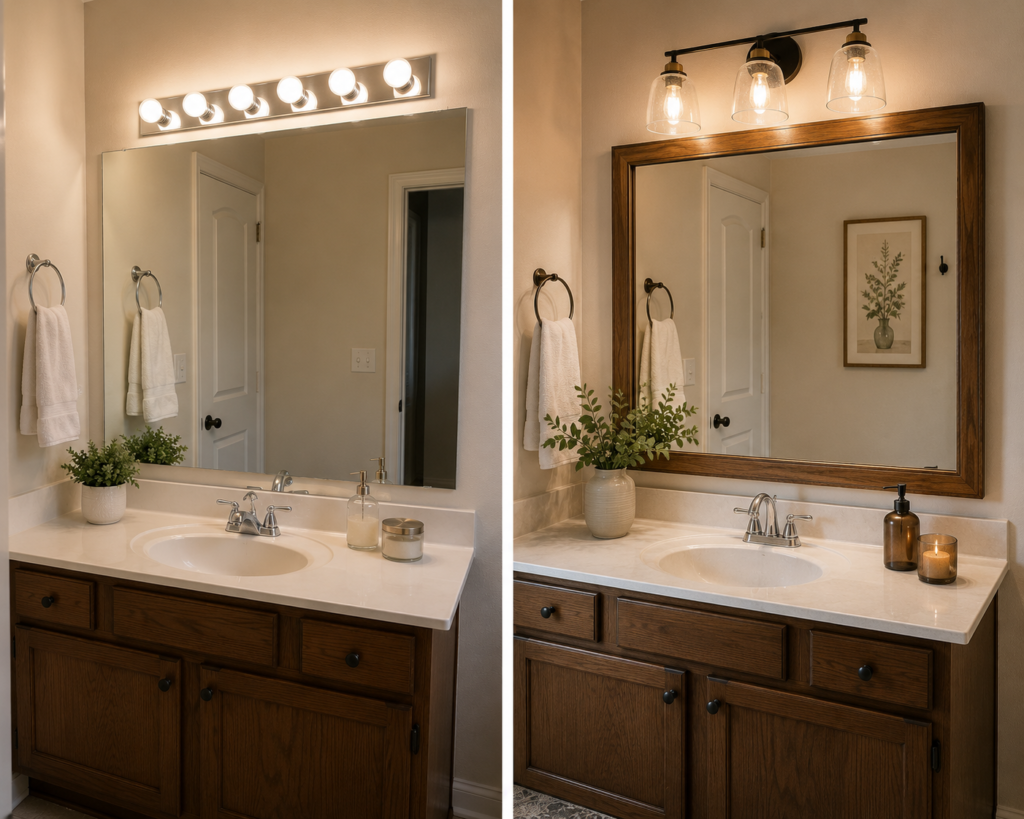
6. Your Bathroom Mirror Is Still Wearing Its Builder Outfit

Making Your Home Look More Dated_BATH MIRROR

You know the mirror.

Huge rectangle.

Glued directly to the wall.

No frame.

Usually accompanied by a row of lights above it.

There’s nothing wrong with a builder-grade mirror. It performs its mirror duties faithfully.

But it can make a bathroom immediately reveal its age.

Depending on how yours is installed, you may be able to frame the existing mirror rather than remove it. Another option is replacing it with one or two framed mirrors that better fit the vanity.

Pair that with updated lighting and suddenly the same vanity may look completely different.

No sledgehammer required.

7. One Old Flooring Choice Is Dominating Everything

Flooring covers a lot of visual territory.

So when it’s strongly associated with a particular period—busy sheet vinyl, heavily patterned carpet, dated tile combinations—it can overwhelm updates you’ve made everywhere else.

Unfortunately, flooring also isn’t always a “spend $42 Saturday morning” project.

So don’t assume replacement is your only option.

A well-sized area rug can change the visual balance of a room. Professionally cleaning carpet may revive something that simply looks tired. Hardwood may be refinished rather than replaced.

And if the floor is in good condition and you like it?

Keep it.

We’re updating a home, not auditioning it for approval from strangers on the internet.

8. Your Switch Plates and Outlets Have Turned That Mysterious Shade of Beige

Making Your Home Look More Dated_fresh paint

You painted the walls.

You changed the curtains.

You hung new artwork.

And there they are:

Twenty-seven-year-old yellowed switch plates.

Once you notice them, they’re surprisingly hard to unsee.

Cracked, painted-over, yellowed, mismatched, or visibly worn covers can make freshly updated walls look unfinished.

Replacing basic cover plates is inexpensive and can make the entire wall look cleaner.

If the actual switches or receptacles are old, damaged, loose, unusually warm, discolored, or otherwise concerning, that’s different. Have a qualified electrician evaluate them rather than treating an electrical issue as a decorating project.

We’re fixing ugly, not decorating our way around a fire hazard.

9. Your Decor Is Shouting the Year You Bought It

Every decade leaves evidence.

Sometimes lots of evidence.

There were Tuscan kitchens. Roosters. Wallpaper borders. Chevron everything. Giant decorative clocks. Word art. Mason jars on absolutely everything. Farmhouse signs explaining that kitchens are for eating and homes are for living.

And eventually today’s biggest trends will date themselves too.

That’s why you don’t need to purge everything that isn’t currently fashionable.

If you still love something, keep it.

The dated feeling usually occurs when an entire room is committed to a single, highly recognizable trend from a particular moment.

Mixing older favorites with simpler pieces, natural materials, personal objects and things collected over time tends to age much better than buying an entire “look” at once.

10. You’ve Been Looking at the Same Room for So Long You Can’t See It Anymore

This one isn’t technically decor.

But it may be the most important item on the list.

You stop seeing your own house.

That strange light fixture?

Normal.

The valance you’ve disliked since 2014?

Invisible.

The chair shoved into a corner because there wasn’t anywhere else to put it?

Apparently it lives there now.

Try this:

Take a photo of the room.

Then look at the photo instead of the room.

It’s bizarre how quickly you’ll notice things you’ve walked past every day for years.

You may immediately spot a crowded corner, undersized artwork, dated fixture, furniture arrangement or decorative piece that never bothered you in person.

Better yet, leave the room for a while and come back with one question:

If I were decorating this room today, what would I change first?

Start with that.

Don’t Accidentally Replace “Dated” With “Trendy”

There’s a trap hiding in articles like this.

You start noticing older things in your home, decide everything must go, and replace it all with whatever happens to be trending right now.

Congratulations.

You may have just scheduled another dated-house problem for 2031. 😂

Instead of chasing every trend, use them selectively.

Keep things you genuinely love.

Choose larger or expensive pieces because they work for your home—not because they’re currently everywhere online.

Then have fun with trends through things that are relatively easy to change:

  • Pillows
  • Throws
  • Artwork
  • Lamps
  • Hardware
  • Paint
  • Smaller decorative pieces

Your home doesn’t need to look like it was decorated yesterday.

It should look like it belongs to you today.

Final Thoughts

If your house feels older than it actually is, don’t immediately assume you need new cabinets, new flooring, new furniture and a contractor who arrives carrying a clipboard and a frightening estimate.

Look at the small stuff first.

The curtains.

The lights.

The hardware.

The mirror.

The things hanging on the walls.

Those details can have an outsized effect on how current a room feels—and many of them can be changed without spending much money.

And remember: dated isn’t the same as old.

An antique table you adore isn’t automatically making your house look dated.

Neither is dark wood, brass, floral fabric, vintage art or anything else you genuinely love.

A home feels current when the things inside it feel chosen rather than simply left there.

That’s a much better goal than trying to make your house look like everybody else’s.

You Might Also Enjoy

Little Home Upgrades
House & Home

12 Little Home Upgrades That Make Everyday Life Surprisingly Better

Not every home improvement needs a contractor, a demolition crew, or six months of wondering why you ever started.

Some of the best upgrades are ridiculously simple.

These are the little home upgrades you install, replace, move, or add—and then wonder why you lived without them for so long.

A light that turns on exactly where you need it. An outlet where you’re always hunting for a charger. A drawer that no longer requires getting on your knees and excavating three frying pans to find the one in the back.

None of these will get you a dramatic HGTV reveal.

But they might make an ordinary Tuesday noticeably less annoying.

And sometimes that’s the better upgrade.

Affiliate disclosure: This article contains affiliate links. If you make a purchase through one of these links, I may earn a commission at no additional cost to you. As an Amazon Associate, I earn from qualifying purchases.

1. Put Outlets With USB Ports Where You Actually Charge Things

If your phone charger currently requires an extension cord, a power strip, and the removal of a lamp, we can do better.

Replacing a standard outlet with one that includes built-in USB charging can eliminate adapters and cord clutter in the places where everybody naturally charges devices.

Good spots include:

  • Beside the bed
  • Near the sofa
  • Kitchen charging areas
  • Home offices
  • Guest rooms

USB-C is especially worth considering as more devices use it.

You can also get outlet extenders and charging stations if you don’t want to replace an electrical receptacle.

The point isn’t creating a futuristic smart house.

It’s being able to charge your phone without crawling behind furniture.

Small victory. Still counts.

5 Outlet Extender with 4 USB Ports

2. Add Under-Cabinet Lighting

This is one of those upgrades that seems decorative until you have it.

Then you realize you’ve apparently been chopping onions in a cave.

Under-cabinet lights illuminate the part of your kitchen where you’re actually working instead of relying entirely on ceiling fixtures behind you.

They can also make the kitchen feel warmer at night when you don’t want every overhead light blazing.

And you don’t necessarily need an electrician. Plug-in and rechargeable versions make this a realistic upgrade even for renters.

Under Cabinet Lighting

3. Install Motion-Sensor Lights in Dark Closets and Cabinets

You open the hall closet.

It’s dark.

You reach inside anyway.

Something falls on you.

Excellent.

Small rechargeable or battery-operated motion lights are fantastic in places that never had adequate lighting:

  • Closets
  • Pantries
  • Under sinks
  • Deep cabinets
  • Stairways
  • Laundry areas
  • Garage storage

Open the door, light comes on.

It’s an embarrassingly small improvement that can make you happy every single time it happens.

Motion Sensor Light

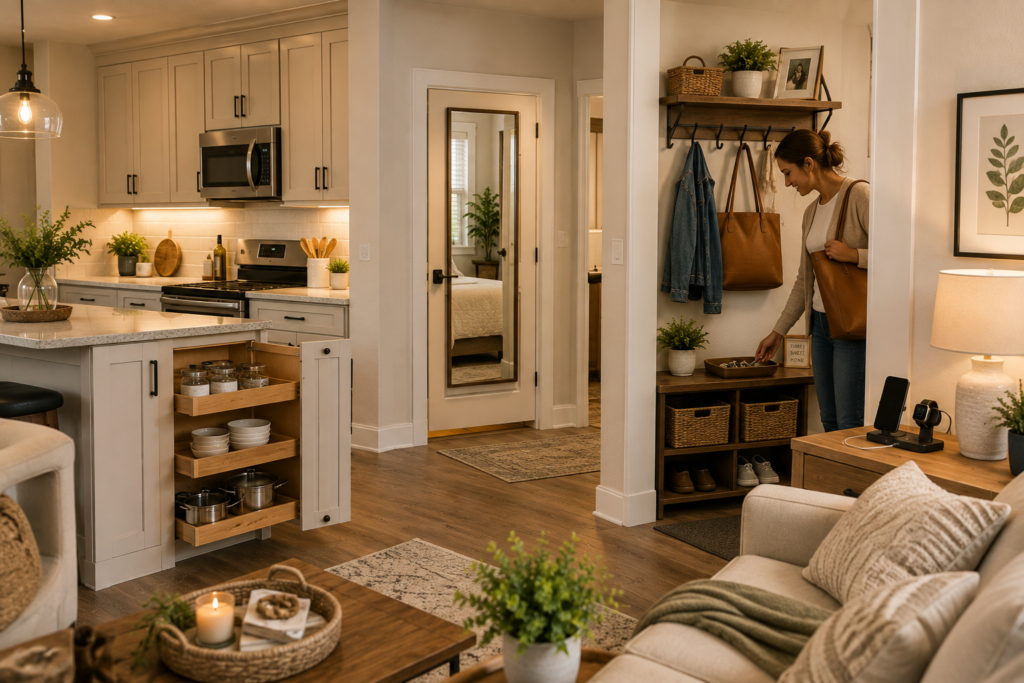
4. Add Pull-Out Shelves to Deep Lower Cabinets

There are things living in the back of your kitchen cabinets that haven’t seen daylight since 2019.

Pull-out shelves bring the back of the cabinet to you.

Instead of kneeling on the floor and removing the colander, stockpot and three lids to reach something hiding in the back, you slide the shelf out.

They’re especially handy for:

  • Pots and pans
  • Small appliances
  • Food-storage containers
  • Pantry items
  • Cleaning supplies

You don’t necessarily need to replace your cabinets, either. Retrofit pull-out organizers are available for many existing cabinet sizes.

Your knees will approve.

Pull Out Cabinet Organizer

5. Put a Drop Zone Beside the Door You Actually Use

Not the beautiful front entry nobody enters through.

The door everybody really uses.

If your family comes through the garage carrying keys, backpacks, purses, mail, sunglasses and assorted evidence of the outside world, give those things somewhere to land.

A simple drop zone might include:

  • Hooks
  • A small shelf
  • Baskets
  • A mail tray
  • Shoe storage
  • A key holder

This isn’t just an organization upgrade.

It’s a “where are my keys?” prevention system.

Key and Mail Organizer

6. Replace One Annoying Showerhead

There are few household disappointments quite like standing underneath a showerhead that produces approximately nine drops of water.

You don’t have to renovate the bathroom to improve your shower.

Replacing an old showerhead can improve spray patterns, adjustability and the overall experience considerably. Handheld models can also make rinsing the shower, washing pets and other cleaning jobs easier.

Just check your local water-use requirements and the specifications before buying.

It’s a relatively inexpensive upgrade you can appreciate every single day.

High Pressure Handheld Shower Head

7. Add Soft-Close Hardware Where Things Slam

Once you’ve had soft-close drawers, a regular drawer feels surprisingly aggressive.

BANG.

Well, good morning to you too, silverware drawer.

Depending on your cabinetry, you may be able to retrofit existing doors and drawers with soft-close hinges, dampers, or slides rather than replacing the cabinets themselves.

It’s especially nice in kitchens, bathrooms and anywhere somebody gets ready while another person is sleeping.

Will soft-close cabinets change your life?

No.

Will you become irrationally annoyed by cabinets without them afterward?

Possibly.

Soft Close Drawer Slides

8. Install a Better Closet System

Many closets aren’t actually too small.

They’re just terribly designed.

One rod stretched across an empty box wastes an enormous amount of usable space.

Adding a second hanging rod, shelves, drawers, baskets or adjustable components can turn the same closet into something considerably more useful.

And don’t automatically buy an elaborate closet system.

First look at what you own.

If you have lots of shoes, prioritize shoe storage. If you mostly wear folded clothes, add shelves or drawers. If dresses make up half your wardrobe, don’t install double rods everywhere.

Build the closet around your stuff—not somebody else’s Pinterest closet.

Wall Mounted Closet System

9. Put a Full-Length Mirror Where You Actually Get Dressed

A full-length mirror is one of those things you don’t think much about until you live in a house without one.

Then you’re standing on the other side of the room trying to see your shoes in a bathroom mirror that stops at your waist.

You don’t need floor space for a big leaning mirror, either. The back of a bedroom, bathroom, or closet door can be the perfect spot for one—especially in a smaller room.

It’s useful for the obvious reason: you can actually see your whole outfit before you leave the house.

But a well-placed mirror can also bounce light around a darker room and make a small space feel a little more open.

If you’ve got an unused door and approximately five minutes, this may be one of the easiest upgrades on the entire list.

And once you get used to having one, you’ll probably want one in every house after that.

Full Length Mirror Over the Door

10. Replace Bad Power Strips With a Real Charging Setup

Look behind your television or desk.

Actually…

Maybe don’t. 😂

If it’s an octopus of cords, adapters and mystery cables, a better cable-management and charging setup can make a surprisingly big difference.

Use appropriately rated surge protection where needed, shorten unnecessarily long cords when possible, label cables you can never identify, and mount a power strip rather than letting it flop around on the floor.

It’s not glamorous.

But the next time you need to unplug the printer and don’t accidentally disconnect the entire internet, you’ll understand why it made the list.

Under Desk Cable Management 

11. Put Hooks in the Places Where Things Already Land

This may be the cheapest upgrade here.

If towels constantly end up on the bathroom floor, maybe you need another hook.

If your robe lives on a chair, put a hook beside the bed.

If reusable grocery bags pile up near the garage door, hang them there.

If headphones are permanently draped over your desk, give them a hook underneath it.

Pay attention to the places where things naturally accumulate.

Sometimes your house is practically telling you where the hook belongs.

Over the Door Hanger

12. Add Dimmers to the Lights You Use Most

There are times when you need to see everything.

And there are times when nobody needs the kitchen illuminated like an operating room.

Dimmers let the same room work differently throughout the day—bright for cooking or cleaning, softer for dinner or winding down in the evening.

Bedrooms, living rooms, dining areas and kitchens are obvious candidates.

Just make sure the switch, fixture, and bulbs are compatible, and hire an electrician if you’re not comfortable doing electrical work.

This is one of those small upgrades that doesn’t add more stuff to your home.

It simply makes the home you already have feel better.

Smart Dimmer Switch

The Best Home Upgrades Fix Something That Bugs You

Here’s the easiest way to decide which little home upgrade is worth doing first:

What annoys you every day?

Not what looks impressive online.

Not what somebody says every modern home “must have.”

What makes you mutter under your breath?

The dark pantry?

The cabinet you hate reaching into?

The pile of backpacks by the garage door?

The showerhead you have personally insulted on multiple occasions?

Start there.

A $25 improvement that solves a problem you encounter twice a day can be more satisfying than a $2,500 improvement you barely notice.

Final Thoughts

The little inconveniences in a house are easy to tolerate because none of them seem important enough to fix.

So we keep crawling under desks looking for outlets.

We keep digging through dark cabinets.

We keep moving the same pile of stuff off the kitchen counter.

And then one Saturday you spend twenty minutes fixing the problem and think:

Why didn’t I do this three years ago?

These little home upgrades are my favorite kind.

They don’t necessarily make your house dramatically prettier or increase its value by thousands of dollars.

They just make living there easier.

And considering how much time we spend at home, that’s a pretty good return on twenty minutes and a screwdriver.

You Might Also Enjoy

Why Does My House Still Look Cluttered
House & Home

Why Does My House Still Look Cluttered After I Clean It? 10 Things to Check

You cleaned the kitchen.

You vacuumed. You dusted. You wiped down the bathrooms. Maybe you even did that annoying little strip of floor between the refrigerator and the cabinets that nobody notices until something sticky lands there.

So why does the house still look cluttered?

What gives?

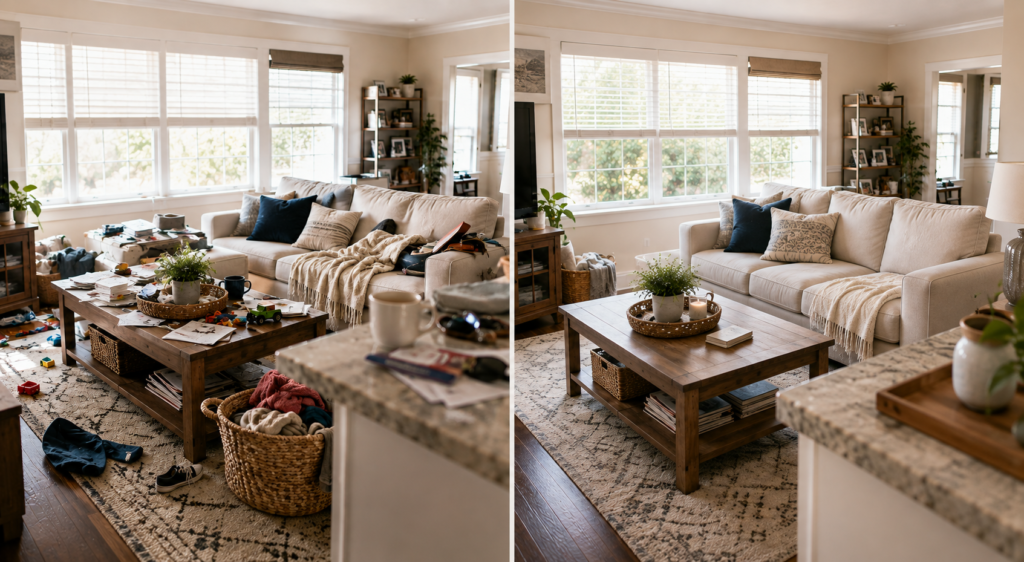
The problem may not be that your house isn’t clean. Clean and uncluttered aren’t the same thing.

You can have spotless countertops covered with appliances, a freshly dusted bookshelf packed with stuff, and a perfectly vacuumed living room containing seventeen things that don’t actually belong there.

If you’ve ever finished cleaning and wondered why your house somehow still looks messy, don’t start cleaning it all over again.

Look for these instead.

Affiliate disclosure: This article contains affiliate links. If you make a purchase through one of these links, I may earn a commission at no additional cost to you. As an Amazon Associate, I earn from qualifying purchases.

1. There’s Too Much Stuff Sitting on Your Flat Surfaces

Start here because this is one of the easiest things to spot.

Look at your:

  • Kitchen counters
  • Bathroom counters
  • Coffee table
  • Nightstands
  • Dresser
  • Dining table
  • Entryway table

How much stuff lives there permanently?

A clean kitchen counter can still look cluttered when it’s holding a toaster, blender, knife block, coffee maker, utensil crock, paper towel holder, fruit bowl, vitamins, mail and three things somebody set down “for a minute” on Tuesday.

You don’t need bare counters.

But try removing a few things and see what happens.

The goal isn’t empty. It’s breathing room.

If you use the toaster every morning, leave it out. If you use the blender twice a month, maybe it doesn’t need prime kitchen real estate.

2. Your Everyday Stuff Doesn’t Have an Everyday Home

Why Does My House Still Look Cluttered_shelf

Key Holder Wall Mount, Wooden Key and Mail Organizer

This is the one that gets me.

Keys come in.

Mail comes in.

Shoes come off.

Sunglasses get tossed somewhere.

Chargers migrate around the house like they’re searching for a better life.

If the things you use every day don’t have an obvious place to go, they’re going to live on whatever horizontal surface happens to be nearby.

Instead of trying harder to “put things away,” make putting them away ridiculously easy.

Put a basket where shoes actually get kicked off.

Put hooks where bags actually land.

Put a small tray where keys actually get dropped.

Notice the important word there:

Actually.

Don’t build an organization system around where you think your family should put things.

Watch where everybody already puts them and work with that.

3. You Clean Around Clutter Instead of Removing It

I’ve done this.

Pick up pile.

Wipe counter.

Put pile back.

Ta-da! Clean pile. 😂

Cleaning removes dirt.

Decluttering removes things you don’t need, use, want, or have room for.

Sometimes you need both.

Before your next cleaning session, choose just one cluttered area—a bathroom drawer, kitchen counter, coffee table or one shelf—and deal with the stuff before you clean the surface.

Throw away trash.

Put wandering items where they belong.

Donate things you don’t use.

Then clean.

That one little area will probably look noticeably better than everything you merely dusted around.

4. Your Storage Is Full

Here’s a sneaky one.

Sometimes the problem isn’t that you need better baskets.

You don’t have anywhere left to put anything.

Open your cabinets and closets.

Are they packed?

Do you have to shove things aside to put something away?

Does putting away one clean towel require rearranging twelve other towels?

When your hidden storage is stuffed to capacity, everyday belongings start spilling into visible areas.

Before buying another organizer, ask whether the space actually needs less stuff.

A prettier container doesn’t magically create another closet.

5. You’ve Got Too Many Little Things Everywhere

A room can contain a reasonable amount of stuff and still look busy when everything is visually scattered.

Why Does My House Still Look Cluttered_bathroom organizer

Bathroom Countertop Organizer

Five bottles lined up individually on the bathroom counter look like five separate things.

Put the same bottles together on a tray and your eye tends to read them as one little group.

Same amount of stuff.

Different visual effect.

Trays, baskets and containers can be especially useful for things you genuinely use and want accessible:

  • Cooking oils beside the stove
  • Toiletries on the bathroom counter
  • Remotes on the coffee table
  • Coffee supplies
  • Kids’ art supplies
  • Everyday skincare

But don’t use baskets to avoid making decisions.

A basket full of junk is still junk. It just has handles now.

6. Paper Is Quietly Taking Over Your House

Paper has an amazing ability to look harmless one sheet at a time.

Then suddenly there’s a pile.

Mail, school papers, receipts, coupons, forms, magazines, warranties, appointment reminders…

And because some of it might be important, nobody wants to throw anything away.

Give incoming paper a very short path:

Trash/recycle it. Act on it. File it.

That’s basically it.

A small inbox or tray can hold things that need attention, but give yourself a limit. When the tray is full, it’s time to deal with it.

Otherwise you’ve invented a decorative paper landfill.

7. You Own Too Many Duplicates

Go look under the kitchen sink.

I’ll wait. 😂

How many half-used cleaning products are in there?

Now try your bathroom cabinet.

Three nearly identical lotions? Five hair products you don’t use? Enough travel-size toiletries to open a tiny hotel?

Duplicates quietly consume storage.

Sometimes they’re useful. Having two sets of sheets isn’t exactly a hoarding crisis.

But if you’re constantly struggling for space, look for categories where you’ve accumulated far more than you realistically use.

Keep your favorites.

Use up what you can.

Stop buying the thing you apparently already own seven of.

8. Your “Just in Case” Stuff Has Taken Over

Some things are worth keeping just in case.

A basic tool kit? Absolutely.

Extra batteries? Sure.

The mysterious cable that belonged to an electronic device you haven’t owned since 2017?

We may be stretching the definition of emergency preparedness.

If letting things go is difficult, make a maybe box.

Put questionable items inside, write the date on it, and store it somewhere out of the way.

If months go by and you never need anything in the box, deciding what to do with it may be considerably easier.

You don’t have to become a minimalist.

You just need enough room for the things you actually use.

9. You’ve Filled Every Available Inch of the Room

This happens with decor as much as ordinary clutter.

Every wall doesn’t need something on it.

Every shelf doesn’t need to be full.

Every corner doesn’t need a basket, plant, chair, lamp or decorative ladder whose primary occupation is holding a blanket.

Leaving some open space gives your eyes somewhere to rest.

Try removing a few decorative items from a room—not permanently, just as an experiment.

Take a photo before and after.

You may be surprised by how much calmer the room feels when everything isn’t competing for attention.

10. The Clutter Keeps Coming Back to the Same Places

This may be the most useful clue of all.

If the kitchen island is messy every single evening, don’t just clear it again.

Ask why.

Are backpacks landing there because there’s nowhere near the door to put them?

Is mail piling up because nobody has decided what happens to it?

Are shoes collecting beside the sofa because the shoe storage is inconvenient?

Does clean laundry live on a chair because the closet is overcrowded?

Recurring clutter isn’t always a discipline problem.

Sometimes it’s a system problem.

The messy spot is telling you exactly where your current setup isn’t working.

Fix that, and you may stop cleaning the same pile over and over.

Before You Buy Another Organizer…

This deserves its own section because organization products are dangerous when you’re frustrated.

You see a beautiful row of matching containers and think:

THAT’S IT. Those bins will finally fix my life.

Maybe.

But first decide:

  1. What exactly needs to be stored?
  2. Do I actually need to keep all of it?
  3. Where would using this item be most convenient?
  4. What size storage do I actually need?
  5. Will everyone in the house realistically use this system?

Declutter first. Organize second. Shop third.

Otherwise you may simply spend $87 to make your clutter coordinate.

Try the 10-Minute Clutter Test

If your house is clean but still looks messy, don’t tackle the whole thing.

Set a timer for ten minutes.

Choose the room bothering you most and remove only visual clutter.

Don’t vacuum.

Don’t dust.

Don’t scrub anything.

Clear things that don’t belong. Reduce crowded surfaces. Group the things that stay. Put obvious wandering objects away.

Then stop and look at the room.

If it suddenly looks considerably cleaner even though you didn’t technically clean anything…

You’ve found the problem.

Final Thoughts

If your house still looks cluttered after you clean it, that doesn’t necessarily mean you need to clean more.

You may need less stuff on the counters.

A better landing spot for everyday things.

Some breathing room on your shelves.

Less paper.

Less “just in case.”

Or simply a storage system designed around how your household actually behaves.

Start with the clutter spot that annoys you the most and figure out why it keeps happening.

You don’t need a perfectly organized house.

You need a house where putting things away isn’t harder than leaving them out.

And if you discover you’ve been carefully dusting the same pile of clutter every Saturday…

At least now you can stop polishing it. 😂

You Might Also Enjoy

sustainable home decor trends
House & Home

10 Sustainable Home Decor Trends to Embrace

Sustainable home decor has moved from niche interest to a vital part of modern living spaces, reflecting a growing desire to make eco-friendly choices without sacrificing style. Many homeowners and renters alike seek ways to refresh their interiors with materials and designs that minimize environmental impact while enhancing comfort and function. Embracing sustainable trends can help reduce waste, support ethical production, and create a healthier home environment.

Incorporating these trends doesn’t require a complete overhaul or a large budget. Instead, practical changes—from choosing natural fibers to repurposing old items—can make a meaningful difference. Here are ten sustainable home decor trends that blend beauty and responsibility, offering ideas for every room and lifestyle.

Affiliate disclosure: This article contains affiliate links. If you make a purchase through one of these links, I may earn a commission at no additional cost to you. As an Amazon Associate, I earn from qualifying purchases.


1. Reclaimed Wood Furniture Pieces

sustainable home decor trends; salvaged wood

Reclaimed wood furniture uses wood salvaged from old buildings, barns, or other structures, giving it a second life as chairs, tables, or shelving. These pieces often showcase unique grains and textures not found in newly sourced wood. Ideal for homeowners or renters looking for durable, one-of-a-kind furniture, reclaimed wood adds warmth and character to living rooms, dining areas, or bedrooms.

Why it stands out: By reusing existing materials, reclaimed wood furniture reduces demand for new lumber and lowers the environmental footprint associated with furniture production.


2. Organic Cotton and Linen Textiles

👉 View on Amazon →

Textiles made from organic cotton or linen avoid synthetic pesticides and fertilizers, making them gentler on the environment and often softer on the skin. These fabrics are commonly found in curtains, throw pillows, bedding, and upholstery. They suit anyone seeking natural, breathable materials that also support sustainable farming practices.

Why it stands out: Organic textiles offer a practical, affordable way to replace synthetic fabrics, improving indoor air quality and reducing chemical exposure.


3. Indoor Plants for Air Quality and Style

👉 View on Amazon →

Incorporating indoor plants is a trend that blends sustainability with wellness. Plants like snake plants, pothos, and peace lilies naturally filter airborne toxins while adding greenery that softens and enlivens any room. They fit well in small apartments or large homes, require minimal care, and are budget-friendly for planters.

Why it stands out: Beyond aesthetics, indoor plants improve indoor air quality and create a calming atmosphere, making them a sustainable decor choice with clear functional benefits.


4. Upcycled and Vintage Decor Items

Upcycling transforms old or discarded items into fresh decor pieces, such as turning glass jars into light fixtures or repurposing vintage suitcases as storage benches. Vintage decor sourced from thrift stores or online markets introduces character and history without the environmental cost of new manufacturing. These choices work especially well for renters or those on a budget who want unique, sustainable accents.

Why it stands out: Upcycled and vintage pieces reduce waste and promote creativity, often requiring less investment than buying new.


5. Natural Fiber Rugs

👉 View on Amazon →

Rugs made from jute, sisal, coir, or wool are sustainable alternatives to synthetic carpets. These natural fibers biodegrade more easily and are often harvested with lower environmental impact. Available in various textures and patterns, these rugs enhance living rooms, bedrooms, or entryways with earthy tones and durability suited for high-traffic areas.

Why it stands out: Natural fiber rugs balance comfort, style, and sustainability by using renewable materials that typically require less processing.


6. Low-VOC and Natural Paints

👉 View on Amazon →

Choosing paints with low volatile organic compounds (VOCs) or natural ingredients reduces harmful fumes during application and over time. These paints come in many colors and finishes and can be used in any room, including nurseries and bedrooms where air quality matters most. They are a practical option for anyone repainting or refreshing walls with health and sustainability in mind.

Why it stands out: Low-VOC paints improve indoor air quality and reduce environmental impact without compromising color or coverage.


7. Energy-Efficient Lighting Fixtures

👉 View on Amazon →

Energy-efficient lighting, such as LED bulbs and fixtures designed to maximize light output, reduces electricity consumption and related emissions. These fixtures come in modern and vintage-inspired designs, suitable for task lighting, ambient light, or decorative accents in kitchens, offices, and living spaces. Using energy-efficient lighting benefits those aiming to lower utility bills and carbon footprints.

Why it stands out: Energy-efficient lighting significantly reduces energy use, offering long-term savings and environmental benefits while effectively brightening the home.


8. Biodegradable Tableware and Accessories

👉 View on Amazon →

Biodegradable tableware—such as bamboo plates, utensils, and serving trays—and accessories like coasters or planters made from natural or recycled materials offer sustainable alternatives to plastic. These items combine function with eco-consciousness and are especially helpful for casual dining areas, outdoor spaces, or entertaining setups.

Why it stands out: These products reduce plastic waste and support composting or recycling efforts, aligning everyday use with sustainability goals.


9. Modular and Multifunctional Furniture

👉 View on Amazon →

Modular furniture includes pieces that can be rearranged or expanded to suit changing needs, while multifunctional furniture serves more than one purpose—like a sofa bed or storage ottoman. These designs maximize space efficiency, reduce the need for excess furniture, and often incorporate sustainable materials. They suit small-space dwellers, renters, and anyone valuing adaptability.

Why it stands out: Modular and multifunctional furniture supports sustainable living by reducing clutter, extending the life of furniture, and adapting to evolving household needs.


10. Natural and Handmade Decorative Accents

👉 View on Amazon →

Decorative accents crafted from natural materials—such as woven baskets, ceramic vases, or hand-carved wooden objects—offer artisanal charm alongside sustainability. Handmade items typically support small businesses or local artisans and avoid mass production impacts. These accents can personalize any room with texture and warmth while reflecting mindful consumption.

Why it stands out: Choosing natural, handmade decor fosters connection to craftsmanship and reduces reliance on resource-intensive manufacturing.


Final Thoughts

Adopting sustainable home decor trends offers practical benefits beyond style, including healthier indoor environments and reduced environmental impact. Whether through choosing organic textiles, adding plants, or selecting energy-efficient lighting, these ideas offer ways to create a more comfortable and functional home while supporting broader sustainability goals. Each choice can be tailored to fit budgets, spaces, and lifestyles, proving that responsible decorating doesn’t require compromise.

For readers looking to refresh their homes, blending these sustainable trends with personal tastes and daily needs can lead to thoughtful, enjoyable spaces that feel good to live in and kind to the planet. Practicality and beauty coexist in these trends, making it easier to embrace sustainability as part of everyday home life.


You Might Also Enjoy

Home Office Essentials
House & Home

Stylish and Functional Home Office Essentials for Remote Work

Creating a home office space that combines style and functionality can be a game-changer for remote work. With more people working from home, finding essentials that enhance comfort and productivity without sacrificing aesthetic appeal is a common challenge. Choosing the right items helps streamline daily tasks, reduce clutter, and create an inviting environment that supports focus and creativity.

This article explores a selection of home office essentials designed to meet various needs and budgets, making it easier to set up or upgrade a workspace that feels both practical and polished.

Affiliate disclosure: This article contains affiliate links. If you make a purchase through one of these links, I may earn a commission at no additional cost to you. As an Amazon Associate I earn from qualifying purchases.


Product Roundup Overview

Setting up a remote workspace involves more than just a desk and chair. The right combination of furniture, accessories, and technology can address common issues such as poor posture, lack of organization, and uninspiring surroundings. This roundup covers a range of essentials including ergonomic seating, adjustable desks, lighting solutions, and organizational tools that collectively support a balanced work-from-home routine.

Each product has been selected for its ability to improve everyday functionality while maintaining a clean, stylish look. Whether the goal is to improve comfort during long hours of work or to add finishing touches that make the space inviting, these options offer practical benefits suited to diverse lifestyles and budgets.


What to Consider Before Choosing

Selecting home office essentials requires assessing your unique work habits, space constraints, and budget. Key considerations include:

  • Ergonomics: Comfort is crucial for long work sessions. Look for adjustable chairs and desks that support healthy posture and reduce strain.
  • Space: Measure your available room to ensure furniture fits comfortably without overcrowding.
  • Style: Choose items that complement your home décor to create a cohesive, motivating environment.
  • Functionality: Prioritize solutions that offer multiple uses or storage to maximize efficiency.
  • Budget: Identify affordable options alongside premium choices to find what fits your budget.
  • Maintenance: Consider materials and designs that are easy to clean and durable for long-term use.

Balancing these factors helps avoid overbuying or settling for items that don’t truly enhance the work experience.


Featured Products

1. Autonomous SmartDesk Core

👉 View on Amazon →

This adjustable standing desk allows users to easily switch between sitting and standing positions, promoting better circulation and reducing fatigue. The minimalist design features a spacious surface suitable for multiple monitors or laptops, plus cable management to keep cords tidy. It’s ideal for professionals who want to create a flexible workspace that adapts to daily needs.

Why it stands out: The height adjustability supports ergonomic health and encourages movement, which can boost productivity and comfort during extended work hours.


2. Amazon Basics Mesh Task Chair

👉 View on Amazon →

This budget-friendly task chair features breathable mesh fabric and adjustable height, offering basic ergonomic support. Its swivel base and rolling casters add mobility, while the simple design fits well in both casual and more polished home office setups. It’s a practical choice for those starting to build their workspace without a hefty investment.

Why it stands out: Provides essential ergonomic features at an accessible price point, making it easier to improve seating comfort without overspending.


3. LED Desk Lamp

👉 View on Amazon →

An adjustable LED desk lamp with multiple brightness levels and color temperature settings, this lamp helps reduce eye strain during late-night work sessions. Its sleek design and touch controls make it a stylish and functional accessory for any desk. The lamp’s compact base frees up workspace while offering consistent, flicker-free lighting.

Why it stands out: Enhances visual comfort and focus with customizable lighting that adapts to different tasks and times of day.


4. SimpleHouseware Mesh Desk Organizer

👉 View on Amazon →

This organizer provides compartments for papers, stationery, and small electronics, helping reduce clutter on the desktop. Its mesh design keeps items visible and accessible, while the compact footprint fits neatly in smaller spaces. It’s a straightforward solution for keeping essentials in order without bulky storage units.

Why it stands out: Offers practical organization that saves time searching for items and maintains a tidy, efficient workspace.


5. Fellowes Under-Desk Footrest

👉 View on Amazon →

Designed to improve posture and circulation, this adjustable footrest encourages proper leg positioning while seated. Its textured surface provides comfort and stability, and the compact size fits easily under most desks. It’s particularly helpful for shorter individuals or anyone seeking additional ergonomic support.

Why it stands out: Supports better body alignment to reduce discomfort during long periods of sitting.


6. Logitech MX Master 3 Wireless Mouse

👉 View on Amazon →

This high-precision wireless mouse offers customizable buttons and ergonomic design suited for extensive computer use. Its smooth scrolling and responsive tracking make navigating documents and creative tasks easier. The device is compatible with multiple operating systems, making it versatile for various setups.

Why it stands out: Enhances efficiency and comfort with features tailored to professional workflows.


7. Blue Light Blocking Glasses by Cyxus

👉 View on Amazon →

These glasses help filter harmful blue light emitted by screens, potentially reducing eye strain and improving sleep quality. With a stylish frame, they blend seamlessly into everyday wear. They’re a useful accessory for anyone spending extended hours on digital devices.

Why it stands out: Supports eye health during prolonged screen time without compromising style.


8. VIVO Dual Monitor Mount

👉 View on Amazon →

This adjustable dual monitor mount frees up desk space by elevating screens to eye level, promoting better posture. It offers wide compatibility with various monitor sizes and easy adjustability for optimal viewing angles. It’s an effective solution for multitaskers needing more screen real estate without clutter.

Why it stands out: Maximizes desk space and ergonomic comfort for users with multiple monitors.


9. Cork Bulletin Board Wall Organizer

👉 View on Amazon →

A cork bulletin board adds a tactile, visual element to organize notes, reminders, and inspirational items. Mounted on the wall, it keeps important information within sight without taking up desk space. It complements a variety of décor styles and encourages a more organized workflow.

Why it stands out: Provides an accessible, low-tech way to keep track of tasks and ideas, reducing digital clutter.


10. Office Chair Mat for Hardwood Floor & Tile Floor

👉 View on Amazon →

Adding a durable, non-slip mat under the desk can define a workspace while protecting floors. This mat offers comfort and stability and helps absorb noise, creating a more pleasant environment. Multiple design options fit a range of interior styles.

Why it stands out: Enhances both comfort and style, making the office area feel more inviting and cozy.


How the Options Compare

When evaluating these essentials, several shared criteria help distinguish their suitability:

  • Value: The Amazon Basics Mesh Chair and SimpleHouseware Organizer offer affordability without sacrificing core functionality, making them accessible starting points.
  • Durability: Items like the Autonomous SmartDesk and VIVO Monitor Mount are constructed for long-term use, supporting heavier equipment and frequent adjustments.
  • Ease of Use: The TaoTronics Desk Lamp and Logitech Mouse prioritize intuitive controls and user comfort, enhancing daily usability.
  • Maintenance: Mesh and fabric materials in chairs and organizers generally require minimal upkeep, while electronic devices need occasional care.
  • Intended Use: Adjustable desks and ergonomic accessories target health and posture improvement, while organizational tools focus on decluttering and efficiency.

This range allows readers to tailor their choices based on which factors align most closely with their workspace challenges and preferences.

Best Choice for Different Needs

For Budget-Conscious Buyers

The Amazon Basics Mesh Task Chair and SimpleHouseware Mesh Desk Organizer provide essential comfort and organization without a high price tag, making them suitable for those setting up a home office on a budget.

For Ergonomic Support Seekers

The Autonomous SmartDesk Core combined with the Fellowes Under-Desk Footrest offers a comprehensive approach to maintaining good posture and preventing fatigue.

For Tech-Savvy Professionals

The Logitech MX Master 3 Mouse and VIVO Dual Monitor Mount cater to users who rely heavily on technology, facilitating smoother workflows and multitasking capabilities.

For Style and Ambiance Enhancers

TaoTronics LED Desk Lamp and Gorilla Grip Area Rug add subtle style elements while improving work environment comfort and lighting quality.

For Organization Enthusiasts

SimpleHouseware Mesh Desk Organizer and Cork Bulletin Board Wall Organizer help keep tasks and materials orderly, reducing distractions caused by clutter.

Final Thoughts

Equipping a home office with stylish and functional essentials can significantly improve the remote work experience. Thoughtful choices that address comfort, organization, lighting, and technology needs contribute to a workspace that supports productivity and well-being. With options ranging from affordable basics to more advanced ergonomic tools, it’s possible to create an environment tailored to individual preferences and constraints.

Considering the balance between aesthetics and practicality ensures that a workspace not only looks inviting but also helps reduce stress and streamline daily routines. Whether starting fresh or upgrading an existing setup, these essentials offer manageable, realistic improvements that can make remote work more enjoyable and efficient.

Frequently Asked Questions

What are the most important features to look for in a home office chair?

Comfort and ergonomic support are key, including adjustable height, lumbar support, and breathable materials. Mobility features such as swivels and casters can also enhance usability.

How does an adjustable standing desk benefit remote workers?

It allows switching between sitting and standing positions, which can improve circulation, reduce muscle fatigue, and increase energy levels throughout the workday.

Can lighting really affect productivity when working from home?

Yes, proper lighting reduces eye strain and helps maintain focus. Adjustable brightness and color temperature settings allow adaptation to different tasks and times of day.

Are blue-light-blocking glasses worth using for remote work?

They may help reduce eye strain caused by prolonged screen exposure and improve sleep quality by filtering blue light, though individual results can vary.

How can I keep my home office organized without taking up too much space?

Using compact organizers like mesh desk trays, wall-mounted bulletin boards, and monitor mounts can maximize space while keeping essential items accessible and tidy.

You Might Also Enjoy

Essential Home Office Accessories
House & Home

Essential Home Office Accessories You Didn’t Know You Needed

Creating an efficient and comfortable home office goes beyond just a desk and a chair. Often, small but well-chosen accessories can make a significant difference in productivity and comfort. Whether working remotely full-time or managing occasional tasks from home, having the right tools can streamline daily routines and reduce clutter.

This article explores essential home office accessories you might not have considered but could greatly enhance your workspace. From improving organization to boosting comfort, these items are practical additions designed to fit various lifestyles and budgets.

Affiliate disclosure: This article contains affiliate links. If you make a purchase through one of these links, I may earn a commission at no additional cost to you. As an Amazon Associate I earn from qualifying purchases.


Product Roundup Overview

Identifying essential home office accessories is about focusing on items that solve everyday problems in a simple, affordable way. This roundup highlights practical tools that improve organization, comfort, and efficiency without overwhelming the workspace or budget. The selections prioritize versatility and ease of use, helping users create a workspace that supports concentration and reduces stress.


What to Consider Before Choosing

Before selecting accessories, consider the specific challenges faced in the home office. Is clutter a persistent issue? Do you struggle with lighting during late hours? Is ergonomics a concern for long working days? Budget and available space also play crucial roles—some accessories suit small desks better, while others require more room.

Evaluating your workflow can help pinpoint which accessories will have the most impact. For example, frequent note-takers may benefit from a smart notebook or digital tools, while those who handle paperwork might prefer efficient filing solutions. Additionally, durability and maintenance should factor into the decision to ensure the items remain practical over time.


Featured Products

1. Adjustable Desk Organizer

👉 View on Amazon →

This desk organizer features multiple compartments with adjustable dividers, allowing you to customize it to fit various office supplies such as pens, sticky notes, cables, and chargers. Its modular design makes it adaptable to different desk sizes and layouts. Ideal for those who find their workspace cluttered, it helps keep essentials within reach without crowding the surface.

Why it stands out: By consolidating scattered items into a single organized space, it reduces distractions and streamlines daily tasks.

2. Clip-On Desk Lamp

👉 View on Amazon →

A clip-on desk lamp offers flexible lighting and easily attaches to desks or shelves without taking up extra surface area. Many models provide adjustable brightness and color temperature, making it easier to reduce eye strain during long hours. This accessory suits small spaces and is ideal for users needing direct, focused light without overhead fixtures.

Why it stands out: It enhances visibility and comfort for detailed tasks without requiring a dedicated lamp base.


3. Ergonomic Footrest

👉 View on Amazon →

An ergonomic footrest promotes better posture by supporting the feet, relieving pressure on the lower back. Its adjustable height and angle accommodate different seating positions. This accessory benefits those who spend extended periods seated, helping reduce fatigue and improve circulation.

Why it stands out: It helps prevent discomfort and supports healthier sitting habits, contributing to overall well-being during work hours.


4. Cable Management System

👉 View on Amazon →

This system includes clips, sleeves, and under-desk trays designed to organize and conceal cables. Managing cords prevents tangling and keeps the workspace neat, reducing the risk of accidents or equipment damage. It is particularly useful for setups with multiple devices such as monitors, printers, and chargers.

Why it stands out: It simplifies cable clutter, making the workspace safer and visually cleaner.


5. Noise-Cancelling Desk Fan

👉 View on Amazon →

A compact desk fan with noise-canceling features provides gentle airflow while minimizing distracting sounds. It helps maintain a comfortable temperature without affecting concentration. This is a practical addition for rooms without optimal climate control, especially during warm seasons.

Why it stands out: It balances comfort and quiet, supporting focus without adding background noise.


6. Digital Note-Taking Tablet

👉 View on Amazon →

This tablet allows users to write or sketch digitally with a stylus, saving notes directly to the cloud or to the device’s storage. It reduces paper waste and keeps ideas organized in one accessible place. Ideal for creative professionals or anyone who prefers handwritten notes but wants the convenience of digital storage.

Why it stands out: It streamlines note-taking and reduces desk clutter by replacing multiple notebooks.


7. Adjustable Laptop Stand

👉 View on Amazon →

An adjustable laptop stand elevates the screen to eye level, promoting better posture and reducing neck strain. Many models fold for portability and include ventilation to prevent overheating. This accessory is particularly helpful for those using laptops as their primary work device.

Why it stands out: It supports ergonomic comfort and device cooling, enhancing both health and equipment longevity.


8. Wireless Charging Pad

👉 View on Amazon →

A wireless charging pad offers cord-free power for compatible smartphones and accessories. It reduces cable clutter and allows quick access to devices while charging. Compact and easy to place on any desk, it suits users who prefer a minimalistic setup.

Why it stands out: It simplifies charging routines and keeps essentials powered without extra cords.


9. Desktop Whiteboard

👉 View on Amazon →

A small desktop whiteboard provides a reusable surface for jotting reminders, to-do lists, or brainstorming ideas. It keeps important notes visible without paper waste and can be easily updated. This accessory benefits users who appreciate visual organization and prefer tactile interaction.

Why it stands out: It offers a flexible, eco-friendly way to manage tasks and ideas within arm’s reach.


10. Under-Desk Storage Drawer

👉 View on Amazon →

An under-desk drawer attaches discreetly beneath a tabletop, offering additional storage without using surface space. It’s suitable for storing documents, office supplies, or personal items, helping maintain a tidy desktop. This accessory works well for those with limited desk space needing extra organization.

Why it stands out: It maximizes storage while preserving desk area for active work.


How the Options Compare

When comparing these accessories, several factors come into play: functionality, space requirements, and user needs. Adjustable organizers and under-desk drawers address clutter but differ in footprint—organizers sit on top, while drawers free surface space. Lighting solutions like clip-on lamps are versatile for small spaces, whereas floor lamps need more room.

Ergonomic items such as footrests and laptop stands prioritize comfort and health, with adjustable features that cater to individual preferences. Digital tools, including note-taking tablets and wireless chargers, lean toward tech-savvy users seeking streamlined workflows. Meanwhile, cable management systems and desktop whiteboards provide practical organization without complex setup.

Durability and ease of cleaning also vary; for example, plastic organizers are easy to wipe down, while fabric-covered footrests may require more care. Balancing budget with intended use helps determine which accessory offers the best value.


Best Choice for Different Needs

For Small Spaces

Clip-on desk lamps and under-desk storage drawers suit compact setups by maximizing surface area and minimizing clutter.

For Comfort and Ergonomics

Adjustable laptop stands and ergonomic footrests help maintain healthy posture during long work hours.

For Organization Enthusiasts

Adjustable desk organizers and cable management systems provide comprehensive solutions for keeping supplies and cords organized.

For Tech-Savvy Users

Digital note-taking tablets and wireless charging pads cater to those who prefer integrating technology into their workflow.

For Temperature Control

Noise-canceling desk fans offer a quiet way to maintain comfort in rooms without ideal climate control.


Final Thoughts

Choosing the right home office accessories requires considering daily habits, workspace limitations, and personal comfort. The products covered here address common issues such as clutter, poor lighting, discomfort, and disorganization in practical ways. Incorporating even one or two of these items can enhance efficiency and create a more pleasant environment.

Ultimately, the best accessories are those that fit seamlessly into your routine and space, offering real benefits without complicating your setup. Whether upgrading organization, improving ergonomics, or adding convenience, these selections provide flexible options to tailor a home office that works for you.


Frequently Asked Questions

What are the most important accessories for a new home office setup?

Organizational tools like desk organizers, proper lighting such as clip-on lamps, and ergonomic aids like laptop stands and footrests often have the greatest impact initially.

How can I improve comfort in a small home office?

Using adjustable ergonomic accessories that fit your space, such as a laptop stand and footrest, combined with good lighting and temperature control, can make a small area more comfortable.

Are digital note-taking tablets worth the investment?

For those who frequently jot down ideas or prefer handwritten notes, these tablets can reduce paper clutter and streamline organization, though they may not be essential for everyone.

How do I manage cable clutter effectively?

Cable management systems that include clips, sleeves, or trays can keep cords organized and hidden, improving safety and aesthetics without major setup.

Can a wireless charging pad work with any phone?

Wireless charging pads work with compatible devices that support Qi wireless charging. It’s important to check your device specifications before purchasing.


You Might Also Enjoy

Urban Gardening
House & Home

Exploring the Rise of Urban Gardening: Tips and Tricks

Urban gardening has become an increasingly popular way for city dwellers to reconnect with nature, grow fresh produce, and create green spaces in limited areas. This trend reflects a growing desire for sustainable living, healthier eating habits, and a hands-on approach to food production despite the challenges of urban environments. Whether it’s a small balcony, rooftop, or community plot, urban gardening offers practical benefits that enhance quality of life and contribute to environmental well-being.

The rise of urban gardening is partly driven by the accessibility of new tools, compact growing systems, and an abundance of resources tailored for small spaces. From container gardens to vertical setups, urban gardeners have more options than ever to cultivate herbs, vegetables, and flowers. This article explores practical tips and tricks to help urban gardeners maximize their efforts, whether they are beginners or experienced green thumbs looking for fresh ideas.

Choosing the Right Space and Containers for Urban Gardening

One of the first steps in starting an urban garden is selecting a suitable location that receives adequate sunlight and fits your available space. Most vegetables and herbs require at least six hours of direct sunlight daily, so balconies, windowsills, and rooftops facing south or west are ideal.

Container choice plays a crucial role in the success of your garden. Containers should have good drainage to prevent waterlogging and root rot. Popular materials include terracotta, plastic, and fabric pots, each with different properties:

  • Terracotta pots are breathable and aesthetically pleasing but dry out quickly, requiring more frequent watering.
  • Plastic pots retain moisture better and are lightweight, but may not provide as much airflow to the roots.
  • Fabric grow bags provide excellent drainage and aeration, promoting healthy root systems, and are easy to store when not in use.

Choosing containers that match your watering habits, space, and plant needs will reduce maintenance challenges and help your plants thrive.

Selecting Suitable Plants for Urban Environments

Urban gardening often involves limited space, so selecting plants that are compact, fast-growing, and well-suited to container life is essential. Some commonly grown urban garden plants include:

  • Herbs like basil, parsley, mint, and chives are compact, useful in everyday cooking, and relatively low-maintenance.
  • Leafy greens such as lettuce, spinach, and kale grow quickly and can be harvested repeatedly, making them perfect for small spaces.
  • Compact vegetables like cherry tomatoes, peppers, and radishes adapt well to containers and provide rewarding harvests.
  • Edible flowers and small fruiting plants like strawberries add color and variety without requiring large areas.

It’s important to check each plant’s sunlight and water requirements and choose varieties labeled as “container-friendly” or “compact” to ensure they fit your urban garden setup.

Soil and Fertilization Tips for Healthy Growth

High-quality soil is foundational for urban gardening success because container plants rely entirely on their potting mix for nutrients and water retention. Use a well-draining, nutrient-rich potting soil formulated for containers rather than garden soil, which can compact and hinder root growth.

Regular fertilization is necessary since nutrients in pots wash out over time. Slow-release fertilizers designed for container plants offer steady nutrition, while liquid fertilizers can provide a quick boost during the growing season. Organic options such as compost tea or fish emulsion may appeal to those seeking natural fertilization methods.

Proper soil and feeding techniques improve plant vigor, support steady growth, and contribute to bountiful harvests in limited space.

Watering Strategies to Avoid Common Pitfalls

Water management is often a challenge in urban gardening because containers can dry out faster than garden beds. Consistent watering is key, but overwatering can be just as harmful as underwatering.

A few watering tips to consider:

  • Check soil moisture regularly by inserting a finger an inch deep; if it feels dry, it’s time to water.
  • Water early in the day to reduce evaporation and give plants time to absorb moisture.
  • Use self-watering containers or add water-retaining crystals to the soil to maintain consistent moisture levels.
  • Avoid letting containers sit in standing water, which can cause root rot.

Good watering practices not only keep plants healthy but also reduce waste and the frequency of maintenance.

Maximizing Space with Vertical and Creative Gardening Techniques

Urban gardeners often face the challenge of limited floor space, making vertical gardening a popular solution. Vertical systems allow plants to grow upwards rather than outwards, making efficient use of balconies, walls, fences, or railings.

Options for vertical gardening include:

  • Wall-mounted planters and pocket gardens that hold herbs or small plants.
  • Trellises and cages for vining plants like beans, cucumbers, and peas.
  • Stacked or tiered planters that add layers of growing space without expanding the footprint.

Creative solutions such as hanging baskets, repurposed pallets, or ladder shelves can also increase growing capacity and add visual interest while keeping plants accessible and well-spaced.

Utilizing Urban Gardening Tools and Accessories

Having the right tools and accessories tailored to urban gardening can streamline care routines and improve results. Essential tools include:

  • A compact watering can or hose attachment with a gentle spray to avoid soil disruption.
  • Pruning shears for trimming and harvesting to keep plants healthy.
  • Lightweight hand trowels and cultivators suited for working in small containers.
  • Moisture meters to monitor soil hydration accurately without guesswork.

Optional accessories like grow lights can extend growing seasons or supplement low natural light. Plant supports, labels, and timers also add convenience and organization, especially for gardeners balancing busy schedules.

Addressing Common Urban Gardening Challenges

Urban environments present specific challenges, including pollution, limited sunlight, pests, and space constraints. Awareness and proactive management can help mitigate these issues:

  • Use organic mulches or reflective materials to improve light exposure and reduce soil temperature fluctuations.
  • Choose pest-resistant plant varieties, and employ natural pest control methods like companion planting or neem oil sprays.
  • Rotate crops if possible to reduce disease buildup and maintain soil health.
  • Regularly clean containers and tools to prevent mold and pests.

Understanding these challenges and adjusting care routines accordingly will increase the likelihood of a successful and sustainable urban garden.

Final Thoughts

Urban gardening is a rewarding way to bring nature into city living, offering fresh produce, creative expression, and a sense of accomplishment. By thoughtfully selecting spaces, containers, plants, and care techniques, urban gardeners can overcome common obstacles and enjoy a thriving green oasis, even in modest quarters. Practical tools, smart watering, and space-saving methods further enhance the experience, making urban gardening accessible and enjoyable for all skill levels.

Whether growing herbs on a windowsill or cultivating a full balcony garden, embracing these tips and tricks can transform limited urban spaces into productive, vibrant gardens. With patience and attention, urban gardening becomes not only a sustainable lifestyle choice but a daily source of joy and practical benefits.

You Might Also Enjoy

Eco-Friendly Home Products
House & Home

Must-Have Eco-Friendly Home Products for a Sustainable Lifestyle

Eco-friendly home products are gaining attention as more people look for practical ways to reduce their environmental impact without sacrificing convenience or style. Choosing sustainable items for everyday living can seem overwhelming given the multitude of options available. Yet, selecting the right products can make a meaningful difference in reducing waste, conserving resources, and supporting a greener lifestyle.

This article explores a curated selection of popular eco-friendly home products that address common household needs while emphasizing durability, usefulness, and environmental benefits. The goal is to help readers understand which choices fit their lifestyle, budget, and sustainability goals without falling for hype or novelty.

Affiliate disclosure: This article contains affiliate links. If you make a purchase through one of these links, I may earn a commission at no additional cost to you. As an Amazon Associate I earn from qualifying purchases.


Product Roundup Overview

Sustainable home products often earn attention for their potential to replace disposable or energy-intensive alternatives. This roundup focuses on items that help reduce single-use plastics, minimize waste, conserve water or energy, and support eco-conscious consumption habits. Each product is evaluated for how well it performs its intended function, its environmental credentials, and practical considerations like cost and maintenance.

The featured products span kitchenware, cleaning supplies, personal care items, and home organization tools. They reflect a balance between trending eco-friendly innovations and proven sustainable staples. While some may demand a higher upfront investment, their durability and reusable design often justify the cost over time. Others offer budget-friendly options suitable for anyone beginning to embrace a greener routine.


What to Consider Before Choosing

When selecting eco-friendly home products, it’s important to clarify the problem or desire driving the purchase. Are you aiming to eliminate plastic waste, save energy, reduce chemical exposure, or simply adopt more mindful consumption patterns? Understanding this helps narrow options to items that deliver meaningful benefits rather than just green marketing.

Practical factors include product materials, longevity, ease of cleaning, and compatibility with existing household habits. Some sustainable products require a period of adjustment or specific care routines, which may affect suitability. Price is another key consideration—while many eco-friendly items can be cost-effective over time, initial expenses vary widely.

Finally, consider the product’s environmental impact beyond its immediate use. Does it utilize renewable materials? Is it biodegradable or recyclable? How does its manufacturing process affect carbon footprint? These questions help separate lasting value from trend-driven buys.


Featured Products

1. Bamboo Fiber Dinnerware Set

👉 View on Amazon →

This set includes plates, bowls, and cups made from bamboo fiber combined with food-safe resins. Designed as a reusable alternative to disposable plastic or paper dinnerware, it is lightweight and dishwasher-safe. Ideal for families or individuals seeking to reduce single-use waste during meals or outdoor events.

Why it stands out: It replaces disposable dishware with a biodegradable, durable option that supports waste reduction without compromising convenience.


2. Reusable Silicone Food Storage Bags

👉 View on Amazon →

These flexible silicone bags serve as a substitute for disposable plastic sandwich and freezer bags. They seal tightly to preserve food freshness and withstand repeated use and washing. They are heat-resistant, making them suitable for sous vide cooking or microwave reheating.

Why it stands out: They reduce reliance on single-use plastic bags while offering versatility for food storage and preparation.


3. Compostable Trash Bags

👉 View on Amazon →

Made from plant-based materials, these trash bags break down more quickly than traditional plastic bags in composting environments. They are designed for kitchen waste and yard debris and help reduce plastic pollution from everyday garbage disposal.

Why it stands out: They provide a practical way to manage waste with less environmental harm, especially for those with access to composting facilities.


4. Wool Dryer Balls

👉 View on Amazon →

Wool dryer balls replace single-use dryer sheets and reduce drying time by improving air circulation in the dryer. They are naturally hypoallergenic and free from synthetic fragrances or chemicals, making them suitable for sensitive skin.

Why it stands out: They save energy and eliminate disposable dryer sheet waste while softening clothes naturally.


5. Water-Saving Showerhead

👉 View on Amazon →

This showerhead uses pressure-compensating technology to maintain water flow while reducing overall consumption. It is easy to install and can lower water bills without sacrificing shower comfort.

Why it stands out: It addresses water conservation in a high-use area of the home with minimal lifestyle disruption.


6. Beeswax Food Wraps

👉 View on Amazon →

Beeswax wraps are a reusable alternative to plastic wrap for covering bowls or wrapping food. They are made from cotton coated with beeswax, jojoba oil, and tree resin, providing a breathable yet protective barrier for perishables.

Why it stands out: They cut down plastic wrap waste and can be refreshed with simple care, fitting well into low-waste kitchens.


7. Plant-Based Cleaning Pods

👉 View on Amazon →

These concentrated cleaning pods dissolve in water to create cleaning solutions without harsh chemicals or plastic bottles. They come in compostable packaging and target common household cleaning needs like surfaces, glass, and floors.

Why it stands out: They reduce plastic waste and chemical exposure while maintaining cleaning effectiveness.


8. Solar-Powered Outdoor Lights

👉 View on Amazon →

Solar lights charge during the day to provide illumination at night without using electricity from the grid. They’re easy to install in gardens or patios and often include automatic sensors for dusk-to-dawn operation.

Why it stands out: They offer a renewable energy solution for outdoor lighting, lowering energy consumption and cost.


9. Stainless Steel Reusable Straws

👉 View on Amazon →

These durable straws eliminate the need for disposable plastic straws. They’re easy to clean, often come with cleaning brushes, and are suitable for hot or cold beverages.

Why it stands out: They provide a simple, low-cost way to reduce plastic waste in daily beverage consumption.


10. Rechargeable Battery Set

👉 View on Amazon →

Rechargeable batteries and a charger replace disposables for household electronics. Modern options hold charge longer and support hundreds of recharge cycles, minimizing hazardous waste.

Why it stands out: They reduce the need for frequent battery purchases and environmental contamination from single-use batteries.


How the Options Compare

Across these eco-friendly home products, several criteria help gauge their practical value:

  • Usefulness: Most items address common household waste or resource-use issues—such as food storage, cleaning, energy use, or waste disposal.
  • Durability: Products like bamboo dinnerware, silicone bags, and stainless steel straws tend to last for years with proper care, whereas compostable bags and beeswax wraps are consumables that require regular replacement.
  • Ease of Use: Many items integrate easily into daily routines, though beeswax wraps and wool dryer balls may require a learning curve.
  • Maintenance: Silicone bags and stainless steel straws clean easily; beeswax wraps need gentle hand washing; wool dryer balls require occasional sun drying.
  • Environmental Impact: Products made from renewable or biodegradable materials score higher, but manufacturing processes and packaging should also be considered.
  • Price and Value: Initial costs vary. For example, wool dryer balls and reusable straws are low-cost and have long service lives, while water-saving showerheads and solar lights may have higher upfront costs justified by energy savings.

Best Choice for Different Needs

For Waste Reduction Beginners

Reusable silicone food storage bags and stainless steel straws offer simple switches from single-use plastics without requiring major lifestyle adjustments. Their ease of use and cleaning make them accessible for those new to sustainable living.

For Kitchen Sustainability Enthusiasts

Bamboo fiber dinnerware and beeswax food wraps suit those focused on reducing disposable kitchen waste. While beeswax wraps require some care, both products effectively replace disposable plastics.

For Energy and Water Savers

Water-saving showerheads and solar-powered outdoor lights directly address resource conservation. They fit households aiming to lower utility bills and environmental footprint with minimal behavior change.

For Allergy or Sensitivity Concerns

Wool dryer balls provide a chemical-free alternative to dryer sheets, appealing to those with sensitive skin or fragrance allergies.

For Composting Households

Compostable trash bags support organic waste management for homes with composting options, reducing plastic contamination in the waste stream.


Final Thoughts

Choosing eco-friendly home products involves balancing environmental benefits with practical needs and habits. The items highlighted here demonstrate how sustainable options can fit into everyday living without undue complexity or expense. From reusable food storage to energy-saving devices, these products address real problems like waste reduction and resource conservation while offering varying degrees of convenience and cost.

Ultimately, the best choice depends on individual priorities—whether to start with straightforward plastic replacements or invest in resource-saving upgrades. Keeping an eye on durability, ease of use, and environmental impact helps ensure these products contribute meaningfully to a sustainable lifestyle rather than simply following trends. Thoughtful selection encourages lasting positive change in the home and beyond.


Frequently Asked Questions

What materials are best for eco-friendly home products?

Renewable, biodegradable materials like bamboo, cotton, beeswax, and plant-based plastics are often preferred. Durable materials like stainless steel also support long-term sustainability by reducing reliance on disposables.

How do reusable silicone bags compare to traditional plastic bags?

Silicone bags are more durable and can be washed and reused many times, reducing plastic waste. They also withstand heat better, allowing for cooking or reheating, but have a higher upfront cost.

Are compostable trash bags compatible with all waste disposal services?

Compostable bags typically require access to industrial or home composting facilities to break down properly. They may not be suitable for all municipal waste systems, so it is important to check local guidelines.

Can wool dryer balls replace fabric softeners entirely?

Wool dryer balls soften clothes naturally and reduce drying time but do not add scent or reduce static as some fabric softeners do. Some users add essential oils for fragrance if desired.

How much water can a water-saving showerhead realistically save?

Water-saving showerheads can reduce water flow by 20-50% compared to standard models, leading to meaningful water and energy savings over time, depending on usage patterns.


You Might Also Enjoy

Scroll to Top